

In 1990, a slim, sharp-jawed Hong Kong kid nobody outside a TVB dance studio had heard of rode a motorcycle across a Taiwanese screen, tossed his hair, and became a national obsession by the time the ad had finished airing. Within twelve months he had a No. 1 album, a nickname (“The Godson of Michael Jackson”), and a plane ticket back to Hong Kong. His name was Aaron Kwok, and everyone else in Cantopop was about to spend the next thirty years trying to keep up with him.
The dance-trainee kid who wasn't even supposed to sing
Aaron Kwok Fu-shing (郭富城) was born on 26 October 1965 in Hong Kong. In 1984, at eighteen, he did what a lot of ambitious Hong Kong kids did in the eighties — he joined TVB. But not the acting class. He signed up for the dance training course, because his talent was his feet, not his face or his voice. For the next few years he was a background dancer, choreographing routines and appearing in music videos and variety shows behind other people's stars. If Jacky Cheung was the voice and Andy Lau was the smile, Aaron Kwok was still the guy nobody looked at directly.
Then Taiwan happened. And in the same breathless way that other Cantopop legends broke out sideways — through TV shows, competitions, chance encounters — Kwok's break came from a motorcycle commercial. A Taiwanese ad for a scooter cast him because he could move well and fill out a jacket. It aired in 1990, and by the end of the year Kwok was signed to a label, releasing his first Mandopop album “I Love You Forever” (對你愛不完) in September 1990. That album, and the title track built entirely around his dancing, went on to sell over a million copies across Asia.
His Cantonese roots
Kwok grew up in Hong Kong — Cantonese was his first language, TVB variety shows were his classroom, and Cantonese pop was the soundtrack of his teens. That's what makes the arc of his career especially Cantonese: the world discovered him via a Mandopop hit, but he came home for the Cantopop crown. In 1991 he moved his music base back to Hong Kong and began releasing Canto records, picking up the 1991 Jade Solid Gold Top 10 Awards and the RTHK Top 10 Gold Songs Award almost immediately — the same double punch every serious Cantopop debut aims for. Within two years, industry press had grouped him with Jacky Cheung, Andy Lau, and Leon Lai as the Four Heavenly Kings (四大天王) — the four faces who owned the rest of the decade.
Four little-known stories
🎭 He almost quit dancing before he made it
Before the Taiwan commercial, Kwok's TVB career was going nowhere fast. He picked up minor drama roles from 1987 onwards but nothing was landing. He has said in interviews that he considered giving up on the industry entirely more than once during those years. The motorcycle ad wasn't just a lucky break — it was the last credit before he was probably going to walk away from performing altogether.
🕺 The “God of Dance” nickname wasn't marketing — it was earned
Music critics started calling Kwok the “God of Dance” (舞王) in the early nineties not because his label pushed it, but because he was one of the few Cantopop stars actually choreographing his own routines, drawing openly on Michael Jackson's stagecraft. He studied Jackson's concert footage frame by frame and rebuilt the moves in a Hong Kong idiom — sharper wrist snaps, quicker footwork, more visible effort. Twenty years later, dance schools across Guangzhou still teach his 1990s routines.
🎬 Then he won a Golden Horse for a role with no dancing at all
In 2006 Kwok won Best Actor at Taiwan's Golden Horse Awards for his performance in Patrick Tam's “After This Our Exile” (父子) — playing a shattered, gambling-addicted father raising a son in Malaysia. It was quiet, ugly, restrained work, the opposite of everything his image had ever been. He won Best Actor at the Golden Horse Awards again in 2015 for “Port of Call” (諝青雲). The King of Dance had quietly turned into one of the region's most respected screen actors.
🎙️ He still choreographs his own tours in his sixties
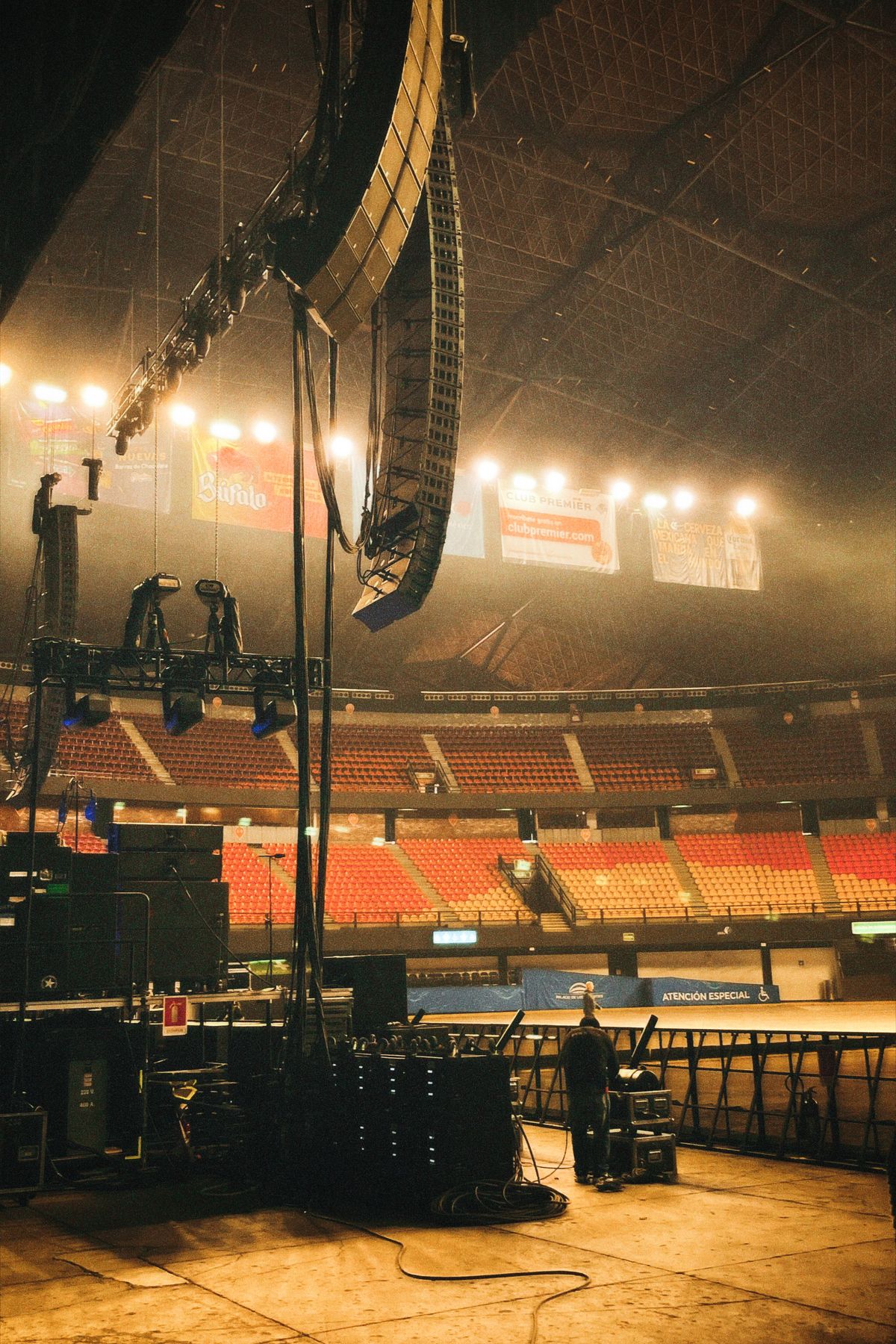
While most of his contemporaries have downgraded to sit-and-sing arena shows, Kwok still designs, rehearses, and delivers full-scale dance-heavy concert tours. His stage rigs regularly include hydraulic platforms, spinning cages, and dance ensembles moving in formation. In an industry that treats sixty as a curtain call, he treats it as a warm-up.
His cultural legacy
In the Cantonese diaspora, Kwok holds a specific slot. He wasn't the voice guy (that's Jacky Cheung). He wasn't the everyman idol (that's Andy Lau). He wasn't the moody one (that's Leon Lai). He was the one who danced — who pushed Cantopop stagecraft past the karaoke standing-still tradition and into full-body performance. For overseas Cantonese kids in the nineties, especially the ones who wanted to see a Cantonese face doing something visibly aspirational and physical, Aaron Kwok mattered. He's the closest thing Cantopop ever produced to its own Michael Jackson.
A Cantonese word Aaron Kwok made everyday
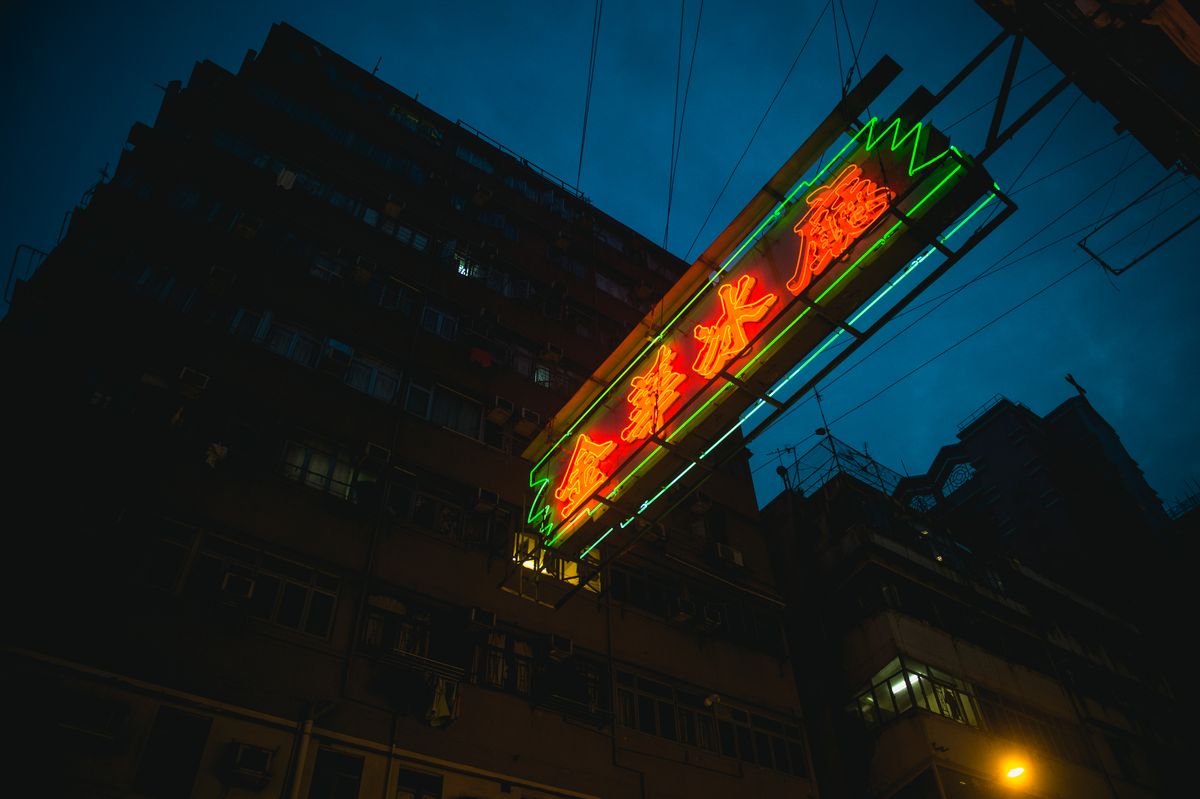
Long before 靈魂舞步 (soul dancer) got translated onto every Chinese-language talent show, Cantopop press had a shorter one for Kwok: 舞王 — dance king. Two characters that did all the work.
舞王
mou5 wong4 — Jyutping romanisation
Meaning: Dance king — the acknowledged top dancer of an era.
Explanation: Not a general compliment — in Hong Kong press it's specifically the crown you get when critics agree there's no one dancing on your level. Kwok has held that title, without a serious rival, for more than three decades.
Kwok's whole career is a lesson in owning the Cantonese identity even when your first hit is in Mandarin — he came home. Our 廣東仔 CANTONESE GUY oversized tee is the same statement on fabric — pride of origin, worn out loud.
Why he still matters
The Four Heavenly Kings were the last coherent thing Cantopop produced before the industry fragmented, and Kwok is the one who never really stopped. He's still touring, still choreographing his own shows, still making films. For the global Cantonese community, he's a working reminder that showing up — for decades, in front of a stage — is its own kind of loyalty to the culture that made you. If you grew up watching him on TVB, that shape in the spotlight was your first idea of what a Cantonese star could look like doing something extraordinary with a whole body. And it still is. Every one of his tours sells the same message our CANTONESE GUY hat puts on the front: this is where I'm from, and I'm not putting it down.
📖 Related Articles
👉 Shop the Best Seller collection
Modern streetwear for the global Cantonese community.