

Every Cantonese diaspora city has its own creation story — a chapter of the great global migration that carried Guangdong's people outward across oceans and decades. Vancouver has its railway workers and Gold Mountain mythology. San Francisco has its Chinatown, the oldest in America. London has Gerrard Street, built by Cantonese seamen and restaurant owners after the Second World War. And Sydney has something equally remarkable: a Cantonese community whose roots reach back almost two centuries, and whose influence on the city's culture, food, and identity runs deeper than most Australians realise.
The First Arrivals: Before the Gold Rush
Chinese migration to Sydney predates the famous gold rush. Records show Chinese labourers arriving in New South Wales as early as 1828, with the first organised group embarking from Amoy (present-day Xiamen) in 1848 to work as farm labourers and domestic servants. These early pioneers were followed by a surge that would change the colony's demographics permanently.
In 1851, gold was discovered in the Australian colonies, and what followed was one of the great migrations in Pacific history. By 1855, around 17,000 Chinese migrants had arrived in New South Wales and Victoria. The vast majority came from one specific corner of China: the Pearl River Delta region of Guangdong Province. Many hailed from Zhongshan (中山), Taishan (台山), and the surrounding counties — places that would send their sons across the Pacific to America, Canada, and Australia in wave after wave through the 19th century. These were Cantonese people, and they would shape Sydney's Chinese community for generations to come.
From The Rocks to Haymarket: A Community on the Move
The first concentration of Chinese residences and businesses in Sydney grew up in lower George Street, in The Rocks neighbourhood — a logical location near the wharves where new arrivals disembarked. As the gold rush era waned, the community adapted, diversifying into market gardening, laundries, furniture, and the restaurant trade. Chinese market gardeners from the suburbs came into the city to trade at the fruit and vegetable markets in Haymarket, often staying overnight in local boarding houses. Slowly, the centre of gravity shifted.
By the 1920s, Sydney's Chinese community had established a new Chinatown in the Campbell Street and Dixon Street area of Haymarket, near the Capitol Theatre. The Haymarket Chinatown grew steadily through the mid-20th century, surviving discrimination, wartime disruptions, and demographic shifts. In 1979, the City of Sydney closed Dixon Street to vehicle traffic to create a pedestrian mall. The renovated Chinatown, complete with ornamental archways (牌樓) donated by local Chinese businesses, reopened in 1980 — the form it largely retains today.
Sydney's Chinatown Today
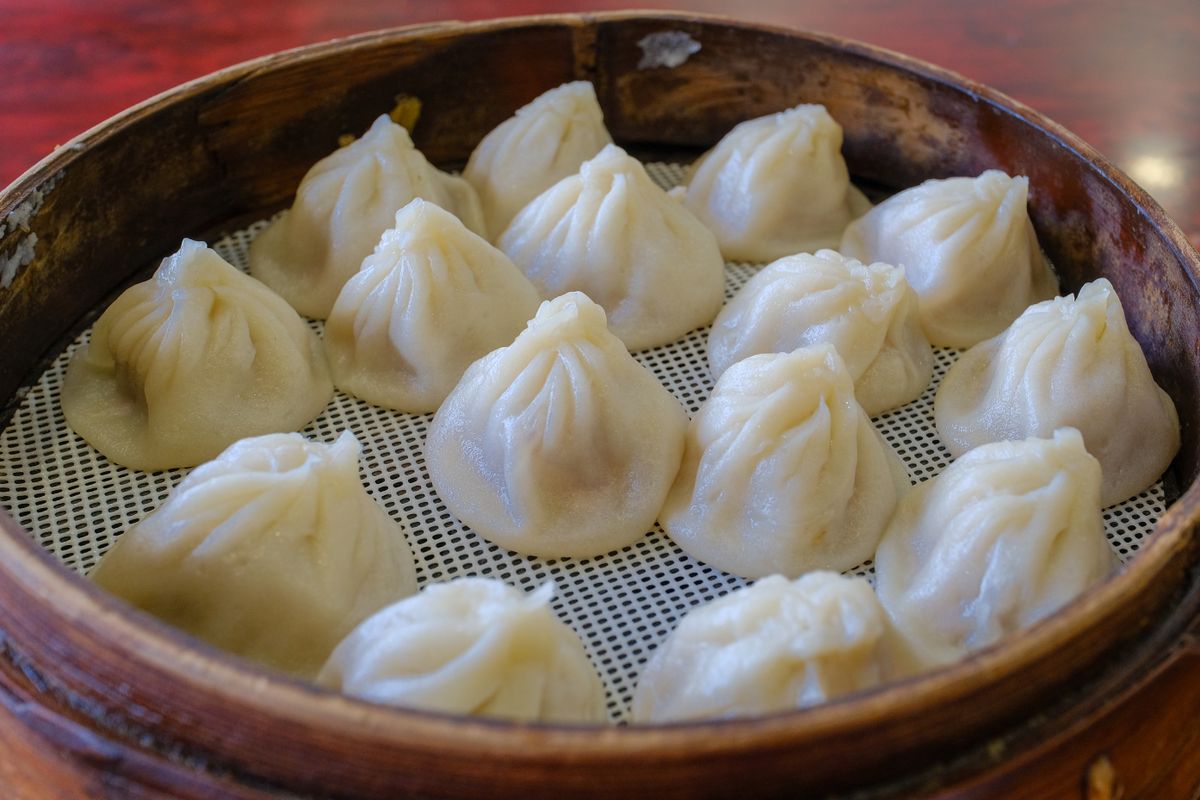
Today, Sydney's Chinatown in Haymarket is the largest in Australia. Dixon Street and the surrounding area is a sensory tapestry of Cantonese BBQ windows, yum cha restaurants, bubble tea shops, and bakeries. While the demographics have shifted over time — more recent waves of immigration have brought Mandarin-speaking communities from mainland China, as well as Taiwanese, Vietnamese, and Korean communities — the Cantonese foundation remains visible everywhere you look: in the restaurant menus, the BBQ ducks hanging in shop windows, and the dim sum trolleys that still roll through the great Chinatown yum cha halls on Sunday mornings.
Beyond the City: Cantonese Life Across Greater Sydney
Sydney's Cantonese community extends far beyond the inner city Chinatown. Suburbs like Burwood, Chatswood, Cabramatta, and Hurstville have become vibrant hubs of Chinese-Australian life, with strong Cantonese populations, Cantonese-language media, Cantonese churches, and restaurants that rival anything in Hong Kong or Guangzhou for quality and authenticity. The suburb of Eastwood, further west, is particularly known for its Cantonese food scene. On any given weekend, families from across Sydney make the trip to these suburbs for a proper yum cha experience — the familiar ritual of tea, trolleys, and conversation that has connected Cantonese families across the world for generations.
Culture, Language and the Next Generation
Like all diaspora communities, Sydney's Cantonese population navigates an ongoing conversation about identity, language, and belonging. For many second and third-generation Australian-Cantonese, maintaining the language — taking Saturday Cantonese school, speaking it at home with grandparents, using it to order at the family's favourite restaurant — is an act of cultural pride as much as communication. The rise of Cantonese identity movements globally, including brands like Cantonese Guy, resonates deeply with this generation: they want to claim and celebrate their heritage on their own terms, in their own language.
📖 Related Articles
👉 Shop Cantonese Guy — Modern Streetwear for the Global Cantonese Community