

Learning Cantonese? Street slang is the heartbeat of the language. While textbooks teach formal grammar, the real Cantonese culture lives in the expressions locals use every day—words that capture attitude, humor, and pride in being Cantonese. Today we're diving into 10 essential street slang words that'll make you sound authentically Cantonese, not like a tourist.
The Language of Attitude & Confidence
Cantonese street slang isn't just about vocabulary—it's a mindset. From expressing frustration to complimenting someone's vibe, these words carry cultural weight. Let's explore them:
1. 叻 (Capable & Smart)
lek1 — Jyutping romanisation
Meaning: Smart, clever, skillful, good at something.
Explanation: Use this when you want to compliment someone's competence or smarts. It's not just about being intelligent—it's about being capable in a practical, street-level way. A brilliant chef, a smooth negotiator, a clever problem-solver—all 叻.
「佢唱歌好叻。」(Keoi coeng go hou lek.) — "He/She is really good at singing."
2. 靚 (Pretty & Good-Looking)
leng3 — Jyutping romanisation
Meaning: Beautiful, pretty, attractive, impressive.
Explanation: A distinctly Cantonese word you won't hear in Mandarin, 靚 describes physical beauty but also anything visually appealing or stylish. Great clothes, a beautiful sunset, or a stunning design—all can be 靚. It's a word that celebrates aesthetics in Cantonese culture.
「靚仔」(leng zai) — "Good-looking guy" (literally 'pretty boy')
3. 嘢 (Thing)
je5 — Jyutping romanisation
Meaning: Thing, stuff, object, matter.
Explanation: Perhaps the most versatile Cantonese word. It can mean a physical object ("買啲嘢" — buy some stuff), food ("食中國嘢" — eat Chinese food), or even abstract situations. Street vendors use it constantly.
「你想食日本嘢定泰國嘢?」(Nei soeng sik jat bun je ding taai gwok je?) — "Do you want Japanese food or Thai food?"
4. 廢 (Useless & Wasted)
fai3 — Jyutping romanisation
Meaning: Useless, worthless, wasted, pointless.
Explanation: When something's not worth your time or effort, it's 廢. Can describe a bad movie (「呢套戲好廢」), a wasted effort, or someone who's incompetent (「廢柴」— literally 'dead wood').
「咁廢!」(Gam fai!) — "What a waste!"
5. 衰 (Bad Luck & Unfortunate)
seoi1 — Jyutping romanisation
Meaning: Unlucky, pathetic, messed up, bad.
Explanation: You use 衰 when bad luck strikes or when someone's done something stupid. It captures both the frustration of misfortune and a bit of dark humor about life's mess-ups. "衰仔" (a bad kid/troublemaker) is common in HK cinema.
「你好衰啊!」(Nei hou seoi aa!) — "You're so unlucky!"
6. 靴 (Fake & Inauthentic)
hoe3 — Jyutping romanisation
Meaning: Fake, phony, inauthentic, artificial.
Explanation: Born from Cantonese street culture, 靴 describes anything that's not genuine. Counterfeit bags, fake smiles, posers—all 靴. In diaspora communities, this word cuts through BS and celebrates authenticity.
「佢好靴。」(Keoi hou hoe.) — "He/She is fake."
7. 串 (Annoying Person)
chyun3 — Jyutping romanisation
Meaning: Annoying, bothersome, irritating person.
Explanation: When someone's being a pest or causing trouble, you call them 串. It's got bite but isn't extremely harsh—more of a friendly jab among mates. Used frequently in Hong Kong pop culture and movies.
「唔好咁串。」(M hou gam chyun.) — "Don't be such a pain."
8. 掂 (Excellent & Spot-On)
dim3 — Jyutping romanisation
Meaning: Excellent, perfect, well-handled, just right.
Explanation: A compliment for when something's been done brilliantly or turned out perfectly. Could be a great performance, a well-executed plan, or even a perfectly cooked dish. 掂 celebrates competence and satisfaction.
「呢個計劃掂到爆。」(Ni go gai waak dim do baau.) — "This plan is absolutely perfect."
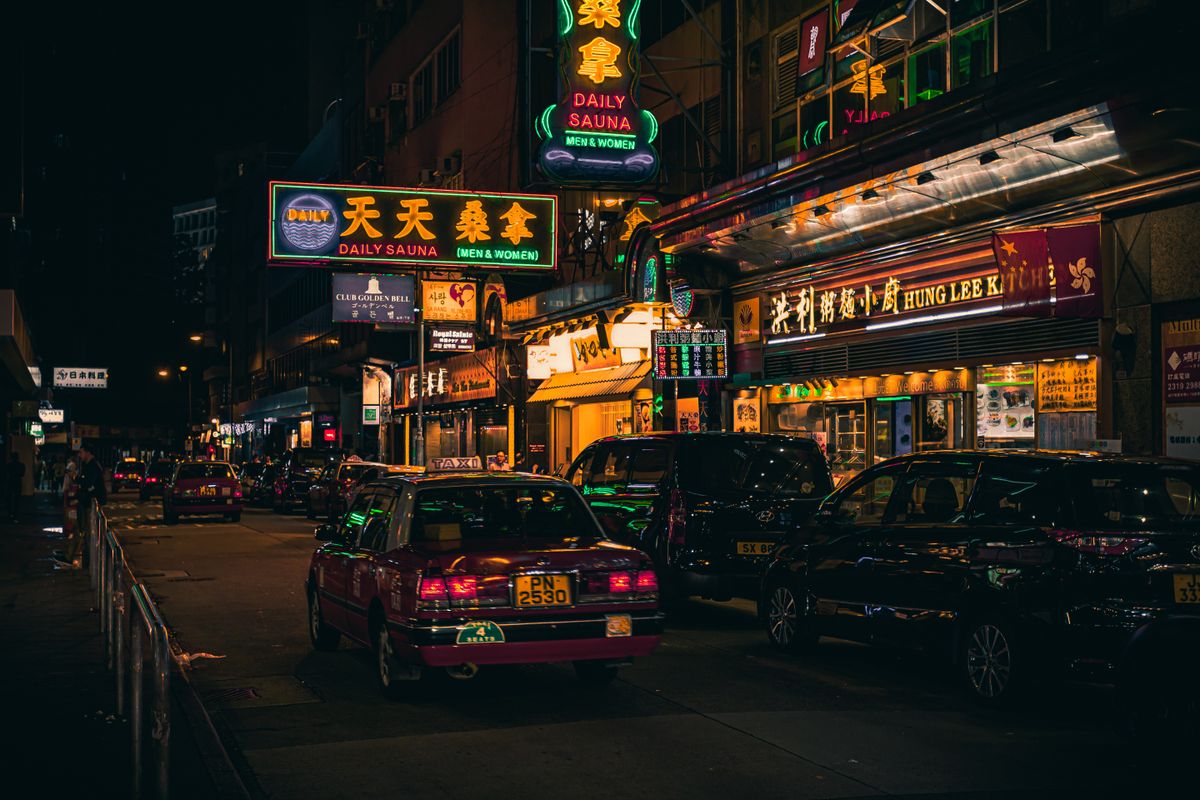
Why Street Slang Matters for Diaspora Culture
For Cantonese diaspora worldwide—in Vancouver, San Francisco, Sydney, and London—these words are lifelines to home. They carry the spirit of Hong Kong nightlife, Guangdong pride, and the attitude that makes Cantonese culture unmistakable. You won't learn these in Duolingo, but they're the words your grandmother uses, the phrases you hear in dim sum restaurants, and the expressions that define what it means to be authentically Cantonese.
📖 Related Articles
👉 Shop Cantonese Guy — Modern Streetwear for the Global Cantonese Community