

If there's one thing Cantonese does better than almost any language, it's expressing frustration. From the small daily annoyances to the full-volume "I give up" moments, Cantonese gives you a whole emotional vocabulary that English just doesn't have. Today we're covering 10 essential words and phrases for letting off steam — the kind every Cantonese kid heard their grandma mutter when something went sideways.
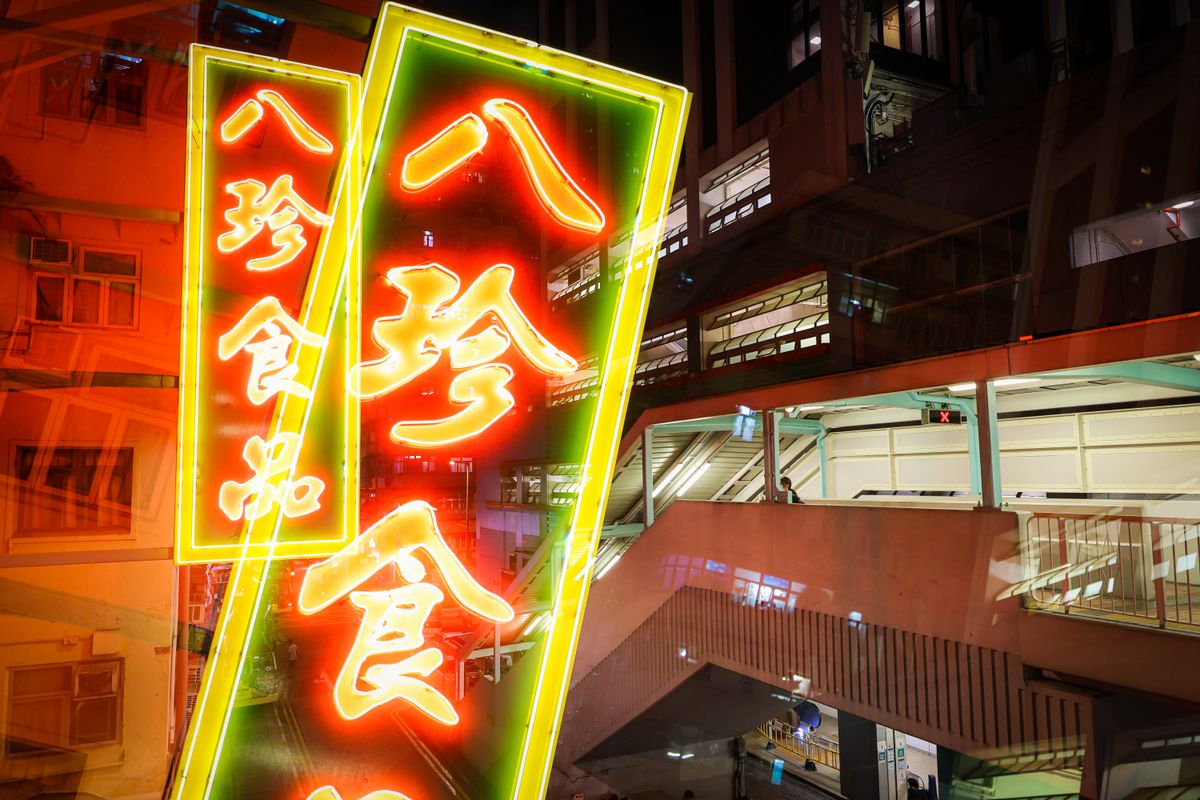
Why Cantonese is the world champion of complaining
Cantonese has tone, rhythm and a long folk tradition of vivid metaphor. A single syllable can carry a whole mood. The frustration vocabulary below isn't just slang — it's a window into how Cantonese speakers see the world: dramatic, bodily, often hilarious, and never afraid to name a feeling out loud. If you grew up around a Cantonese family, half this list will sound like your aunties at dim sum.
The 10 words
1. 仆街
puk1 gaai1 — Jyutping romanisation
Meaning: "Drop dead on the street" — a vulgar but universally understood curse.
Explanation: Literally "to fall onto the street", it's one of the most-used vulgar words in the Cantonese repertoire. It can be a noun ("that puk gaai") or an exclamation when something goes wrong. Strong word — use with people you know well, not your boss.
2. 黐線
ci1 sin3 — Jyutping romanisation
Meaning: Crazy, insane, "your wires are crossed".
Explanation: Literally "sticky wires" — a metaphor from the old days when crossed telephone lines produced static and nonsense. Now used for someone acting irrationally or for an unbelievable situation. Distinctly Cantonese; Mandarin speakers wouldn't recognise it.
3. 弊家伙
bai6 gaa1 fo2 — Jyutping romanisation
Meaning: "Oh no!" / "Disaster!" / "We're done for!"
Explanation: 弊 means "bad" or "critical"; 家伙 literally "household goods" but here just intensifies the panic. It's the classic Cantonese alarm bell — the sound your mum makes when she realises she left the rice cooker plugged in.
4. 死火
sei2 fo2 — Jyutping romanisation
Meaning: "Damn it!" / "We're stuck!"
Explanation: Literally "dead fire" — originally what you'd say when a car engine stalled. Now any time you realise you've messed up, this is the right word. Slightly softer than 仆街.
5. 頂你個肺
ding2 nei5 go3 fai3 — Jyutping romanisation
Meaning: "Damn you!" — literally "ram your lungs".
Explanation: A famously creative Cantonese substitute swear — it sounds like something much ruder but stays just on the right side of speakable. Use it when something or someone really gets on your nerves.
6. 激氣
gik1 hei3 — Jyutping romanisation
Meaning: Pissed off; frustrated; "blood-boiling".
Explanation: Literally "stirred-up qi" — that pent-up energy that makes you want to throw something. Cantonese parents use this constantly when their teenagers test their patience.
7. 嘥氣
saai1 hei3 — Jyutping romanisation
Meaning: "Waste of breath" / "Don't bother".
Explanation: 嘥 means "to waste", 氣 means "breath" or "energy". You say this when someone won't listen, won't change, or when arguing further just isn't worth the air in your lungs.
8. 谷氣
guk1 hei3 — Jyutping romanisation
Meaning: Stifled, bottled-up anger.
Explanation: 谷 means "to dam up" — this is the feeling of swallowing your words, the angry sigh you let out after a meeting where you couldn't say what you really thought. The body-level cousin of 激氣.
9. 心淡
sam1 taam5 — Jyutping romanisation
Meaning: Disheartened; lost faith; emotionally checked out.
Explanation: Literally "heart gone faint" — the quieter, sadder side of frustration. The feeling when you've tried so many times you've stopped expecting anything. Famous as the title of a 2003 Joey Yung Cantopop hit.
10. 冇眼睇
mou5 ngaan5 tai2 — Jyutping romanisation
Meaning: "I can't bear to watch this."
Explanation: Literally "no eyes to see". The all-purpose response to embarrassing cringe, incompetent behaviour, or a football team losing 5–0. Mums use it on their kids' rooms.
Why frustration words matter for the diaspora
For Cantonese speakers raised abroad, this category of vocabulary is often the first to disappear. English-speaking kids might keep food words (siu mai, dim sum) but lose the emotional shorthand. Saying 嘥氣 instead of "ugh, never mind" reconnects you to a whole way of feeling that's specifically Cantonese — bodily, communal, unafraid to vent. It's also the layer that shows up most in Stephen Chow comedies and old TVB dramas.
How to actually use these
A few rules. 仆街 and 頂你個肺 are vulgar — keep them between friends. 弊家伙, 死火 and 黐線 are fine in casual conversation. 激氣, 谷氣, 嘥氣, 心淡 and 冇眼睇 are completely acceptable in any setting, even with elders. Match the register to the room. And remember: Cantonese is performative. Half the power of these words is in how dramatically you say them. Don't whisper them — let them rip.
📖 Related Articles
👉 Shop Cantonese Guy — Modern Streetwear for the Global Cantonese Community