

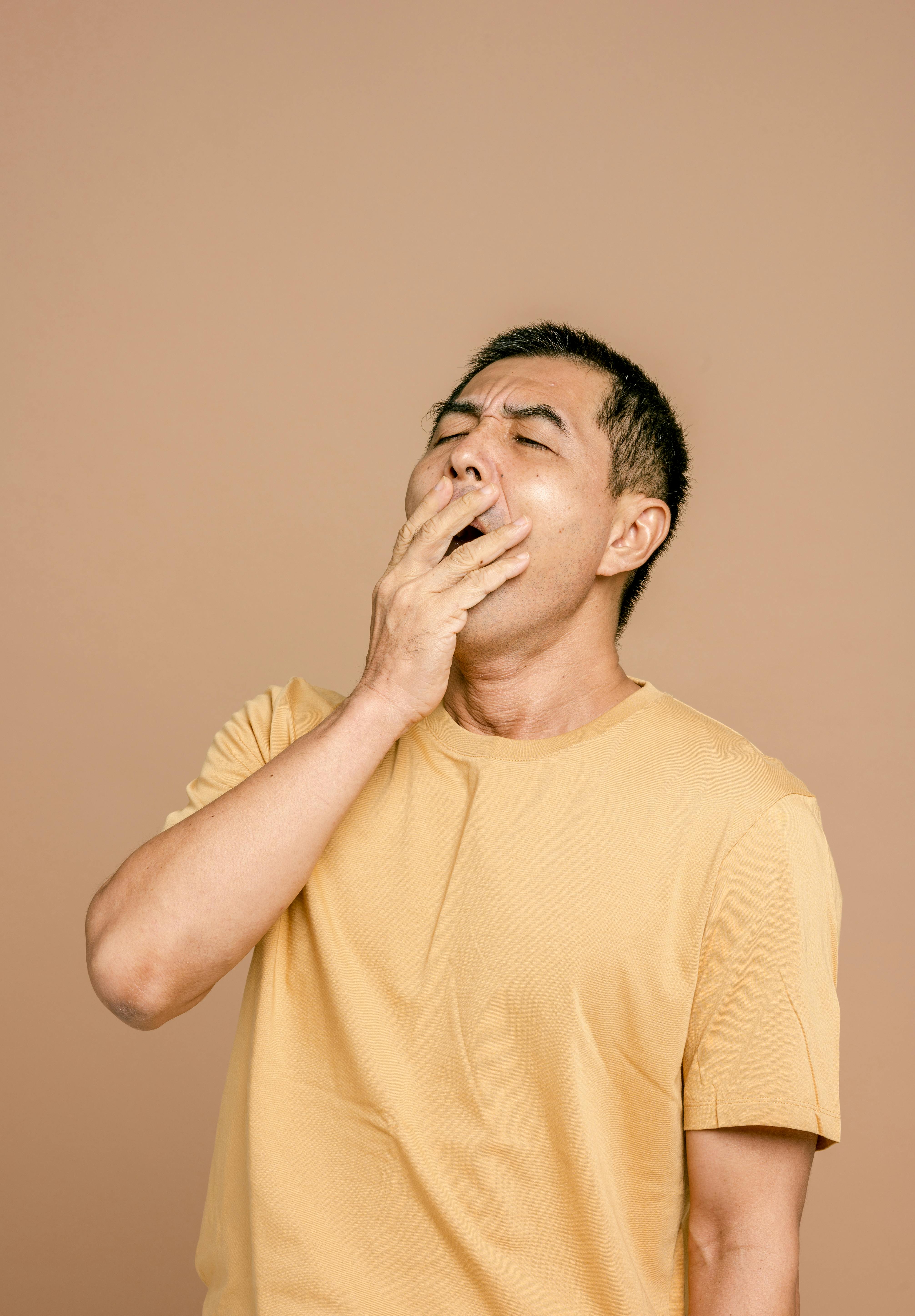
If there is one thing Hong Kongers never get enough of, it is sleep. Between late-night suppers, early-morning commutes, and the kind of humid summer heat that makes a nap feel like a human right, the Cantonese language has built up a rich vocabulary around rest, tiredness, and the fine art of switching off. This volume gathers 10 everyday words every Cantonese speaker uses when they are running on empty.
Learn these and you will understand half the conversations happening on the MTR at 7am and the other half happening on the sofa after a Sunday yum cha.
The 10 words
1. 瞓覺
fan3 gaau3 — Jyutping romanisation
Meaning: To sleep.
Explanation: The core Cantonese verb for sleeping, used instead of Mandarin's 睡覺. 瞓 on its own already means "to lie down to sleep" and the pairing with 覺 is pure spoken Cantonese.
2. 攰
gui6 — Jyutping romanisation
Meaning: Tired, worn out.
Explanation: The one-syllable word carrying all the weight of a long day. Hong Kongers reach for it the way others reach for "I'm beat." Stretch it out as 好攰 (hou2 gui6) when you really want someone to feel it.
3. 眼瞓
ngaan5 fan3 — Jyutping romanisation
Meaning: Sleepy, drowsy — literally "eye-sleep".
Explanation: That heavy-lidded, want-to-close-your-eyes feeling, named after the body part doing the complaining. Different from being tired overall — this one is pointed at the eyes.
4. 瞌眼瞓
hap1 ngaan5 fan3 — Jyutping romanisation
Meaning: To nod off, to doze.
Explanation: The exact state of your head gently falling forward in a meeting or on a long bus ride. The verb 瞌 is the involuntary nod itself — your body sleeping before your brain agrees.
If "瞌眼瞓 on the MTR" sounds familiar, you already know the Cantonese philosophy of recovery: just stop. The next few words are all about that. If you live by the maxim that effort is overrated and leisure is sacred, there is a shirt for that — our Hea heavyweight tee turns the word into a wearable statement.
5. 休息
jau1 sik1 — Jyutping romanisation
Meaning: To rest.
Explanation: The slightly more formal word for taking a break — the one your mum uses when she thinks you have been studying or working too hard. It covers everything from a five-minute pause to a full day off.
6. 攤抖
taan1 dau2 — Jyutping romanisation
Meaning: To kick back, to chill out.
Explanation: Literally "spread out and shake off" — the Cantonese answer to lying down on the couch and letting the world go on without you. More casual than 休息, more active than 瞓覺. It is the mode you enter after work on Friday.

When the body gives up
7. 發夢
faat3 mung6 — Jyutping romanisation
Meaning: To dream — in your sleep, or figuratively.
Explanation: Both the dreams you have at night and the hopeful kind you have in the daytime. Used sarcastically — 你發緊夢呀? — it becomes "are you out of your mind?" with maximum deadpan.
8. 打瞌睡
daa2 hap1 seoi6 — Jyutping romanisation
Meaning: To take a quick nap or doze.
Explanation: The three o'clock desk nap, the taxi driver pulled over at a 7-Eleven, your gong gong in his armchair after lunch. More deliberate than 瞌眼瞓 — this is a nap you more or less chose to take.
9. 失眠
sat1 min4 — Jyutping romanisation
Meaning: Insomnia.
Explanation: Literally "losing sleep" — the shared Cantonese and Mandarin word for the hours you spend staring at the ceiling. Hong Kong grannies will diagnose it as 熱氣 (yeet hay) and prescribe you a bowl of herbal soup.
If granny is right and your sleepless nights really are 熱氣, the next move is a bowl of slow-boiled Cantonese soup — and if you want to signal that you believe in that cosmology, our 熱氣 Yeet Hay embroidered tee and 飲湯 Yum Tung tee speak the same language.
10. 冇精神
mou5 zing1 san4 — Jyutping romanisation
Meaning: No energy, listless, out of it.
Explanation: Literally "no spirit" — the all-purpose Cantonese word for being drained in a way that is bigger than just physical tiredness. The look your boss notices before you have said a word.
Why these words matter
Hong Kong is one of the most sleep-deprived cities on earth, and Cantonese has had centuries to build vocabulary around that reality. These ten words are the ones you will hear in a Mong Kok café at midnight, on the morning tram into Central, and in your popo's living room on a Sunday afternoon. If you want to go further, our Vol. 104 workplace words and Vol. 105 chilling words cover the office that drains you and the ways Hong Kongers quietly resist.
And if you spend your weekend 攤抖-ing in a tee that says exactly that, there is nothing more on-brand. Our 準時收工 Clock Out On Time tee was built for the moment the clock hits six.
📖 Related Articles
👉 Shop the Cantonese Slang collection
Modern streetwear for the global Cantonese community.