

Few cultures wrap celebration into language the way Cantonese does. Volume 18 of the Cantonese Guy Dictionary collects 10 words and phrases you'll hear at weddings, banquets, birthdays, and especially Lunar New Year — the kind of language that turns a regular gathering into a proper Hong Kong celebration.
From the rapid-fire 恭喜發財 you'll trade at every red-envelope handoff to the warm 慢慢行 a grandmother whispers as you leave, these phrases shape how Cantonese speakers express joy and good wishes around the world.
The 10 Words
1. 恭喜發財
gung1 hei2 faat3 coi4 — Jyutping romanisation
Meaning: Wishing you prosperity (the headline Lunar New Year greeting).
Explanation: Literally "congratulations and may you become wealthy." From the first day of Lunar New Year through the 15th, this is the phrase you toss out the moment you see anyone — relatives, colleagues, your building's security guard. It comes with an implied handshake or a lai see if you're the right person to be giving one.
2. 利是
lei6 si6 — Jyutping romanisation
Meaning: The red envelope of lucky money — the Cantonese name for what Mandarin speakers call hongbao.
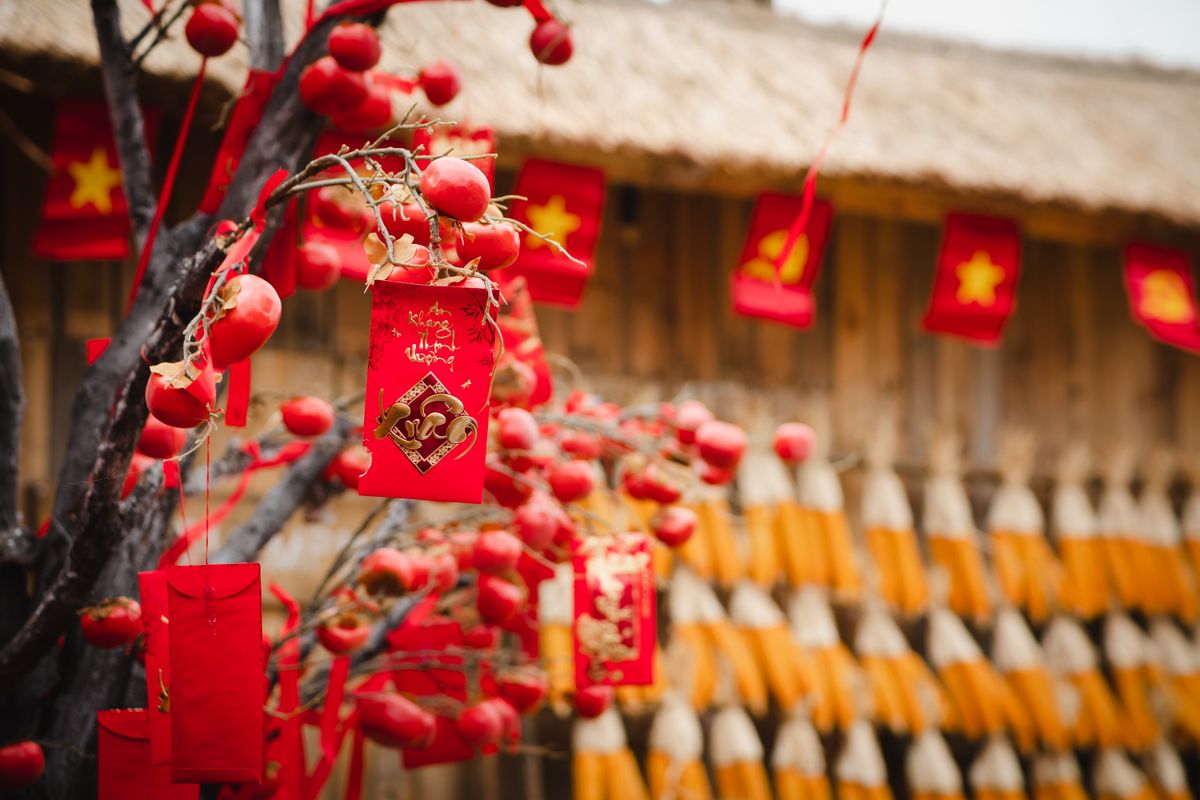
Explanation: The word itself carries the meaning of "useful" or "profitable." Married adults hand them to children, single people, and service workers during Lunar New Year — and at weddings, births and other milestones. The amount inside matters less than the gesture; Hong Kong tradition prefers crisp new bills in even amounts (never four).
3. 福
fuk1 — Jyutping romanisation
Meaning: Blessing, good fortune, well-being.
Explanation: The single character every Cantonese household hangs on red diamond-shaped paper at New Year, almost always upside down — because "upside down" (倒) sounds identical to "arrives" (到), so 福倒 ("luck upside down") becomes 福到 ("luck has arrived"). One word, an entire wordplay tradition.
4. 旺
wong6 — Jyutping romanisation
Meaning: Prosperous, thriving, full of energy and luck.
Explanation: A small word with huge wattage. You use 旺 to describe a shop with non-stop foot traffic, a business that's booming, or a person who seems to attract good fortune. It's the word behind 旺角 (Mong Kok, Hong Kong's busiest district) and the wish people send to anyone opening a new venture.
5. 慶祝
hing3 zuk1 — Jyutping romanisation
Meaning: To celebrate; a celebration.
Explanation: The all-purpose verb for any organised joy — birthdays, anniversaries, promotions, finishing school. Cantonese culture treats celebration as a duty, not an indulgence: if there's a reason, you 慶祝, and you do it with food.
6. 大吉大利
daai6 gat1 daai6 lei6 — Jyutping romanisation
Meaning: Great luck and great prosperity.
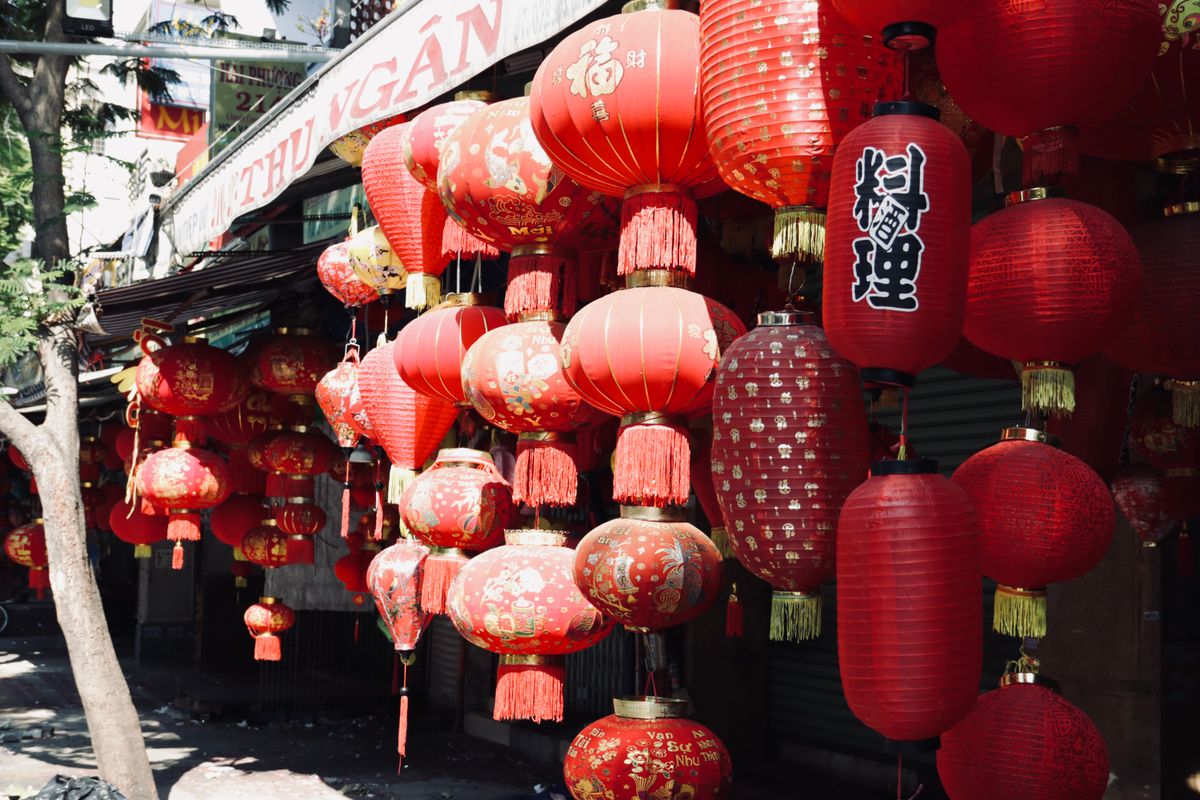
Explanation: The four-character version of "wishing you the best." You'll hear it shouted across reunion dinners and printed on揮春 hanging in doorways. The repetition of 大 ("great") amplifies the wish — this isn't garden-variety luck, this is the maximum dose.
7. 揮春
fai1 ceon1 — Jyutping romanisation
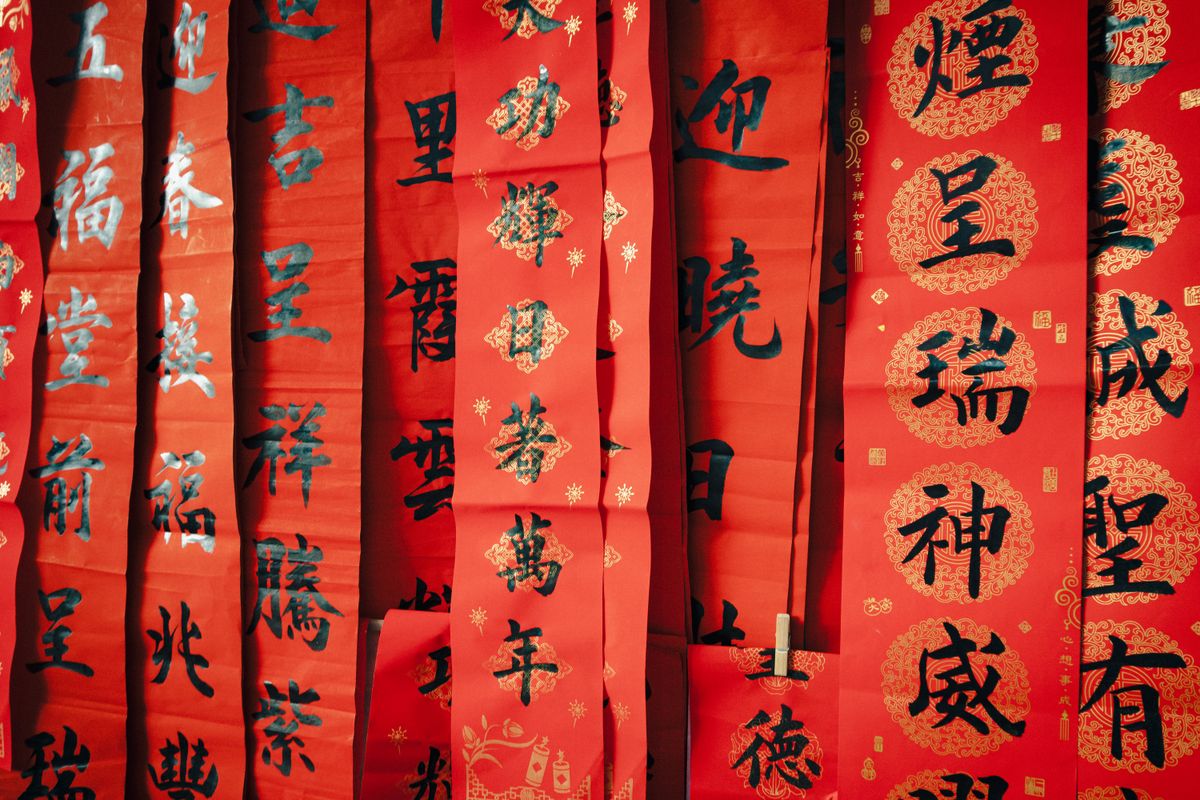
Meaning: Red paper banners and couplets with auspicious phrases, pasted around doors at New Year.
Explanation: Walk through any Hong Kong neighbourhood in the run-up to Lunar New Year and you'll see them — black or gold calligraphy on bright red paper, hand-brushed by uncles at sidewalk stalls. The shorter ones are single phrases like 出入平安; the longer pairs are couplets framing every front door.
8. 身體健康
san1 tai2 gin6 hong1 — Jyutping romanisation
Meaning: Wishing you good health.
Explanation: The wish you save for elders. Especially during New Year, this four-character phrase is the right thing to tell grandparents and senior relatives. It signals respect — that you understand which blessings actually matter as people get older.
9. 萬事如意
maan6 si6 jyu4 ji3 — Jyutping romanisation
Meaning: May everything go according to your wishes.
Explanation: The most all-encompassing wish in the Cantonese festive vocabulary — work, health, love, family. Where 恭喜發財 is about money, 萬事如意 is about everything else. It pairs beautifully on red banners and ends most New Year text messages.
10. 飲杯
jam2 bui1 — Jyutping romanisation
Meaning: Cheers! (literally "drink a cup").
Explanation: The Cantonese toast — said before clinking glasses at banquets, weddings or a Friday gathering at the dai pai dong. It's casual and warm, the more local cousin of the more formal 乾杯 (gon1 bui1, "bottoms up"). At a banquet, expect to hear it several rounds in.
The Rhythm of Cantonese Joy
What ties these ten phrases together isn't grammar — it's emotional choreography. Cantonese celebration words are designed for moments that move quickly: the half-second of eye contact when you hand someone a lai see, the toast across a round table at a wedding, the three seconds you pause at an elder's flat doorway to wish them health. Each phrase is short, musical, and built to be felt as much as heard.
Drop these naturally and you stop being a guest at the celebration — you become part of it.
📖 Related Articles
👉 Shop Cantonese Guy — Modern Streetwear for the Global Cantonese Community