

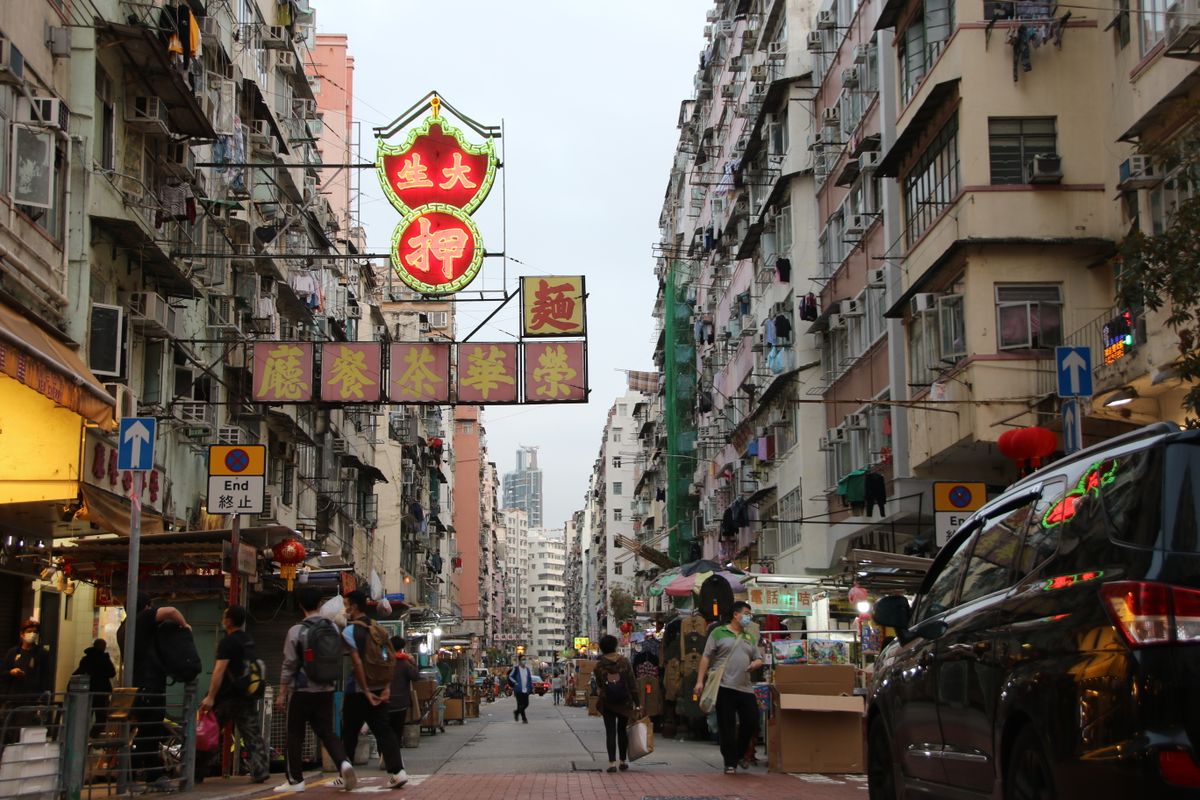
Hong Kong runs on hustle — 加班 nights, dim sum lunches, and boss WhatsApp groups that never sleep. Its office vocabulary reflects that pace: quick, punchy, sometimes dark, always efficient. Here are 10 workplace words every Hongkonger uses, whether they're a fresh grad in Kwun Tong or a boardroom veteran in Central.
The Daily Grind: Coming In and Clocking Out
1. 返工
faan1 gung1 — Jyutping romanisation
Meaning: To go to work.
Explanation: Literally "return to work." In Cantonese, going to work is framed as returning to something you already belong to. It's the most common way to talk about your workday, from Monday morning MTR crowds to Saturday overtime.
2. 收工
sau1 gung1 — Jyutping romanisation
Meaning: To finish work / clock off.
Explanation: Literally "gather up work." The image is of packing up your tools at day's end. It works for any job — office, kitchen, construction site, film set. The sweetest two syllables in the language.
3. 出糧
ceot1 loeng4 — Jyutping romanisation
Meaning: Payday / to be paid.
Explanation: Literally "release rations," a phrase that dates back to when workers were paid in rice. It's still the standard word — you don't get a salary, you get 糧, and when it lands you 出糧.
People at the Office: Bosses, Colleagues & Working Stiffs
4. 老細
lou5 sai3 — Jyutping romanisation
Meaning: Boss.
Explanation: The everyday Cantonese word for boss — warmer and cheekier than the formal 老闆 (lou5 baan2). It also works for restaurant owners, taxi drivers you're bantering with, and even shopkeepers you're trying to sweet-talk into a discount.
5. 打工仔
daa2 gung1 zai2 — Jyutping romanisation
Meaning: Working stiff / salaryman.
Explanation: Literally "kid who hits work." It's the self-deprecating term Hongkongers use for themselves — the eternal employee grinding for someone else's dream. Almost every Cantonese speaker in Hong Kong will call themselves a 打工仔 at some point, even the ones running teams.

The Grind: Deadlines, OT & Getting Fired
6. 加班
gaa1 baan1 — Jyutping romanisation
Meaning: Overtime. Also "開OT" (hoi1 O T) — the English hybrid every Hong Kong office uses.
Explanation: Hong Kong is one of the most overworked cities on earth, and no phrase captures its office culture quite like "開OT." Officially 加班, but colloquially the borrowed English abbreviation dominates — you'll hear it in every Central lift lobby after 7pm.
7. 死線
sei2 sin3 — Jyutping romanisation
Meaning: Deadline (literal calque of the English word).
Explanation: A direct translation — 死 (dead) + 線 (line) — that made its way into everyday Cantonese from English via Hong Kong's bilingual media and office culture. It's blunt and vivid: miss it, and something dies.
8. 交數
gaau1 sou3 — Jyutping romanisation
Meaning: To hit your targets / deliver the numbers.
Explanation: Literally "hand in numbers." It's the phrase for making quota — sales, KPIs, whatever the boss is measuring. Every Hong Kong finance and retail worker knows the pressure of trying to 交數 before month-end.
9. 蛇王
se4 wong4 — Jyutping romanisation
Meaning: To slack off / skive at work.
Explanation: Literally "snake king." The imagery is of a snake coiling up somewhere quiet to nap. If a colleague disappears for a suspicious hour, you tease them for 蛇王-ing. It's one of Cantonese's most beloved bits of office slang.
10. 炒魷魚
caau2 jau4 jyu4 — Jyutping romanisation
Meaning: To be fired.
Explanation: Literally "fry the squid." The phrase supposedly comes from the days when workers slept and ate on-site — when a squid is stir-fried, it curls up like a rolled-up bedroll. Get fired, you roll up your bedding and leave. It works both directions: your boss can 炒 you, or you can 炒 your boss (i.e. quit dramatically).
Wear Your Cantonese to Work
From 返工 in the morning to 收工 in the evening, this vocabulary carries the rhythm of Hong Kong's working life. Whether you're a fresh 打工仔 chasing a 死線 or a seasoned pro trying not to 炒魷魚, you're speaking the same language as every generation of Cantonese hustlers before you.
📖 Related Articles
👉 Shop Cantonese Guy — Modern Streetwear for the Global Cantonese Community