

If you spend a week in Hong Kong, you'll notice something surprising: locals name their feelings with a precision English can't quite match. There's a word for "pent-up frustration you can't vent," another for "the quiet satisfaction of watching karma catch someone up," and a third for the melty sweetness of a very good text message. Welcome to Volume 32 of our Cantonese dictionary — 12 emotion words Hong Kong actually uses every day.
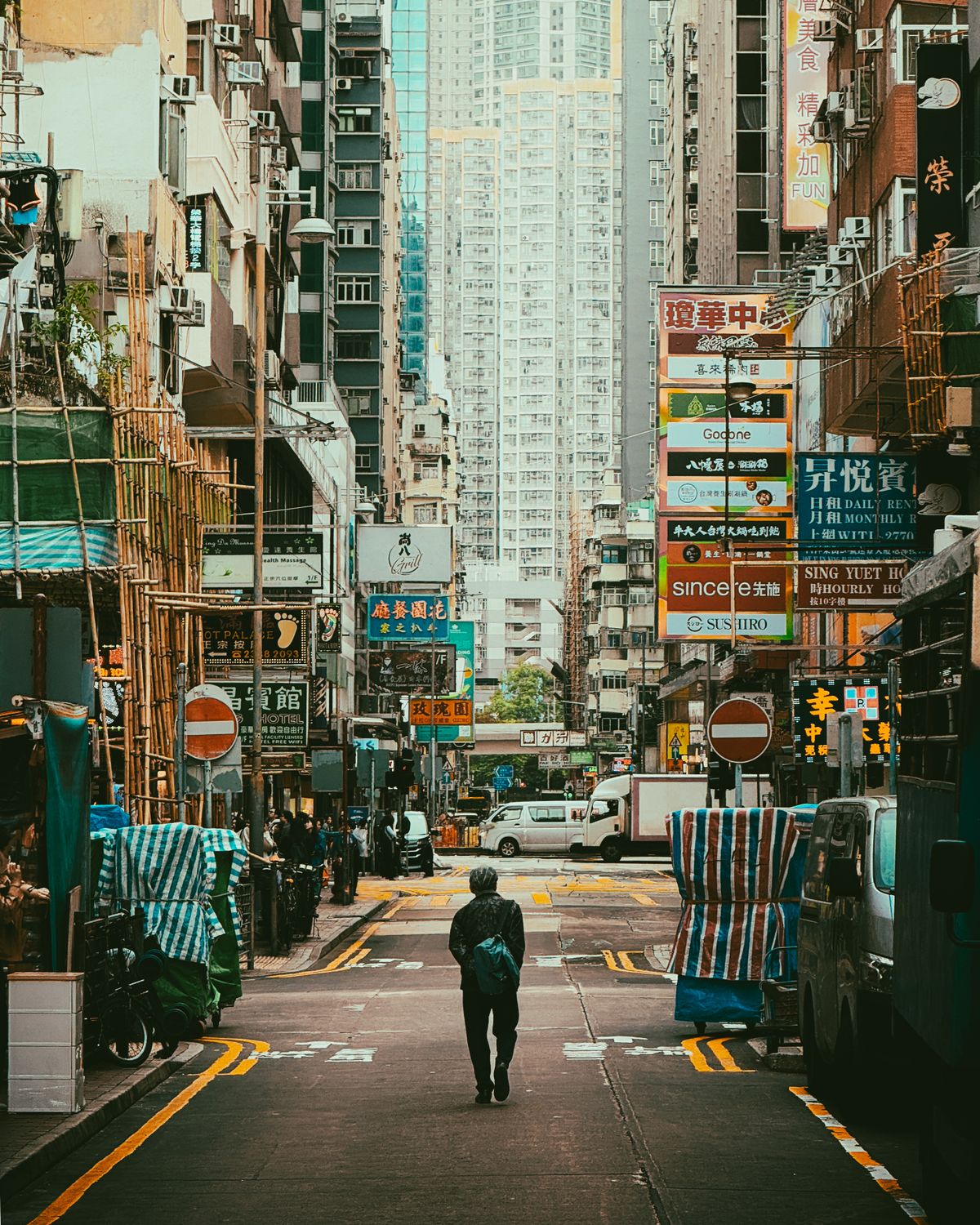
The 12 Cantonese emotion words
1. 開心
hoi1 sam1 — Jyutping romanisation
Meaning: Happy, glad, in a good mood.
Explanation: Literally "open heart." This is the default word for happiness, used everywhere from casual chats to song lyrics. Small joys, big joys, birthdays, promotions — all 開心.
2. 唔開心
m4 hoi1 sam1 — Jyutping romanisation
Meaning: Unhappy, sad, down.
Explanation: The direct negation of 開心 — "not happy." It's the everyday word for sadness, gentler than 傷心 (broken-hearted). If a friend seems off, this is the word you use.
3. 嬲
nau1 — Jyutping romanisation
Meaning: Angry, upset, mad at someone.
Explanation: The go-to Cantonese verb for anger. Covers everything from mild annoyance to real fury, and is often paired with 好 (very) — 好嬲 means "very angry." Cantonese kids grow up hearing "唔好嬲" ("don't be mad") as a plea from friends and family alike.
4. 掛住
gwaa3 zyu6 — Jyutping romanisation
Meaning: To miss (someone or something); to have on one's mind.
Explanation: More than English "miss" — 掛住 carries the sense of someone hanging in your thoughts. Cantonese parents phone their kids abroad and say this instead of "I love you." It's how affection travels through the diaspora.
5. 驚
geng1 — Jyutping romanisation
Meaning: Scared, afraid, worried.
Explanation: Covers fear from ghost-story terror to low-key worry ("I'm scared it'll rain tomorrow"). The colloquial reading is geng1, not the more formal ging1. Used constantly by anxious Hong Kong parents.
6. 慘
caam2 — Jyutping romanisation
Meaning: Miserable, pitiful — often used exclamatively like "oh no."
Explanation: One of the most versatile emotion words in the language. Someone drops their bubble tea? 「好慘。」 Missed the last minibus home? 「慘啦!」 It expresses sympathy, mock-sympathy and self-pity all at once.
7. 谷氣
guk1 hei3 — Jyutping romanisation
Meaning: Pent-up frustration; suppressed anger you can't let out.
Explanation: Literally "bottled qi." Describes the specific feeling of being upset but unable to vent — a passive-aggressive boss, an unfair rule, a rude auntie you can't talk back to. It's one of those Cantonese words that names an emotion English speakers only describe with a long paragraph.
8. 心涼
sam1 loeng4 — Jyutping romanisation
Meaning: A cool, satisfied feeling — often the quiet joy of seeing someone get their comeuppance.
Explanation: Literally "heart cool." Cantonese's answer to Schadenfreude, but softer — it can also mean simple relief after a stressful situation ends well. The word tells you a lot about how Cantonese speakers understand justice: quiet, personal, tea-sipping.
9. 頭痕
tau4 han4 — Jyutping romanisation
Meaning: Troubled, headache-inducing; a situation that scratches at your brain.
Explanation: Literally "itchy head." Not a real headache — it's the mental itch of a problem you can't solve. Kids' school assignments, tax season, your friend's messy relationship: all classic 頭痕 material.
10. 忟憎
mang2 zang2 — Jyutping romanisation
Meaning: Irritable, grumpy, in a fretful mood.
Explanation: A distinctly Cantonese word for the mood of being easily annoyed at everything and nothing. Often follows a bad night's sleep, a hot day on the MTR, or hunger. The verb form 發忟憎 (faat3 mang2 zang2) means "to get fretful."
11. 冧
lam1 — Jyutping romanisation
Meaning: Melty-sweet, smitten; the feeling of being romantically charmed.
Explanation: A very colloquial Hong Kong word. 好冧 (hou2 lam1) describes both a very sweet gesture and the feeling it gives you. If a Canto-drama moment melts you, you're 冧. It's basically the Cantonese equivalent of "swooning."
12. 攰
gui6 — Jyutping romanisation
Meaning: Tired, exhausted.
Explanation: The everyday Cantonese word for tired — not the more literary 累 (leoi6). Every Hong Kong worker knows the phrase 好攰 after a long shift, and everyone nods knowingly when they hear it.

Why Cantonese emotion words matter
Languages carry the shape of a culture's inner life. 谷氣 exists because Cantonese speakers grew up in dense, hierarchical spaces where venting isn't always safe. 心涼 exists because quiet moral satisfaction is its own kind of pleasure. 冧 exists because Hong Kong pop culture — songs, dramas, romance novels — turned melting sweetness into a whole genre. Learning these words isn't just vocabulary; it's a small window into how a city feels.
📖 Related Articles
👉 Shop Cantonese Guy — Modern Streetwear for the Global Cantonese Community