

Every culture's language is rooted in its food. Cantonese is no exception—the dialect overflows with precise, playful words for cooking techniques, ingredients, and the textures that matter most in the kitchen. This volume covers 10 essential food words you'll hear in Cantonese homes, dim sum restaurants, and street markets across Hong Kong.
The Words
1. 鑊氣 (wok hei)
wok6 hei3 — Jyutping romanisation
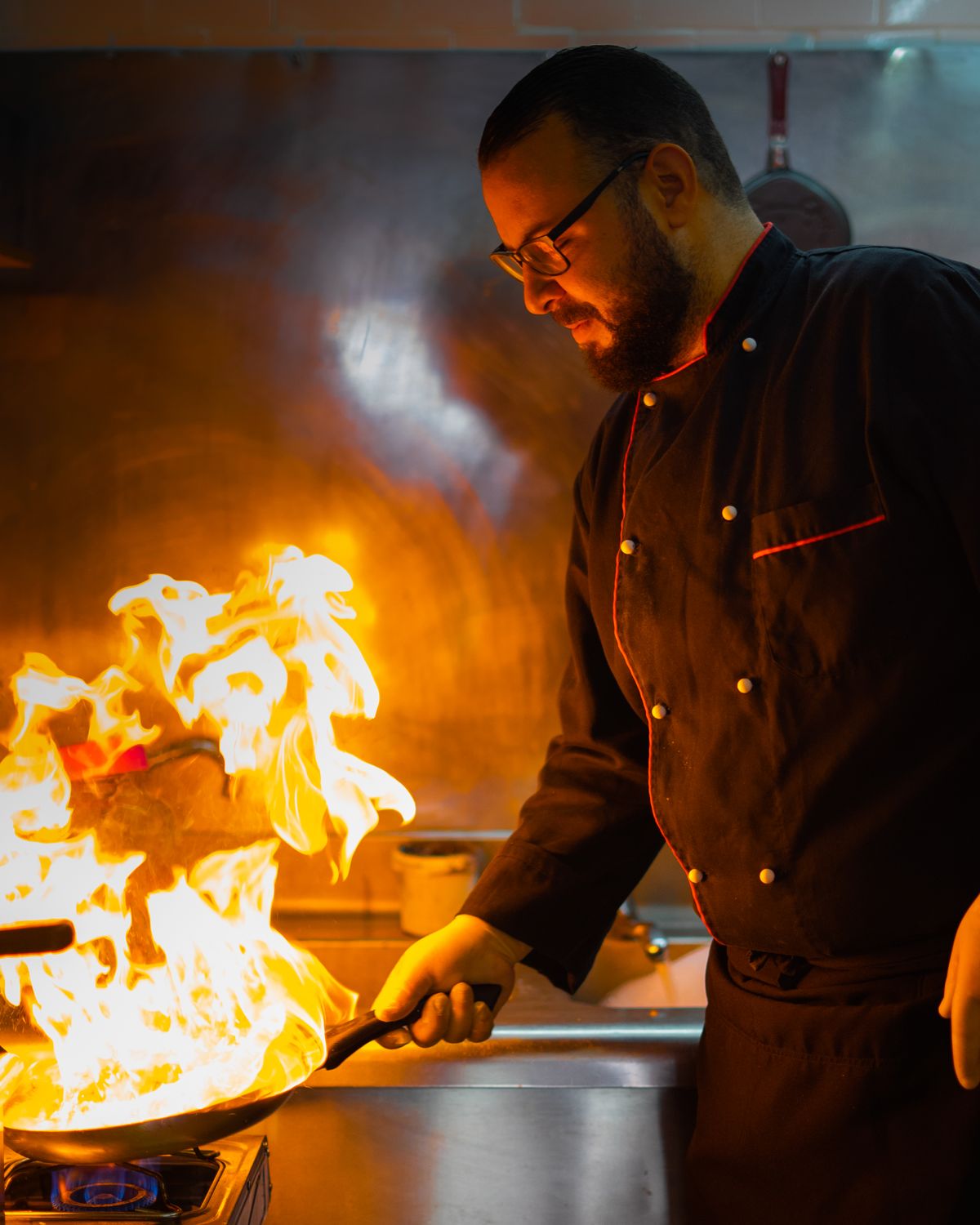
Meaning: "Wok breath" or "breath of the wok"—the smoky, charred flavor that comes from high-heat stir-frying in a traditional wok.
Explanation: This is perhaps the most celebrated concept in Cantonese cooking. Wok hei refers to that irreplaceable smoky, almost caramelized quality you get only when a wok is heated to extremely high temperatures. It's the difference between home cooking and professional restaurant stir-fry—and Cantonese cooks are obsessed with achieving it.
2. 鮮 (sin)
sin1 — Jyutping romanisation
Meaning: Fresh, lively, vibrant—with an implicit sense of umami and bright flavor.
Explanation: In Cantonese cuisine, 鮮 (sin) is a word loaded with meaning. It doesn't just mean "fresh"—it describes that lively, umami-rich quality that marks premium ingredients like fresh seafood, high-quality broth, or perfectly ripe produce. It's a quality that Cantonese diners actively seek.
3. 油香 (yau heung)
yau2 heung1 — Jyutping romanisation
Meaning: Oil aroma or oil-infused fragrance—the aromatic quality that comes from cooking with hot oil and garlic or aromatics.
Explanation: In Cantonese cooking, 油香 is a hallmark of properly executed dishes. It's that toasted, garlicky aroma that rises from hot oil hitting fresh ingredients. Without 油香, a Cantonese stir-fry tastes incomplete.
📖 Related Articles
👉 Shop Cantonese Guy — Modern Streetwear for the Global Cantonese Community