

Cantonese doesn't just have vocabulary — it has an entire soundtrack of exclamations, gasps, and one-syllable eruptions that carry more meaning than any full sentence. A well-timed 哇 can mean genuine awe or complete sarcasm. A single 唓 can dismiss an entire argument. In Volume 80, we're covering 10 exclamations and interjections that every Hong Konger fires off dozens of times a day without thinking — and every one of them is a masterclass in Cantonese emotional shorthand.
Why Cantonese exclamations are their own language
Linguists have a name for these little emotional grenades — discourse particles and interjections — and Cantonese is one of the richest languages in the world for them. A Mandarin speaker might use two or three regularly. A Hong Konger fires off ten before breakfast. If you want to sound fluent, forget the dictionary of nouns and verbs for a second and start collecting these instead. They're what makes Cantonese sound like Cantonese. And if you want the streetwear that captures that same everyday attitude, our Cantonese slang collection puts these expressions on a tee.
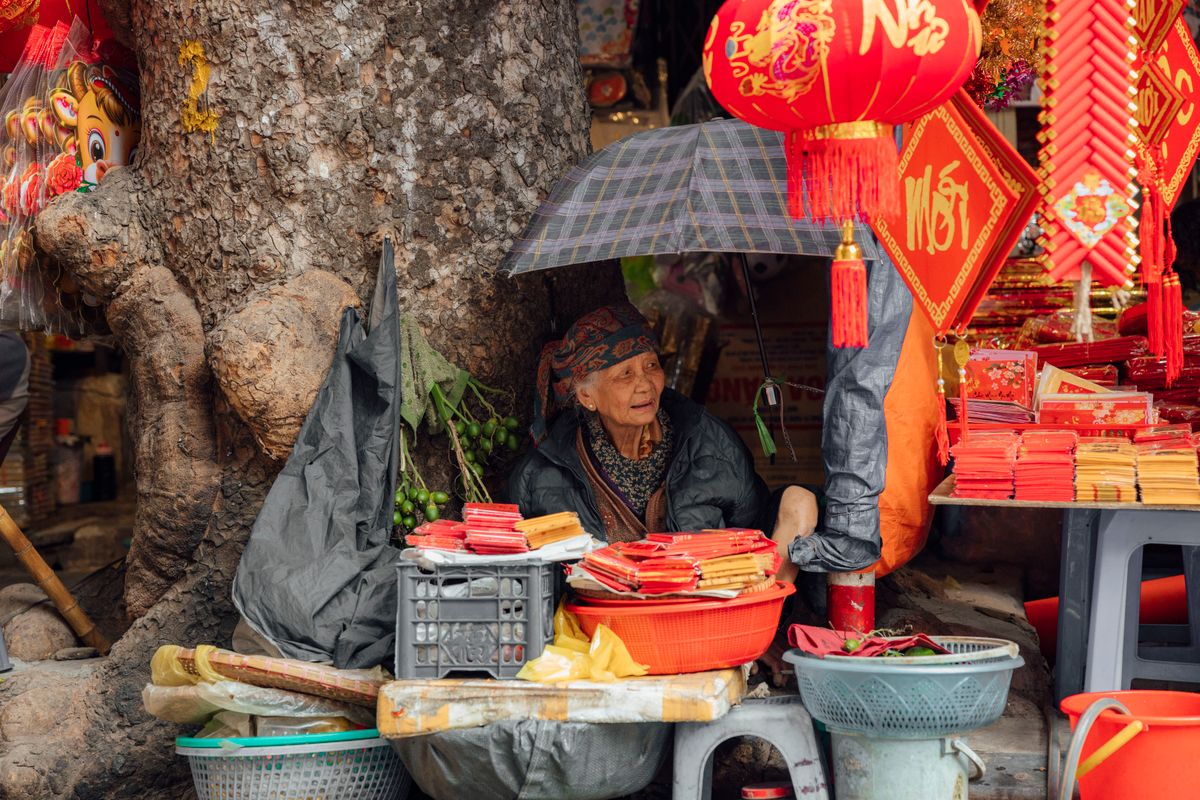
10 Cantonese Exclamations & Interjections
1. 哇
waa1 — Jyutping romanisation
Meaning: Wow / whoa — the all-purpose Cantonese sound of amazement.
Explanation: Depending on tone and length, 哇 can mean sincere awe, teasing exaggeration, or dry sarcasm. A short sharp 哇! is surprise. A long stretched 哇~~~ is either genuine wonder or mock-impressed. Same character, entirely different social meaning.
2. 咦
ji4 — Jyutping romanisation
Meaning: Huh? / Wait, what? — the sound of confusion or noticing something new.
Explanation: 咦 is what escapes your mouth when you spot something unexpected. You reach for your phone in your pocket and it's not there — 咦? You walk past a shop you've never noticed before on a street you've walked a hundred times — 咦? It's the sound of the world briefly not matching your expectations.
3. 吓
haa2 — Jyutping romanisation
Meaning: What? / Say that again? — a request for repetition or disbelief.
Explanation: If you didn't catch what someone said, or you can't believe what you just heard, 吓 does the work. Rising tone is polite curiosity. Flat, hard tone is closer to "excuse me?" — the kind that starts arguments. Both are useful.
4. 唓
ce1 — Jyutping romanisation
Meaning: Pff / please / whatever — the pure sound of Cantonese dismissal.
Explanation: Nothing in English quite matches 唓. It's a wet, tongue-through-teeth exhale that dismisses whatever was just said — a brag, a threat, a rumour, a compliment you don't believe. One 唓 can end a debate. Two consecutive 唓唓 means you find the whole thing beneath comment.
One dismissive 唓 embodies the same attitude our 是但 Whatever oversized tee puts across the chest. It's the Cantonese art of not being impressed.
5. 哎吔
ai1 jaa1 — Jyutping romanisation
Meaning: Ouch / oh no / oh dear — the sound of small alarm or pain.
Explanation: Stub your toe on the sofa leg — 哎吔! Realise you left the umbrella at yum cha — 哎吔! Watch your kid do something dangerous from across the playground — 哎吔! It's the ultimate mother's word, deployed dozens of times a day and always with feeling.
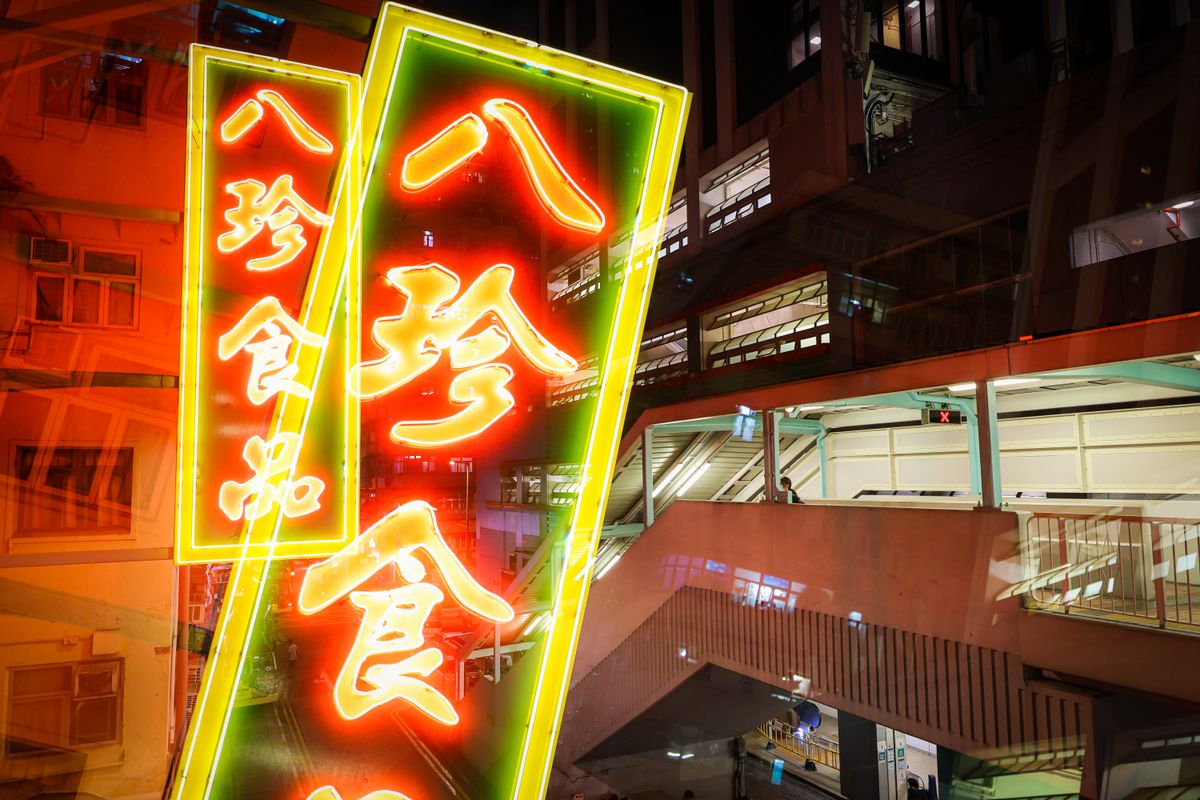
6. 弊啦
bai6 laa1 — Jyutping romanisation
Meaning: Oh no / we're screwed / bad news.
Explanation: 弊 literally means "bad" or "harmful" — add the sentence-final 啦 and it becomes the panic sound of realising something has gone wrong. You forgot the deadline, you left the stove on, the MTR is delayed and you're about to be late. 弊啦.
7. 慘啦
caam2 laa1 — Jyutping romanisation
Meaning: That's tragic / awful / miserable.
Explanation: 慘 literally means "miserable" or "tragic". 慘啦 is a step up from 弊啦 — usually said about someone else's fate ("that's tragic for them"), or dramatically about your own. Slightly theatrical, always relatable.
8. 頂
ding2 — Jyutping romanisation
Meaning: Ugh / dammit — the sound of exasperation.
Explanation: 頂 literally means "to endure" or "push against". As an interjection it's the sigh you make when something is annoying but not catastrophic — the printer jammed again, the taxi passed you, someone cut the yum cha queue. Softer than a curse, sharper than a sigh.
If you've ever muttered 頂 at your desk at 7pm, our 準時收工 Clock Out On Time heavyweight tee is the wearable version of that exact feeling.
9. 呀
aa3 — Jyutping romanisation
Meaning: Ah / oh — realisation, recognition, or attention-grabbing.
Explanation: 呀 does double duty as an exclamation and as a sentence-final particle that softens tone. When it stands alone at the start of a sentence, it's the "ah" of sudden memory — "Ah, I forgot to tell you..." or "Oh, right, that's what you meant."
10. 嘩
waa4 — Jyutping romanisation
Meaning: Whoa / big wow — extended awe or dramatic reaction.
Explanation: If 哇 is a short crack, 嘩 is the long stretched sibling — used for genuinely being impressed, or for dramatic emphasis when the price of something is outrageous. Hong Kongers pull out 嘩 when the wedding banquet bill arrives.
Why these matter for the diaspora
For overseas Cantonese, these particles are usually the last thing to go. You might forget how to say certain foods, mix up tones, or lose entire vocabulary chunks — but the 哇 you make when yeh-yeh tells a good story, or the 弊啦 when you realise you missed dim sum, stays wired in for life. That's because they're not learned so much as absorbed. They're the shape of Cantonese emotional life, packed into a single sound.
Every one of these ten belongs on a Cantonese person's tongue every single day — right alongside our 阿吱阿咗 Always Whining oversized tee, which puts the same everyday complaint energy on fabric.
📖 Related Articles
👉 Shop the Cantonese Slang collection
Modern streetwear for the global Cantonese community.