

Walk into Lung Wah Hotel in Sha Tin on a Saturday afternoon and the first thing that hits you is the smell — soy sauce, Shaoxing wine, five-spice, the sweet char of skin that has been dunked, blow-dried, and roasted until it crackles. The second thing you see is a wall of autographed photos. Bruce Lee at a table in the 1960s. A dozen Hong Kong directors, actors, generals, politicians. Every single one of them came for the same thing: the roast pigeon.
Cantonese roast pigeon — 乳鴿, jyu5 gaap3 — is one of those dishes that sounds strange in English and reads obvious in Cantonese. Of course it's pigeon. Of course it's roasted. Of course it's one of the proudest items on a traditional Hong Kong wedding banquet menu. In Guangdong and Hong Kong, pigeon has been a prestige meat for centuries. The Sha Tin version — crackled skin, juicy breast, served with a plate of prawn crackers and a dish of five-spice salt — is the one most Hong Kongers consider the standard.
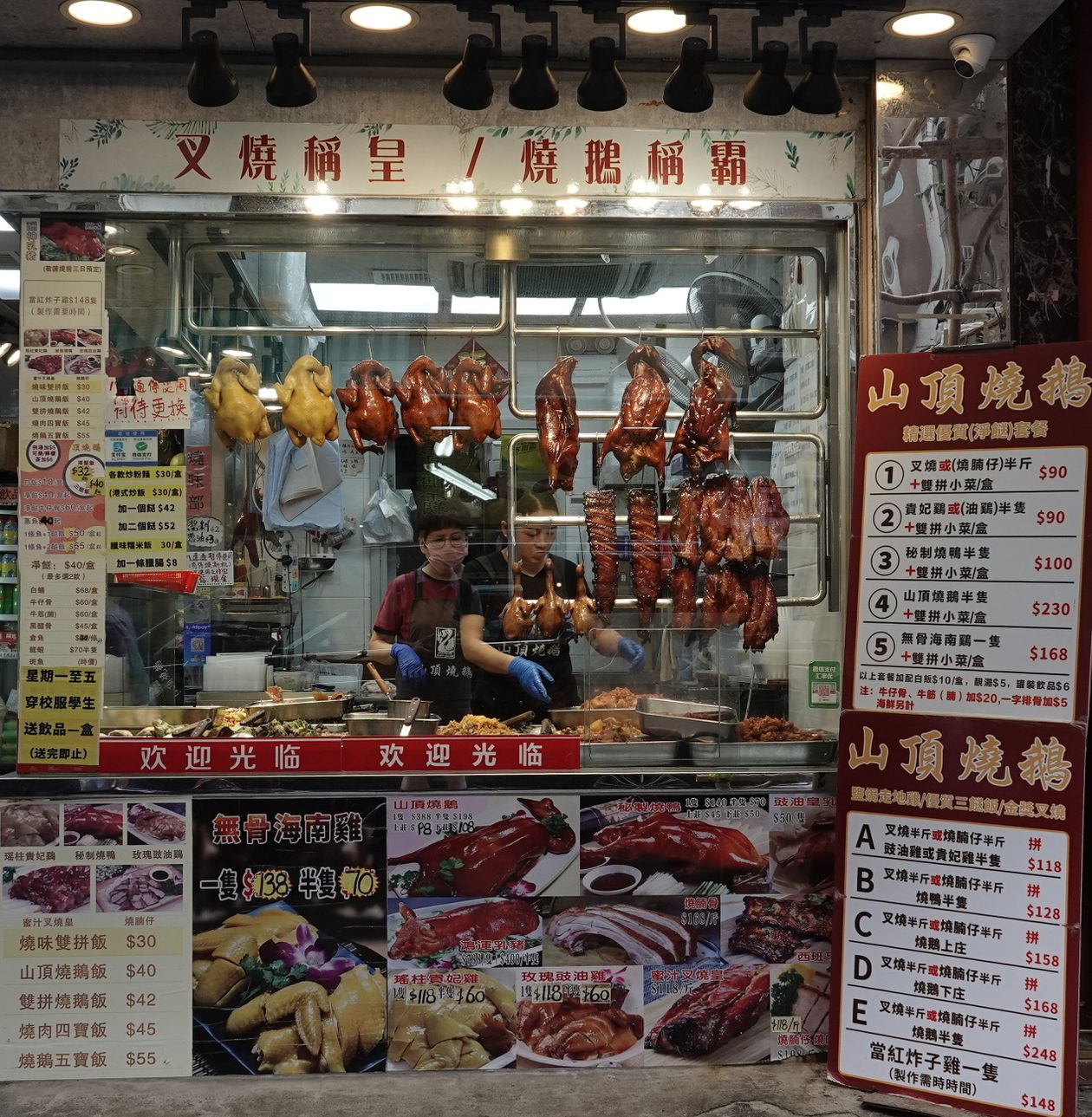
Why Sha Tin became the pigeon capital of Hong Kong
Sha Tin wasn't always a satellite town of highways and MTR stations. Through the 1930s, 40s, and 50s it was semi-rural — paddy fields, fish ponds, farms, holiday retreats for well-off Hong Kong families escaping the city. Lung Wah Hotel opened as a rural getaway in 1938, with guest rooms upstairs and a restaurant on the ground floor. The restaurant served roast pigeon as a specialty from the start, raising their own birds on-site. By the 1960s the hotel rooms were an afterthought; by 1985 the rooms had closed entirely. The restaurant kept going. The pigeon kept selling.
Three things made Sha Tin the obvious pigeon destination. First, the local farms could raise pigeons year-round in the subtropical New Territories climate. Second, the KCR railway (now the East Rail Line) opened Sha Tin as a day-trip from Kowloon — families would spend an afternoon at Che Kung Temple, walk along the river, and finish with roast pigeon. Third, the restaurateurs of the New Territories developed a specific style — marinated in Shaoxing wine, soy, maltose and five-spice, air-dried, then plunged into hot oil to crisp the skin — that became the Hong Kong gold standard.
If dinner-table traditions like this are part of your DNA, we built an entire tee around them: 食飯 Dinner is Ready embroidered heavyweight tee.
The Bruce Lee connection — and the walls of autographed photos
The best-known regular of Lung Wah Hotel was Bruce Lee. He visited often enough in the 1960s and early 70s that the restaurant walls are now a kind of informal museum — framed photos, press clippings, oil paintings of him at the table. The restaurant has leaned into that heritage. Walk the staircase and you pass decades of Hong Kong cinema history: directors from the Shaw Brothers era, action stars from the Golden Harvest years, kung fu grandmasters, Cantopop singers, politicians.
The dining room itself has barely changed in sixty years. Round tables with lazy Susans. Red tablecloths. Vintage Chinese screens. A pond with gold-and-black koi in the courtyard. If you've seen a Hong Kong period drama set in the 1960s, you've probably seen a dining room that was modelled on this one.
How Cantonese roast pigeon is actually made
The traditional Hong Kong method is a close cousin of how you make a proper Peking duck. The bird — usually a milk-fed squab around 28 days old — is cleaned, blanched briefly in hot water to tighten the skin, then marinated in a mixture of Shaoxing wine, soy sauce, five-spice powder, star anise, and sometimes a touch of ginger and spring onion. The marinade is dried onto the skin with a glaze of maltose or honey diluted in vinegar, then the bird is hung in a cool, breezy spot to air-dry for several hours. The dry, glazed skin is what crisps up when the pigeon hits oil.
The final step is deep-frying rather than oven-roasting. The pigeon is lowered into hot oil and basted continuously until the skin blisters into a dark mahogany lacquer. The flesh underneath stays juicy — bordering on pink at the breast, which is how a proper Cantonese chef serves it. On the plate, the bird is halved along the spine, served with a saucer of five-spice salt (椒鹽) and a lemon wedge. You eat it with your hands.
For other classic Cantonese roast meats on your table, see our deep dive on char siu, Guangdong's lacquered BBQ pork, and the piece on Kau Kee's hundred-year beef brisket noodles on Gough Street.
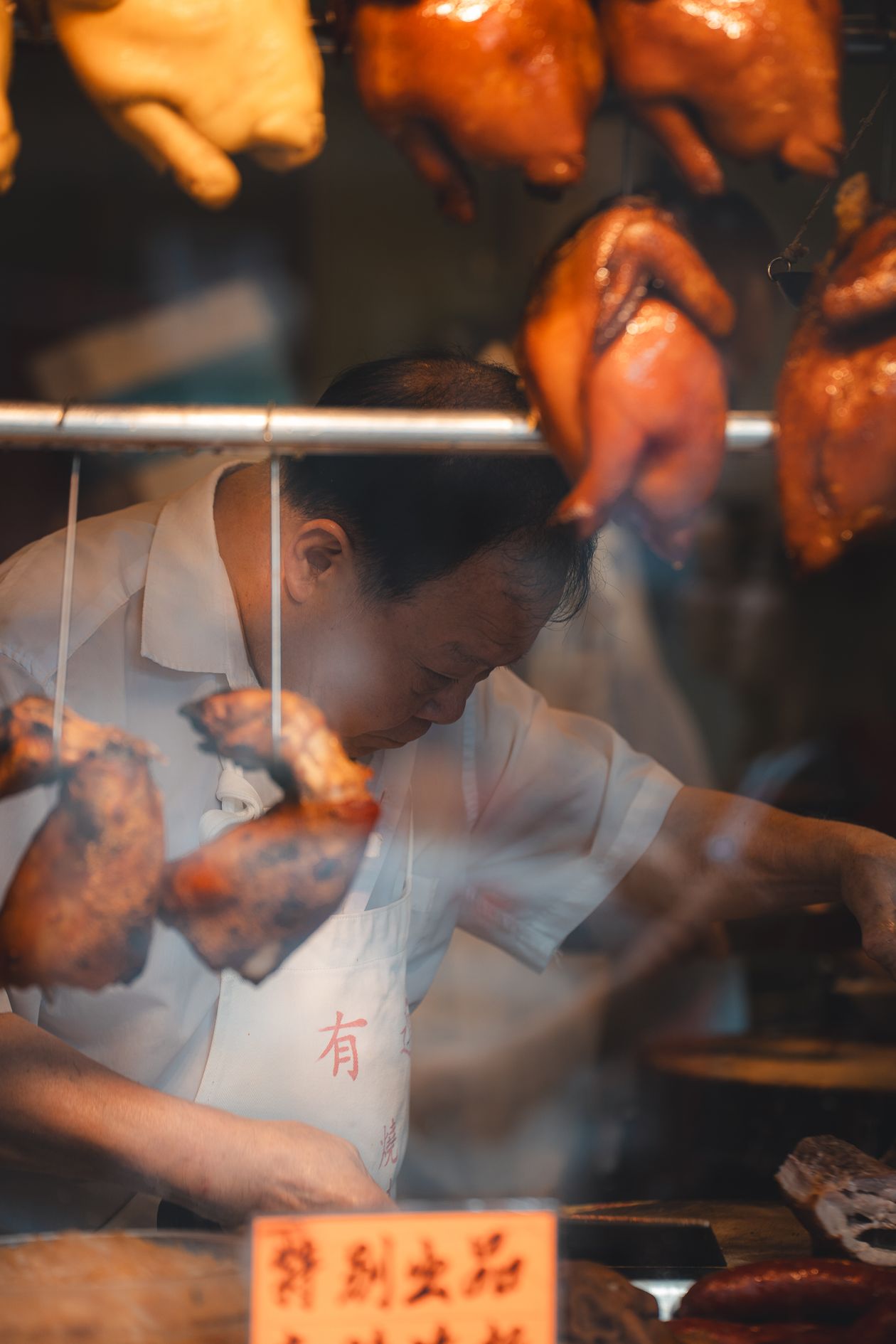
Why pigeon is a wedding and banquet dish
On a Cantonese wedding or banquet menu, roast pigeon is never a mystery choice — it is a status marker. Pigeon takes labour. Each bird feeds one or two people. Serving it at a banquet is a quiet way of saying "we are not cutting corners on your table". A dozen roast pigeons for a dozen guests is a message about care and generosity.
The dish also has symbolic weight. In Cantonese banquet tradition, poultry stands for prosperity, and the plural birds laid out at a round table nod to abundance. That is why you'll still see roast pigeon served at the end of a Cantonese wedding dinner course — right before the sweet soup — and why older Cantonese uncles still argue, over tea, about which restaurant in the New Territories has the best crackle this year. If you want to understand how deeply food is tied to Cantonese family rituals, start with the finger-tap tradition at a yum cha table.
Where to try Cantonese roast pigeon today
Lung Wah Hotel is still open in Sha Tin. The restaurant kept operating long after the guest rooms closed in 1985, and the roast pigeon is still the headline dish. Beyond Lung Wah, roast pigeon is still a specialty across the New Territories — Yuen Long, Tai Po, and parts of the walled villages still have decades-old restaurants that build their menu around the bird.
For diaspora Cantonese looking for the dish outside Hong Kong — the Chinatowns of Vancouver, Toronto, Flushing, San Gabriel Valley and Richmond all have at least one old-school Cantonese banquet restaurant doing a credible version. Ask any 嘴刁 (zeoi2 diu1, picky) auntie in your family. She will have an opinion.
Our 叉燒 Char Siu oversized tee was built for exactly this kind of eater — the diaspora kid who grew up on roast meats and still argues about which siu mei shop in their city has the best crackle.
📖 Related Articles
👉 Shop the Mami Says collection
Modern streetwear for the global Cantonese community.