

In 2008, in the thin mountain air of Bhutan, two of Hong Kong cinema's most private people got married on a hillside. The groom was Tony Leung Chiu-wai, holder of a Cannes Best Actor award and a face the world knew. The bride wore red. She was Carina Lau Ka-ling (劉嘉玲) — Suzhou-born, Hong Kong-made, and by that point already two decades deep into a career that had survived abuse, scandal, and a cinematic industry that didn't quite know what to do with a woman who refused to play small.
Carina Lau's biography reads like a Hong Kong film plot: the mainland girl who arrived in Kowloon at twelve, had to learn Cantonese from scratch, fought her way into TVB's acting academy, and emerged as one of the most awarded actresses of her generation. Along the way she survived the kind of thing most careers don't survive — and came out the other side as the most elegant screen presence in Cantonese cinema.
From Suzhou to the TVB Academy
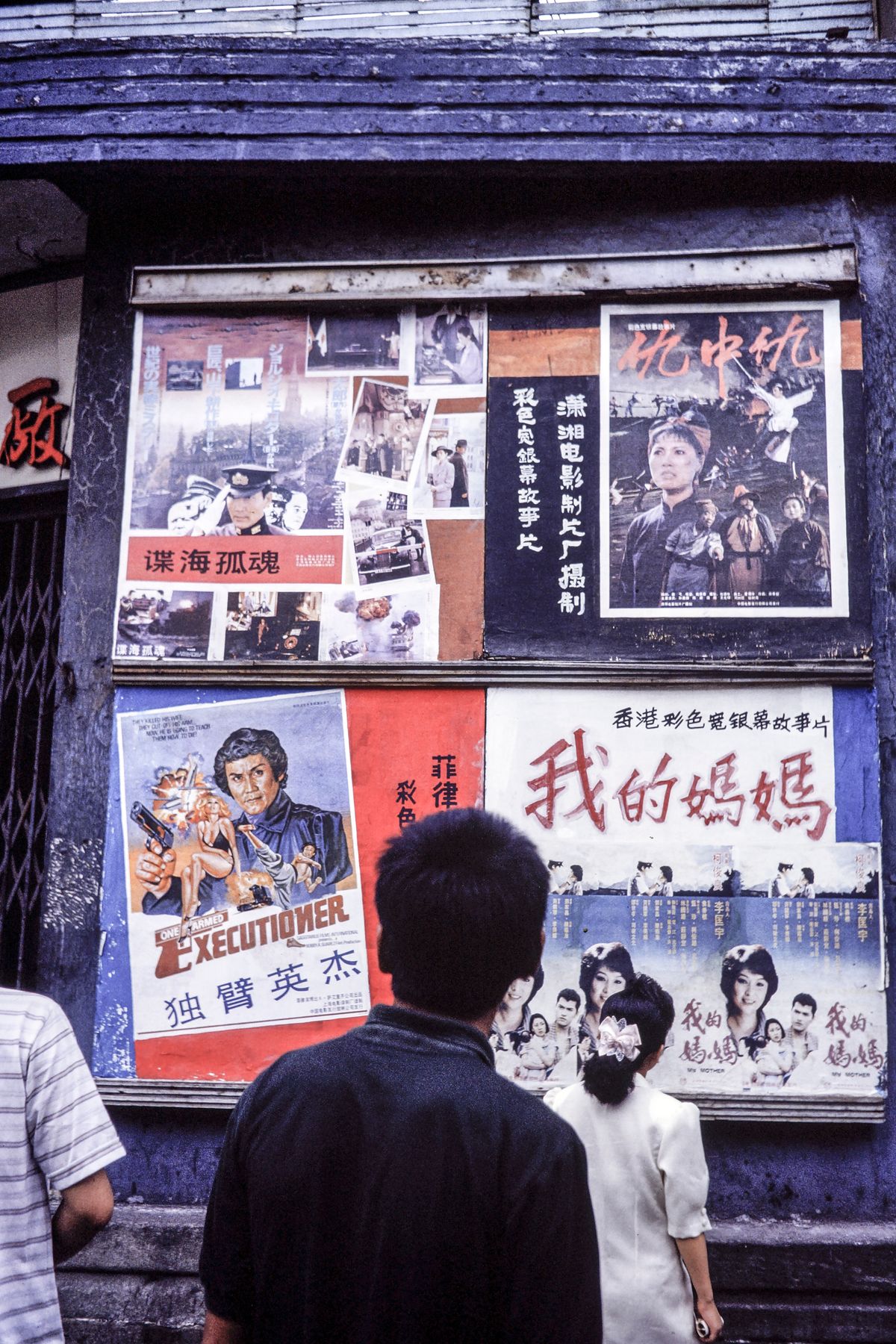
Carina Lau was born in Suzhou, Jiangsu, in December 1965 — not in Hong Kong at all. Her father ran afoul of the Cultural Revolution, and she and her mother moved to Hong Kong in 1978 when she was twelve, reuniting with him in Kowloon. For a Cantonese learner this is unusual: most of the stars who dominate 1980s Hong Kong cinema grew up speaking the language from birth. Carina had to learn it in secondary school, under the kind of accent-correction scrutiny that only Hong Kong classrooms deliver.
In 1983 she joined TVB's acting training class — the same assembly line that produced Chow Yun-fat, Tony Leung, Stephen Chow, and most of Cantopop. Her classmates included Tony Leung, whom she would marry twenty-five years later. She debuted the following year in the TV series The Clones. By the late 1980s she had broken out via the hugely popular 1989 series Looking Back in Anger, which cemented her as a leading lady. Her later TVB roles in The Duke of Mount Deer and Police Cadet added range.
What was unusual about her screen presence from the start was control. Carina didn't play the Anita Mui-style working-class heroine and she didn't play the ingenue. She played women who held something back — a secret, an edge, an understanding of exactly what room they had just walked into.
🎬 The Wong Kar-wai Chapter
Her career took a cinematic turn when Wong Kar-wai cast her in 1990's Days of Being Wild, Hong Kong New Wave's defining film. Her performance as the brittle, abandoned Lulu won her Best Actress at the Nantes Three Continents Festival — a European recognition rare for a Cantonese actress at the time. She would reunite with Wong fourteen years later in 2046 (2004), reprising the same character — an eerie, elegiac echo of the role that made her name.
💍 The Bhutan Wedding That Was a Statement
On 21 July 2008, after twenty years together, Carina married Tony Leung in Bhutan — not at a Causeway Bay hotel, not at the Peninsula, but in the Himalayas. Reports put the celebration cost over HK$30 million. The couple is famously private: no joint interviews, no gossip-magazine tours. They've been together through two of Hong Kong cinema's most intense decades, and have kept the relationship almost entirely out of the lens.
🏆 The Hong Kong Film Award Nobody Expected
In 2011 she won Best Actress at the Hong Kong Film Awards for Tsui Hark's Detective Dee and the Mystery of the Phantom Flame (2010), playing Empress Wu Zetian — a performance that silenced the entire "she's just a glamour girl" discourse that had followed her for twenty-five years. By then she'd already won the Golden Rooster Best Actress in 2006 for Curiosity Kills the Cat. The awards came late — which, in Hong Kong cinema, is often how you know they were deserved.
🌐 The Reinvention: Business and Social Media
In her fifties and sixties, Carina pivoted. She launched beauty and lifestyle brands, became a prolific social-media presence on Weibo and Instagram, and transformed herself into something Hong Kong cinema rarely allows older actresses to become: a continued commercial force. She still acts selectively — but she is also, increasingly, a brand of her own. The glamour never went away. It just moved platforms.
Why Her Elegance Still Matters
Hong Kong cinema has a lot of beautiful actresses. Carina was never only beautiful. What she had — what every one of her Wong Kar-wai characters leaned on — was a specific Cantonese kind of composure: the ability to hold a very long pause, the willingness to say nothing when it mattered, the discipline to deliver one line of dialogue and leave the rest to a cigarette and a mirror. In a cinema full of noise, she was quiet in a way that filled a whole frame.
That composure, in Cantonese, has a name: 靓爆鏡 (leng3 baau3 geng3) — "so good-looking they break the mirror". It's the compliment Hong Kong reserves for presence, not just face. We built a 靓爆鏡 Mirror Breaks sweatshirt around the phrase for exactly this reason.
A Cantonese Word She Lived
硬頸
ngaang6 geng2 — Jyutping romanisation
Meaning: Hard-necked. Stubborn in a way that will not bend to a bad situation.
Explanation: Carina never gave the press the apology or the breakdown they wanted — not during the career-defining pressure of 1990, not later, not ever. She just kept working. That specific quality has a Cantonese name, and if you've met Hakka Cantonese grandmothers you know it instantly: 硬頸.
Carina Lau's career is the Cantonese 硬頸 principle translated into cinema. If you want to wear the attitude, we made a 硬頸 Hard Neck sweatshirt that holds the same posture.
Why She Still Matters to the Diaspora
Carina Lau's audience is now spread from Vancouver to Melbourne to London. Half of them know her through Days of Being Wild and 2046; the other half discovered her through Detective Dee and her Weibo lifestyle posts. Both halves see the same thing: a Cantonese woman who built an unapologetic life on her own terms, in a cinema industry that still, mostly, refuses to let women age on screen. For Cantonese kids in the diaspora watching their mothers quietly do the same thing — holding households and businesses together while refusing to be pitied — Carina is a model of what that discipline can look like with a red lipstick on it.
She's also one of the last stars of a Hong Kong cinema era that built the city's global cultural footprint. When Tony Leung finally won his Cannes Best Actor for In the Mood for Love, she was in the room. When Wong Kar-wai makes his next film, she is almost certainly in the cast list. She has survived to be a living reference point — which, in an industry that eats its stars, is itself a form of victory.
In Cantonese culture, there's a quiet respect reserved for people who did not flinch — not just men who threw punches, but women who held the room. Carina Lau is a case study in that specific kind of grace. The Cantonese streetwear we build at CANTONESE GUY is for exactly this generation of diaspora kids: the ones raised by hard-necked parents and shaped by stars who refused to be small.
📖 Related Articles
👉 Shop the Best Sellers collection
Modern streetwear for the global Cantonese community.