

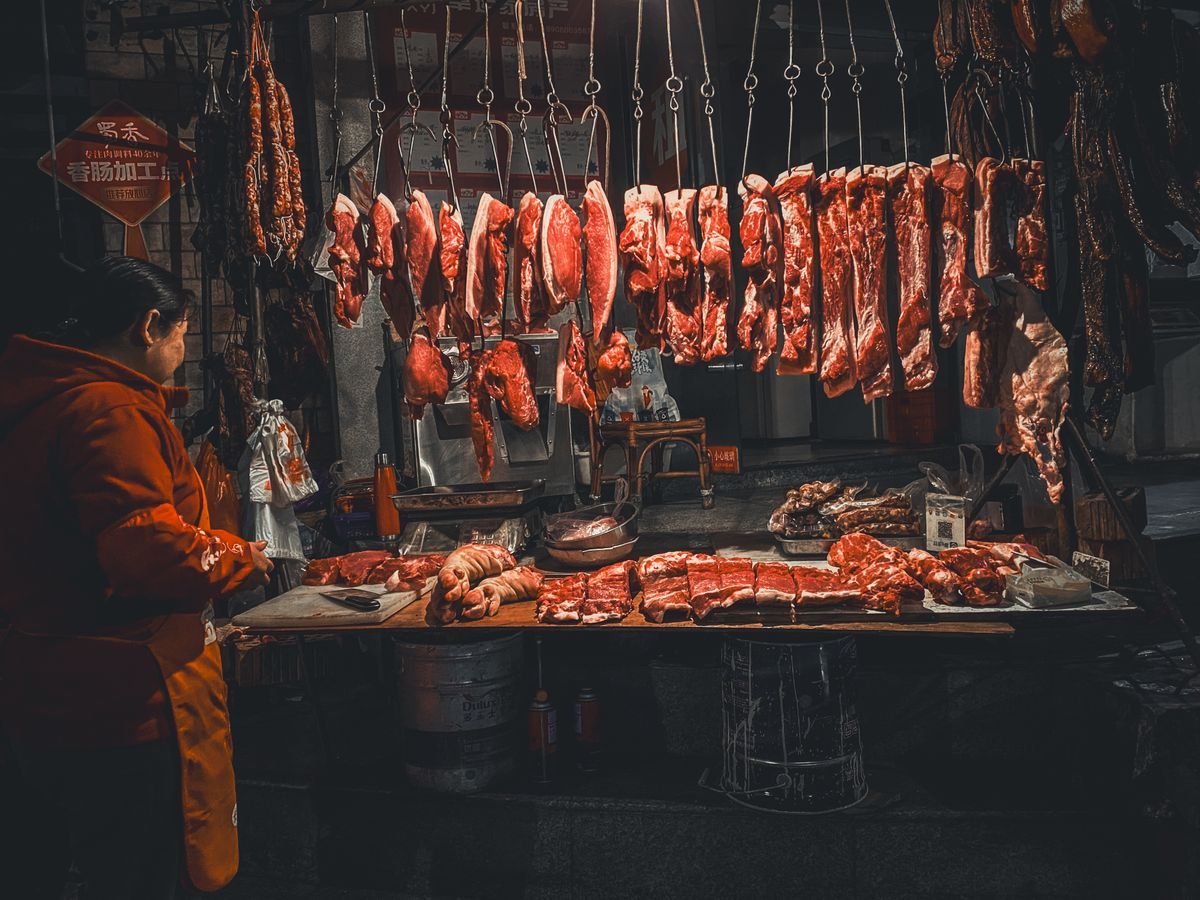
Walk into any Cantonese restaurant or siu mei shop and you will see it immediately: long strips of glistening, lacquered pork hanging in the window, their mahogany-red surface catching the light. This is 叉燒 — char siu — one of the most iconic and beloved preparations in all of Cantonese cuisine. Part BBQ technique, part cultural ritual, char siu is the dish that has travelled with Cantonese people to every corner of the world.
What Does Char Siu Actually Mean?
The name tells the whole story. 叉 (caa1) means fork or skewer, and 燒 (siu1) means to roast over fire. Char siu is, literally, "fork roasted" pork — a name that dates back to the traditional cooking method of threading marinated pork strips onto long metal skewers and hanging them inside a wood or charcoal oven. The meat rotated gently in the heat, basting in its own juices and the aromatic smoke below. Modern gas ovens have largely replaced this method in commercial kitchens, but the name — and the soul — of the original technique remain intact.
Char siu belongs to the broader family of siu mei (燒味) — Cantonese roast meats that include crispy-skin roast pork (siu juk), soy sauce chicken, and roast duck. Among all of them, char siu is arguably the most versatile and universally loved, appearing in dim sum, fried rice, wonton noodle soup, steamed buns, and as the centrepiece of a simple rice plate eaten at a lunch counter in Sham Shui Po.
The Marinade: Where the Magic Lives
Ask any Cantonese cook what makes char siu great and the answer will always come back to the marinade. A proper char siu marinade is a deeply layered mixture of contrasting elements that, together, produce something greater than the sum of their parts. The core components are soy sauce (for savouriness and colour), hoisin sauce (for sweetness and body), honey or maltose (for the lacquered glaze), five-spice powder (for warmth and complexity), Shaoxing rice wine (for depth and aroma), and fermented red bean curd (nan ru — 南乳) for the characteristic deep red hue and umami richness.
The pork is typically marinated for at least several hours, and ideally overnight. As the marinade penetrates the meat, the sugars begin to interact with the proteins in a slow, anticipatory way — laying the groundwork for the glossy caramelisation that will happen in the oven. The best cuts for char siu are pork shoulder (sometimes called pork butt), which has just enough fat to stay moist through high-heat roasting, and pork belly, which produces a richer, fattier result favoured by those who want maximum flavour.
The Basting Process: Patience and Timing
One of the most important secrets of restaurant-quality char siu is the basting. The pork is not simply roasted once and served — it is glazed with honey and reserved marinade multiple times during cooking, each coat building on the last to create that thick, sticky, intensely flavoured crust. The final few minutes of cooking are done at high heat, causing the sugars in the glaze to caramelise rapidly and produce the signature char siu colour: a deep, burnished red-brown with slightly charred edges that carry a smoky, sweet bite.
The word "char" in char siu is not accidental — those caramelised, slightly burnt edges are not a flaw. They are a feature. The contrast between the sticky, sweet glaze and the deeper savouriness beneath is precisely what makes char siu so compelling. A good piece of char siu should have visible char marks, a lacquered surface that reflects the light, and a cross-section that shows a graduated colour from the mahogany crust to the pink, juicy centre.
Char Siu as Cultural Currency
Char siu is more than food. For the Cantonese diaspora, it is a sensory anchor to home. The smell of siu mei roasting in a kitchen in Vancouver, or the familiar sight of hanging char siu in a Richmond, BC restaurant window, triggers an immediate and powerful sense of cultural belonging. Generations of Cantonese families have been raised on the ritual of the Sunday trip to the siu mei shop, selecting pieces with careful deliberation — more fat or less, the end piece or the middle — and carrying it home wrapped in butcher paper.
Char siu has also become a canvas for cultural evolution. Diaspora chefs and home cooks have introduced regional variations: some use fermented shrimp paste, others replace honey with raw cane sugar, and adventurous cooks have experimented with char siu applied to chicken, tofu, and even jackfruit for plant-based versions. But the Cantonese original — pork shoulder, overnight marinade, high-heat basting — remains the gold standard by which all variations are measured.
Char Siu in Dim Sum: The Beloved Char Siu Bao
Perhaps the most famous expression of char siu beyond the roasting rack is the 叉燒包 (caa1 siu1 baau1) — the char siu bao, or BBQ pork bun. These soft, pillowy steamed buns filled with diced char siu in a sweet, sticky sauce are a cornerstone of any dim sum meal. The baked version, glazed and golden with a soft, enriched dough, is equally beloved. For many people around the world, char siu bao was their first encounter with Cantonese cuisine — and it remains a deeply personal food, carrying the memory of early dim sum mornings with grandparents and the perfume of the steamer cart rolling by.
To understand char siu is to understand a great deal about Cantonese culinary philosophy: the balance of sweet and savoury, the respect for technique, the patience of a proper marinade, and the belief that even humble ingredients — a shoulder of pork, some soy sauce, a little honey — can become something transcendent in the right hands. Explore more about Cantonese roast meat culture in our post on 燒味 Siu Mei: The Art and Soul of Cantonese Roast Meats, and learn more about the broader Cantonese food culture beyond dim sum.
📖 Related Articles
👉 Shop Cantonese Guy — Modern Streetwear for the Global Cantonese Community