

In 1977, a 20-year-old kid in bell-bottoms walked onto the stage of RTV's Asian Song Contest, opened his mouth to sing an Elton John number, and sent the crowd into something close to a riot. People booed. Critics said his voice sounded chicken-like. One of them wrote that he should go home and try something else. He finished first runner-up in the Hong Kong round and walked off the stage into a decade of near-failure. Twenty years later, that same kid would stand on a Hong Kong Coliseum stage in a Jean-Paul Gaultier angel costume, dedicate a love song to his mother and to the man he had loved since childhood, and change what it meant to be a Cantonese superstar forever.
That kid was Leslie Cheung Kwok-wing (張國榮). Everyone in Hong Kong just called him 哥哥 — big brother. And more than two decades after his death, the city still does.
The Hakka tailor's youngest son
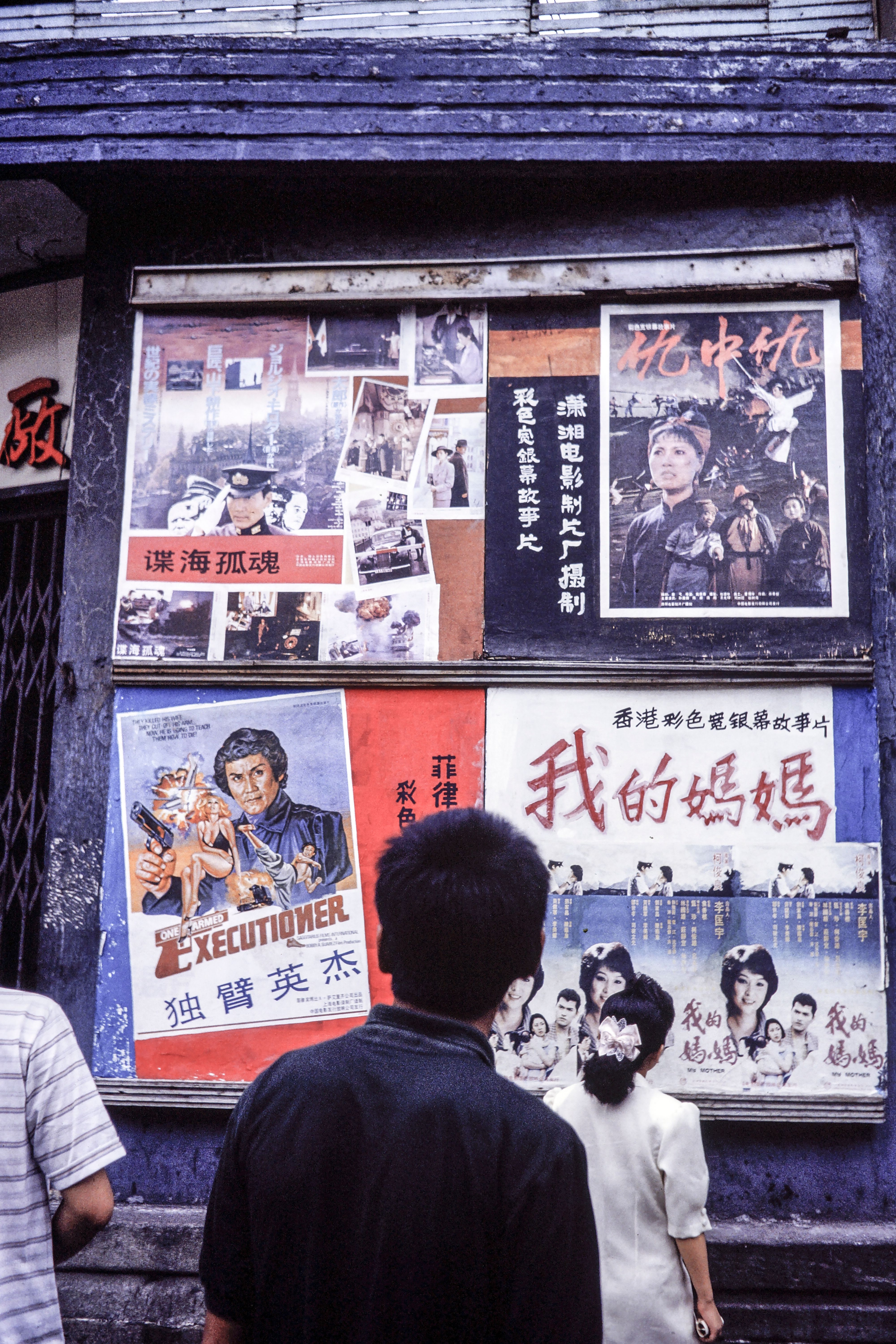
Leslie was born in Kowloon on 12 September 1956, the youngest of ten children in a middle-class Hakka family. His father was a renowned Hong Kong tailor whose private clients included Alfred Hitchcock, Marlon Brando and Cary Grant. By any measure the family was comfortable. By Leslie's own account, it was not warm. He grew up emotionally estranged from his father and most of his siblings and would later describe the person he had loved most in that house as his grandmother. He was sent to boarding school in England as a teenager and only returned to Hong Kong in 1976, after his father fell ill. His first real job was selling Levi's jeans. Within a year he was on television, getting booed. Within a decade he was the biggest male star in Cantopop.
His 1984 single "Monica" is the song most Hong Kongers point to as the moment it all clicked — a Japanese cover with a brass-fuelled chorus that lit up every roller rink and TVB variety show from Causeway Bay to Vancouver. He would release more than 40 albums over a 26-year career, and he is still, by nearly every Cantopop historian's reckoning, one of the founding fathers of the genre.
The things most people miss
🎤 He was booed off the stage before he was adored
The first time Leslie performed in public, in 1977, he threw his hat into the audience as a theatrical gesture. The audience threw it back. Critics called his voice "chicken-like." His first record label, Polydor, released him before anything stuck. For the first five years of his career he was a punchline on Hong Kong talk shows. It took signing with Capital Artists in 1982 and the arrival of "Monica" in 1984 for Hong Kong to realise what it had been laughing at.
🎬 He almost quit acting after Days of Being Wild
His portrayal of the drifting, loveless Yuddy in Wong Kar-wai's 1990 Days of Being Wild won him the Hong Kong Film Award for Best Actor — but the shoot was so punishing and the film initially such a commercial flop that Leslie seriously considered walking away from film. Instead, he stayed for Farewell My Concubine three years later. His turn as the opera singer Cheng Dieyi earned a Best Actor nomination at Cannes and remains, for most critics, the single greatest performance by a Hong Kong actor in Chinese cinema.
💔 The Passion Tour broke records — and broke him too
His 2000–2001 Passion Tour, costumed by Jean-Paul Gaultier around a concept he called "From Angel to Devil," broke attendance records across Asia and made him the first foreign artist to hold 16 concerts in Japan. In Hong Kong, the local press tore him apart for its gender-crossing imagery. Both Leslie and his manager later said the hostile reception at home was part of what tipped him into the clinical depression that followed. He had always given Hong Kong everything. Hong Kong, that year, gave him very little back.
The 1997 concert that changed Hong Kong
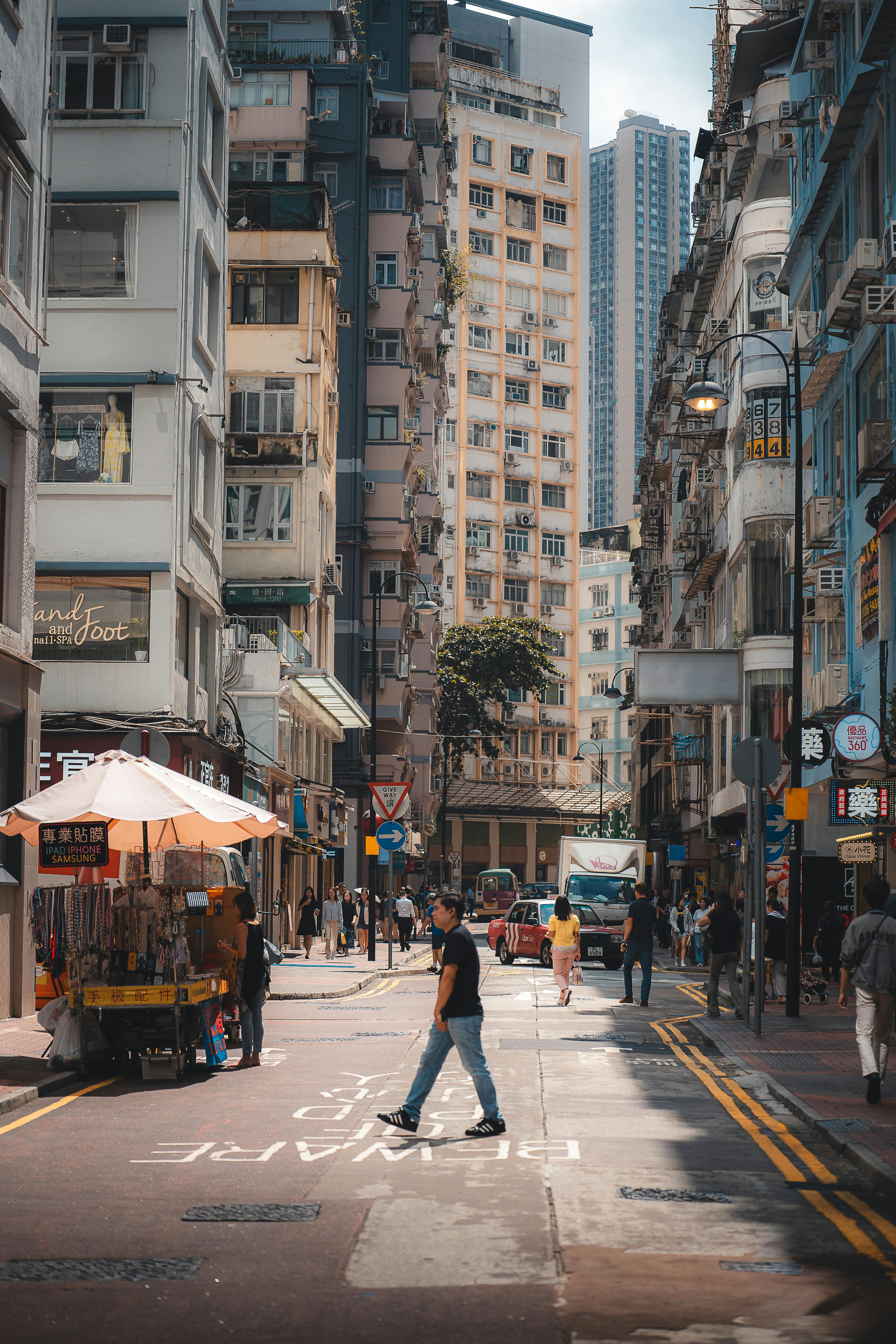
On a January night at the Hong Kong Coliseum in 1997, in the middle of a sold-out show, Leslie dedicated a song to two people: his mother, and his lifelong partner Daffy Tong Hok-tak. The song was 月亮代表我的心 — "The Moon Represents My Heart." Tong was a childhood friend turned banker turned lifelong partner. The two had known each other since Leslie's teenage years. Nobody in the Chinese-speaking world of that scale had ever done anything like it on a public stage. In an interview afterwards he described his orientation in his own careful terms: his mind, he said, was bisexual. For a generation of Cantonese LGBT kids watching from Vancouver to Sydney, he was the first public figure who looked like them and belonged to them.
If you want to feel what Hong Kong looked like in that moment, the glamour of its late-golden-age cinema and the kind of streetwear that reads as a love letter to it, our bestseller collection is where modern Cantonese identity lives on fabric — and the 靚爆鏡 Mirror Breaks sweatshirt borrows a phrase pure Hong Kong icons made famous.
A Cantonese phrase he made the whole city say
哥哥
go1 go1 — Jyutping romanisation
Meaning: Big brother. For an entire generation, it also means one person — Leslie.
Explanation: Leslie's nickname inside the industry became his nickname across all of Cantonese pop culture. Fans still refer to him only as 哥哥. In Hong Kong you can say "every April 1st I miss 哥哥" and nobody will mistake who you mean.
If you want to carry a slice of that Hong Kong cinema-and-identity energy with you, our 廣東仔 CANTONESE GUY oversized tee is the modern diaspora's way of saying exactly who they are, loudly.
April 1, 2003
On the evening of 1 April 2003, in a Hong Kong being quietly ravaged by the SARS epidemic, Leslie Cheung died by suicide, leaping from the 24th floor of the Mandarin Oriental in Central. He was 46. His sister later disclosed that he had been diagnosed with clinical depression caused by a chemical imbalance in the brain, and that he had been reluctant to continue the medication he had been prescribed. "Why am I depressed?" he had once asked. "I have money and so many people love me." The city went into a form of mourning it had reserved for very few people. Every year on 1 April, fans still gather outside the Mandarin to leave flowers.
Why 哥哥 still matters
To talk about Leslie Cheung is to talk about the version of Hong Kong that stopped existing a long time ago — the one with Cantopop albums shipping 300,000 copies, with cinema that could out-swagger Hollywood, with a confidence in its own identity that it has had to rebuild in different shapes since. He showed that a Cantonese kid who got booed at twenty could win Cannes recognition at thirty-six. He showed that gender was something to play with on stage, not apologise for. He showed that the words 哥哥, said with real feeling, could belong to one person for a whole city.
For the global Cantonese diaspora — the kids in Richmond, Toronto, Flushing, Monterey Park and West London who have grown up on YouTube uploads of the Passion Tour — Leslie is the proof that being Cantonese and being yourself were never two different projects. If you want to read more about the cinema that raised him, our piece on the Golden Age of Hong Kong cinema is the natural next stop.
📖 Related Articles
👉 Shop the Best Seller collection
Modern streetwear for the global Cantonese community.