

恭喜發財 — Gung Hei Fat Choy. It is the phrase that defines the season: a wish for prosperity, health, and abundance that Cantonese people have exchanged at the start of the lunar year for generations. But the Cantonese Lunar New Year is not simply a phrase and a red packet. It is a weeks-long sequence of rituals, foods, gatherings, and gestures — each carrying meaning accumulated over centuries of Guangdong culture. This is a guide to the traditions that make the Cantonese New Year unlike any other celebration in the world.
The Flower Markets: Peach Blossoms and the Scent of New Beginnings
One of the most distinctively Cantonese New Year traditions is the flower market (年花市 / nin4 faa1 si5). In the days before Lunar New Year, outdoor markets spring up across Guangdong, Hong Kong, and Macau, selling flowers, plants, and decorations of every kind. The atmosphere is festive, fragrant, and dense with families choosing their blooms with a sense of occasion. Victoria Park in Hong Kong transforms into one of the city's most beloved New Year events, drawing hundreds of thousands of visitors who browse stalls selling not just flowers but snacks, toys, calligraphy, and New Year decorations.
The most symbolic purchase at any Cantonese flower market is peach blossom (桃花 / tou4 faa1). In Guangdong culture, peach blossoms symbolise luck, romance, and new beginnings — bringing a branch of peach blossom into your home at New Year is an invitation for good fortune and love to enter with it. Cherry blossoms, narcissus (水仙9 / seoi2 sin1), and Kumquat trees (金橘 / gam1 gyut1, homophone for "golden orange") are equally prized — the kumquat's golden fruit representing the gold you hope will flow through your door in the coming year.
The Reunion Dinner: The Most Important Meal of the Year
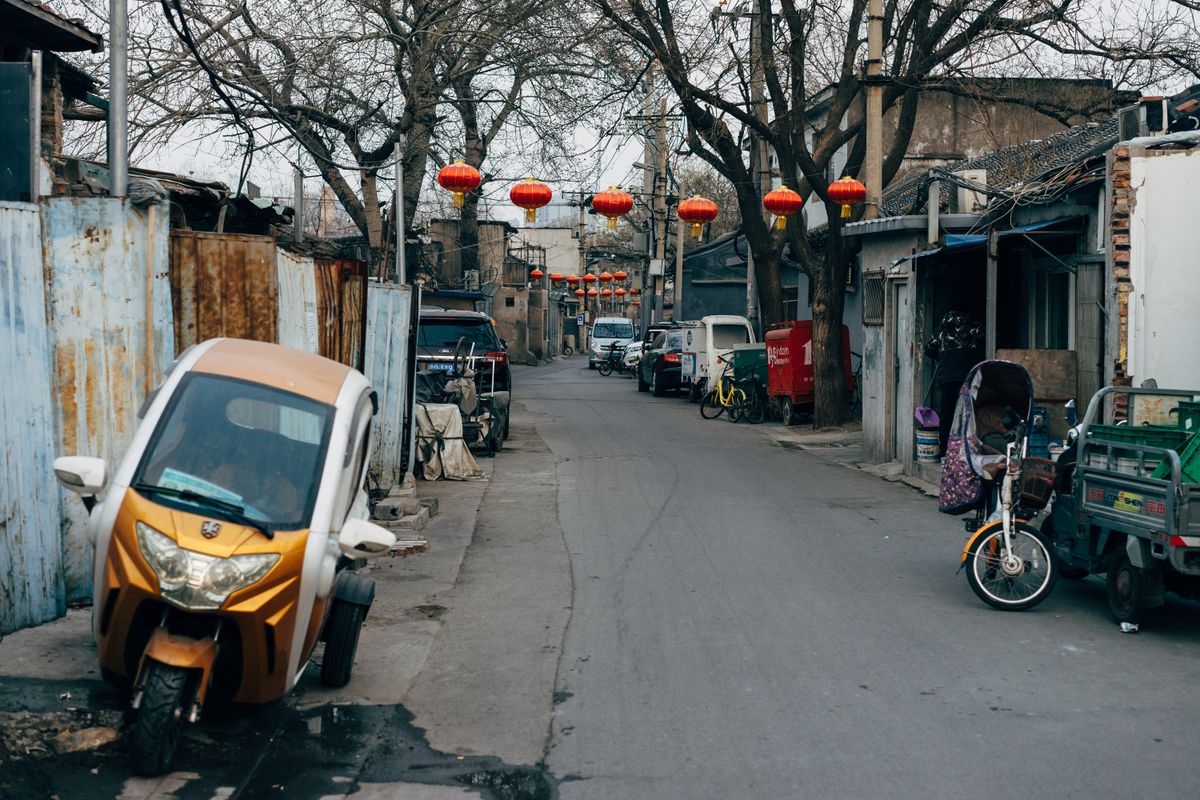
New Year's Eve in Guangdong means one thing above all else: the 團年飯 (tyun4 nin4 faan6) — the reunion dinner. This is the meal at which the entire family gathers, often traveling from far away to be at the same table. It is the Cantonese equivalent of Christmas dinner, Thanksgiving, and the most meaningful family event of the year, combined. The dishes served are chosen not just for taste but for the blessings their names and appearances carry.
Steamed whole fish must be served — because 魚 (fish / jyu2) is a homophone for 餘 (“remainder” / jyu4), and having a surplus — more than enough — is a central aspiration of the New Year. The fish is placed on the table whole, from head to tail, as an unbroken symbol of completeness and abundance. Lettuce wraps are served because 生菜 (“living greens”) sounds like 生財 (“growing wealth”). Fat choy (發菜 / faat3 coi3) — dried black moss — appears in many dishes because its name is a perfect homophone for 發財 (“prosper”). Every bite is a small prayer for the year ahead.
Lai See: The Red Packets That Say Everything
On New Year's Day, married couples give 利是 (lei6 si6) — red packets containing money — to children, young people, and unmarried adults. The red envelope is a vessel of luck: the colour red wards off evil spirits and bad fortune, and the money inside is a wish for prosperity. In Cantonese culture, the giving of lai see is inseparable from a warm greeting — 恭喜發財 (“Congratulations and be prosperous”) — and the receiver always expresses gratitude in return.
The protocol around lai see is its own social grammar. You give with both hands. You do not open the packet immediately in front of the giver. You do not give in amounts containing the number four (四 / sei3 — homophone for death). You give in fresh, crisp banknotes if at all possible, because old notes carry the energy of the past year. And crucially, you always include a mandarin orange (柑 / gam1, homophone for "gold") when visiting a family — two oranges per household, carried in both hands, placed with a bow and a blessing.
The Lion Dance: Driving Out Evil, Welcoming Fortune
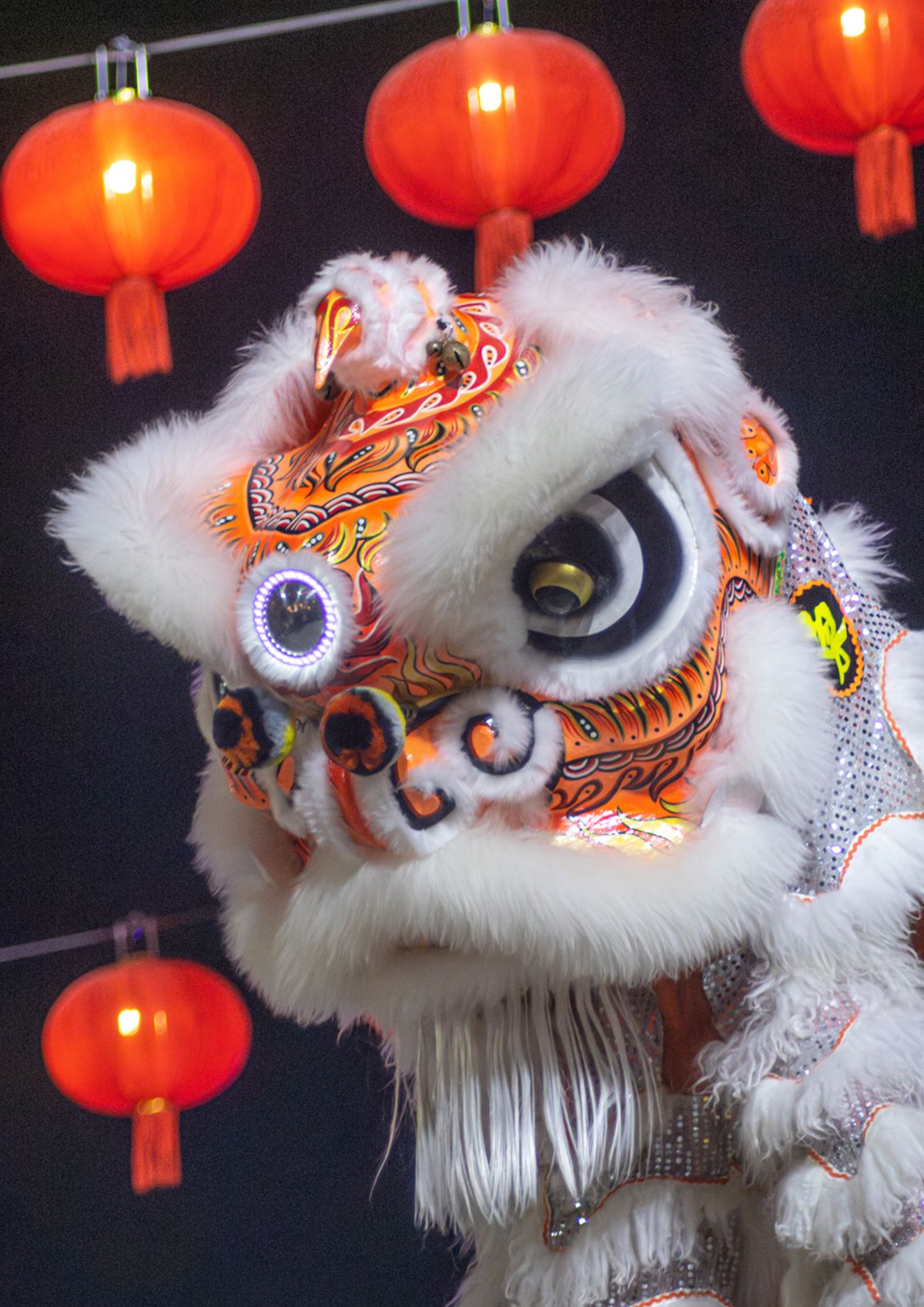
The 舂獅子 (mou5 si3 zi2 — lion dance) is one of the most visually spectacular elements of the Cantonese New Year. Two performers operate a single ornate lion — one controlling the head with its blinking eyes and snapping jaw, the other working the body and tail — while drummers, cymbalists, and gong players create an almost unbearable wall of sound designed to frighten bad spirits and announce the arrival of good fortune. Businesses hang heads of lettuce with lai see red packets from their storefronts, and the lion must leap, dance, and "eat" the greens — a ritual blessing for the establishment's prosperity.
New Year Rules: What to Do and What to Avoid
Cantonese New Year comes with a full code of conduct. In the days before New Year, the entire house is thoroughly cleaned to sweep away the accumulated bad luck of the past year — but cleaning is strictly forbidden on New Year's Day itself, lest you sweep away the fresh fortune just arrived. You do not wash your hair on New Year's Day for the same reason. You avoid eating porridge (associated with poverty) and must not use scissors or knives. Arguments and harsh words are taboo — how you spend the first days of the year sets the tone for all that follows.
These traditions, carried by Cantonese families across the world, remain alive in diaspora communities from Vancouver to Sydney to London. They are not superstitions — they are the accumulated wisdom of a culture that understands the power of intention, community, and the annual act of beginning again. Explore more Cantonese festival traditions in our post on the Mid-Autumn Festival, and learn about the Cantonese proverbs that guide the culture year-round.
📖 Related Articles
👉 Shop Cantonese Guy — Modern Streetwear for the Global Cantonese Community