

Before he was the international auteur behind Kung Fu Hustle, Stephen Chow was a scrappy kid from Kowloon who kept failing TVB auditions and worked as a children's TV host for years while the industry ignored him. Then, in one improvised scene in 1990, he cracked open a whole new grammar of Cantonese comedy — and the language of Hong Kong humour was never the same again.
If you grew up Cantonese anywhere in the world in the 1990s, you didn't just watch Stephen Chow. You quoted him. His lines became a shared code between diaspora kids who'd never met each other. Two decades later, those catchphrases still slip into WhatsApp groups from Toronto to Sydney.
The kid from a Kowloon slum
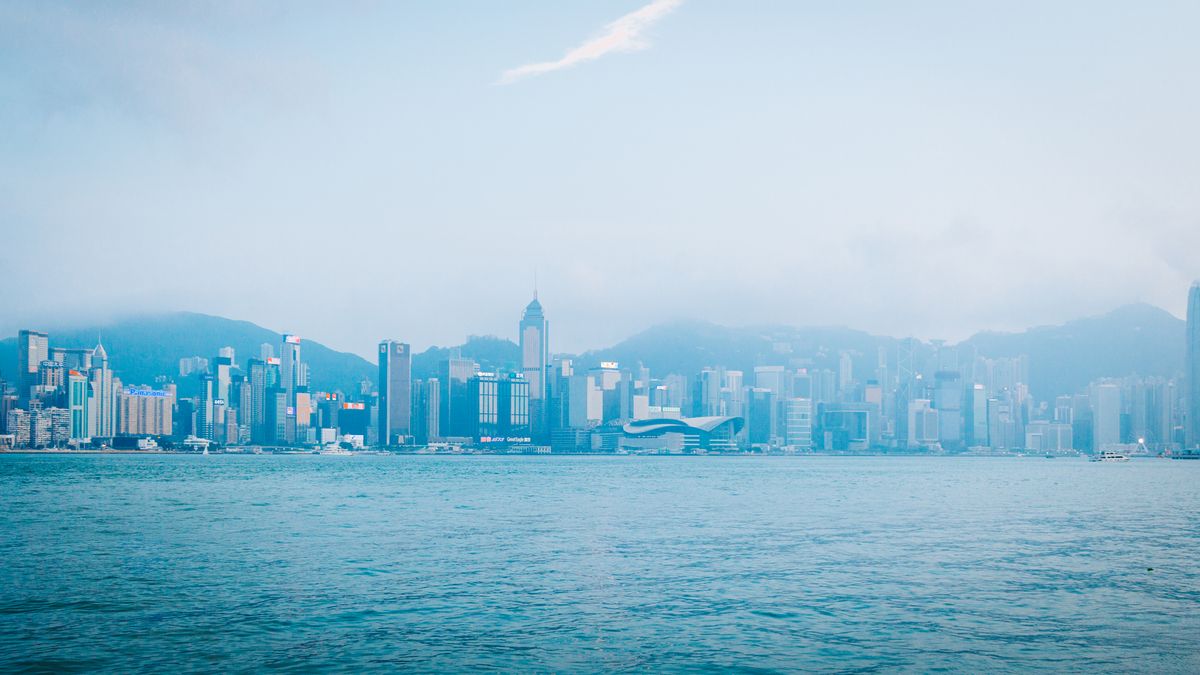
Stephen Chow Sing-chi was born on 22 June 1962 in British Hong Kong, the son of Shanghai migrants who divorced when he was seven. He grew up in a cramped resettlement flat in Kowloon with his mother and sisters — and by his own account, spent most of his childhood watching Bruce Lee films at the local cinema. That obsession would later erupt in the martial-arts sequences of nearly every film he made. If you want the full picture of that era's kung-fu god, our deep dive on Bruce Lee is the companion piece.
Mo lei tau: the language he invented
Chow didn't just make funny movies — he made a genre. 無厘頭 (mou4 lei4 tau4), or mo lei tau, literally means "cannot find the head" — nonsense, or a joke that goes nowhere logical. Chow perfected it into an entire film language: rapid Cantonese wordplay, anachronisms, fourth-wall breaks, absurd character reversals, Ming-dynasty settings filled with modern slang. It sounds chaotic on paper. On screen, it landed like nothing Hong Kong had ever produced.
🎬 He was rejected by TVB's acting school — twice
Before he was a superstar, Chow tried to enrol in TVB's prestigious acting training programme — the same one that launched Chow Yun-fat and Andy Lau. He was rejected on his first try. He got in eventually as a part-timer, then spent years hosting the children's variety show 430 Space Shuttle. The industry told him he wasn't leading-man material for almost a decade. Then All for the Winner hit in 1990 and everything flipped overnight.
🎬 He directs almost every gag frame-by-frame
Chow is famously exacting. Co-stars have described his sets as intense: he'll act out every character's lines himself first, then ask the actor to mirror him precisely. On Kung Fu Hustle, he reportedly re-shot the axe-gang dance sequence dozens of times to get the timing exactly right. What looks improvised on screen is choreographed down to the eyeblink.
🎬 He mostly stopped acting after 2008
The last time Stephen Chow starred in a film was CJ7 in 2008. Since then he's directed and produced — Journey to the West (2013), The Mermaid (2016), The New King of Comedy (2019) — but he's largely stepped behind the camera. Fans have been begging for a return on-screen for over fifteen years. He keeps saying "maybe next one."
🎬 Kung Fu Hustle made over US$100 million globally
When Kung Fu Hustle was released in 2004, it grossed over US$100 million worldwide and became one of the most successful Hong Kong films of all time internationally. Chow won Best Director at the Taiwan Golden Horse Awards and racked up dozens more international prizes. Roger Ebert called it "like Jackie Chan and Buster Keaton meet Quentin Tarantino and Bugs Bunny." That's the mo lei tau formula, exported to the world.
Why the diaspora still quotes him
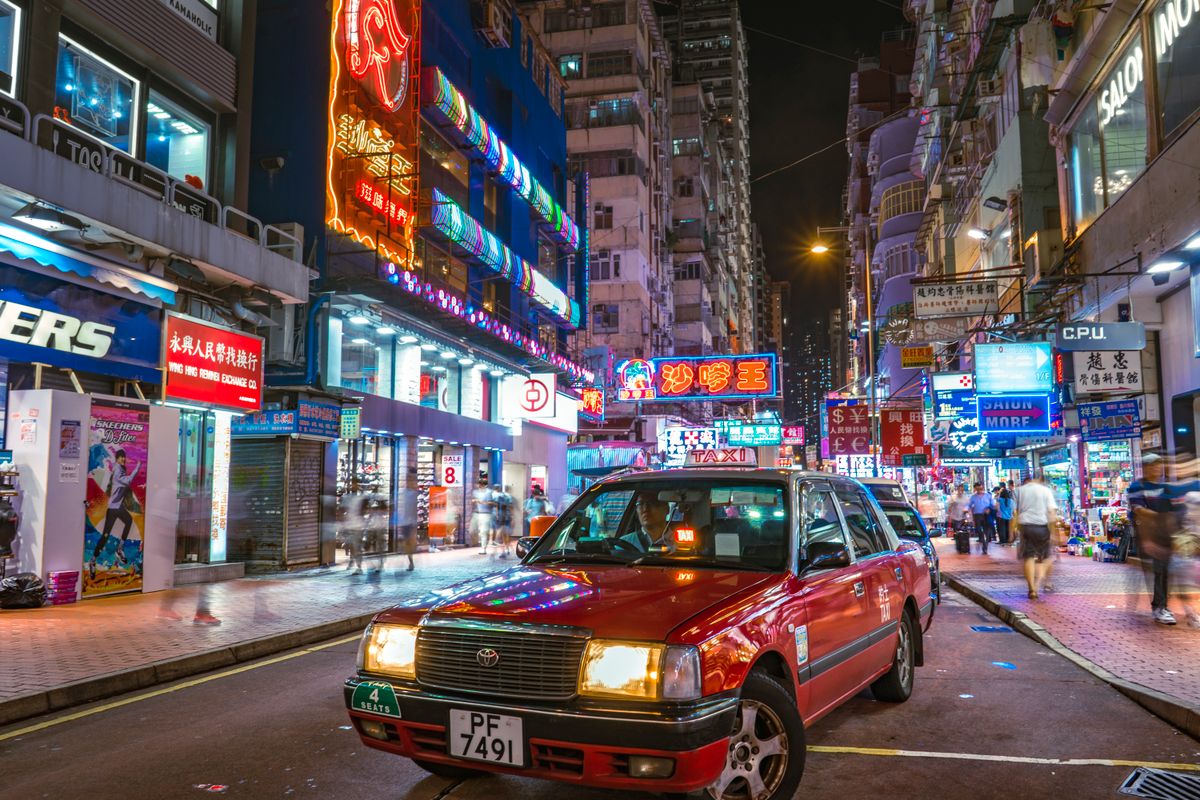
Chow's films work in Cantonese in a way they simply do not in Mandarin dubs. The wordplay depends on Cantonese homophones, tone jokes, and slang so specific to Hong Kong of the 90s that it becomes a time capsule. For diaspora Cantonese speakers, quoting Chow is a low-key identity handshake: if you can throw out a God of Cookery punchline in the right accent, you're recognised. This is one of the reasons Cantonese-speaking communities in Vancouver, London, and Sydney have worked so hard to keep the language alive.
Learn a little of his slang
Two of the most quoted Chow phrases have entered daily Cantonese use — you'll hear them from people who might not even remember the film they came from.
喰颯 (haam4 seoi2)
haam4 seoi2 — Jyutping romanisation
Meaning: Literally "salty wet" — pervy, cheeky, a bit dirty-minded
Explanation: A pre-existing Cantonese word that Chow's characters wielded so effectively that it now feels like part of his vocabulary. Used affectionately more often than as a real insult — the tone tells you which.
多謝大家 (do1 ze6 daai6 gaa1)
do1 ze6 daai6 gaa1 — Jyutping romanisation
Meaning: "Thank you, everyone" — said with mock-humility
Explanation: Chow's characters use this constantly, usually right after doing something ridiculous, cocky or self-serving. It flipped the polite phrase into a punchline. Now Cantonese speakers deliver it with the exact same tilted grin.
The quiet man who reshaped Hong Kong cinema
In interviews, Stephen Chow is famously reserved — the opposite of his manic on-screen persona. He rarely gives press, avoids gossip columns, and has been called one of the most private public figures in Hong Kong. What he did give the world instead was a body of work that reshaped what Cantonese comedy could be: intelligent, absurd, working-class, self-aware, and deeply moral underneath the chaos. His films sit inside the same lineage as the Hong Kong New Wave — but where the auteurs went arthouse, Chow went populist. Both changed cinema.
For the global Cantonese community, he's more than a movie star. He's the guy who proved that Cantonese jokes, Cantonese rhythm, and Cantonese underdogs could carry a film all the way to Cannes. Every diaspora kid who ever felt embarrassed of their parents' language can trace a little of their pride back to Stephen Chow. That's a legacy no amount of prestige awards can measure.
📖 Related Articles
👉 Shop Cantonese Guy — Modern Streetwear for the Global Cantonese Community