

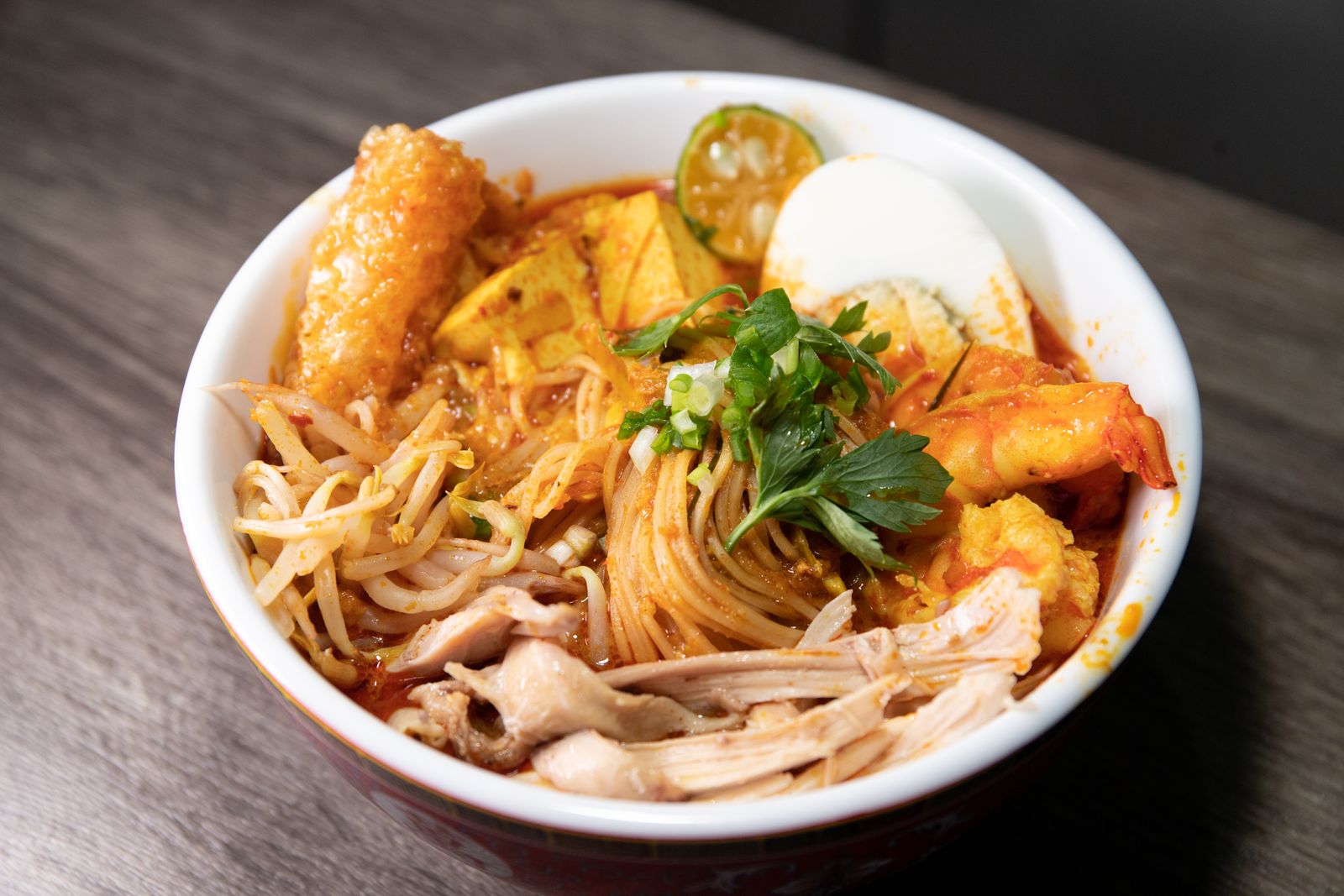
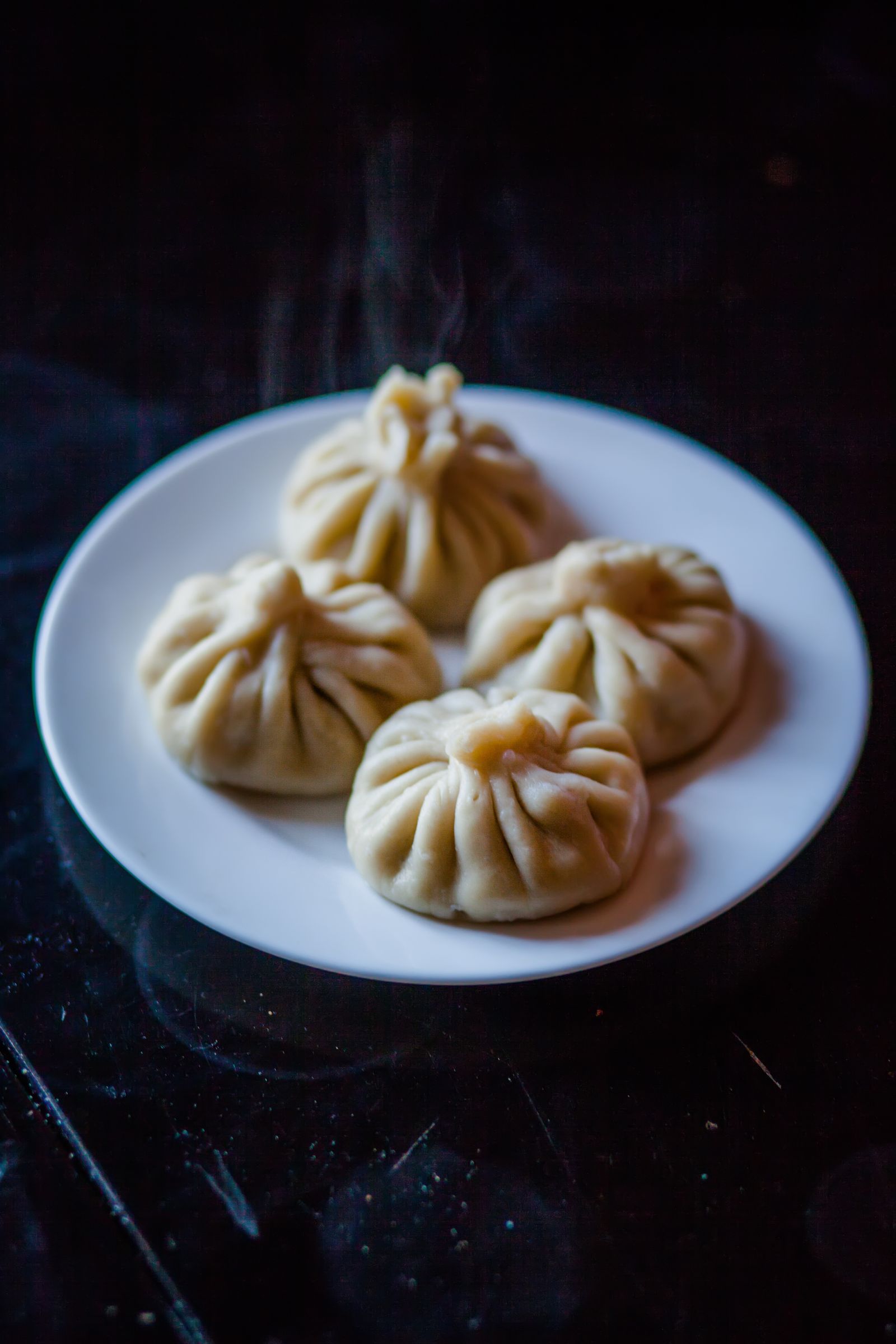
A proper Hong Kong bowl of wonton noodles is a small architectural feat. Four shrimp-and-pork dumplings the size of a five-cent coin sit at the bottom. A tangle of springy all-egg noodles floats above them. A ladle of amber shrimp-shell-and-flounder broth is poured in last. Total footprint: smaller than your palm. Total impact: the reason Cantonese food conquered the world.
Wonton noodles — 雲吞麵, wan4 tan1 min6 — are the Cantonese dish that Guangzhou hawkers invented, Hong Kong perfected, and the diaspora spread from Vancouver to Sydney. To understand this bowl is to understand how Cantonese food works: obsessive over ingredients, unfussy in delivery, and always fitted for the pace of the city that eats it. If you're new here, our history of har gow covers the sister dim sum obsession.
From Hunan to Guangzhou: the long march south
Wontons themselves are old — the consensus among food historians is that they originated in central China and drifted south into Guangdong during the Tang and Song dynasties. But wonton noodles, the specific pairing that Cantonese people now argue over, took shape in Guangzhou during the Qing dynasty. During the Tongzhi era (1862–1874) a Hunan-born cook opened the "Three Chu Noodles Restaurant" in Guangzhou's Shuangmendi district, specialising in pasta and wontons. The Cantonese loved it, refined it, and made it theirs.
In old Guangzhou the dish was called "mobile wonton" — travelling hawkers carried a portable set-up on shoulder poles, with a coal fire, a stockpot of broth, a drawer of noodles and dumplings, and bowls dangling from string. They walked the alleys tapping a small bamboo clapper. When a customer heard the clack, they came down from their tenement and ate on the pavement.
The crossing to Hong Kong
Wonton noodles arrived in Hong Kong in the early 20th century — the earliest mainstream mention in Hong Kong's Chinese Mail newspaper dates to 1930. But the man who turned Hong Kong into wonton noodle territory was Mak Woon-chi (麥換池), a Guangzhou master who moved south and, in 1950, opened Mak's Noodle (麥奠記) in Central. His grandson still runs a branch there today. Mak set the four immovable rules of a Hong Kong wonton bowl:
The noodles must be all-egg (全蛋麵), thin, and pressed with a bamboo pole (竞站麵) that a man rides like a see-saw. The wontons must be mostly shrimp with a small anchor of pork fat, wrapped in wonton skin so thin it becomes translucent when cooked. The broth must be built on dried flounder (大地魚), shrimp shells, and pork bones, simmered until it tastes of the sea and smoke. And the bowl must be small — half the size of a mainland Chinese noodle bowl, so the noodles never sit long enough to soften.
The bamboo pole that saved the noodle
The bamboo pole technique, 竞站麵, is what makes the noodles snap when you bite them. A worker sits on one end of a long bamboo pole, then bounces down the length of the dough, pressing and folding it hundreds of times. It replaced kneading, delivered relentless even pressure, and forced the gluten into a springier structure than a machine can copy. It is genuinely dangerous work — the pole can slip — and it is dying out because young Hong Kongers do not want the job. A handful of shops in Sham Shui Po and Mong Kok still do it by hand. If you want to see what surviving Cantonese craft looks like, this is the front line.
If wonton noodles are the ultimate Cantonese comfort food, our 食飯 Dinner is Ready oversized tee is what you wear on the way to eat one. And when you sit down at the counter and call the boss for a bowl, our 得閒飲茶 Let's Catch Up sweatshirt captures the whole point of the meal.
How Hong Kongers order it, in Cantonese
There is a rhythm to ordering. Walk in, sit down, catch the boss's eye. 「老闆,一細雲吞麵!」— "Boss, one small wonton noodle!" 一細 ("one small") is the traditional size — not because you are eating light, but because Cantonese people are convinced any noodle sitting in broth more than 90 seconds is ruined. Extra noodles come as a separate order (加麵, gaa1 min6). Extra wontons the same (加雲吞, gaa1 wan4 tan1). Drink some Chinese tea between mouthfuls. Finish, say 埋單, and you are back on the street in eleven minutes. That efficiency is the whole cuisine's operating philosophy — also see our piece on char siu, the fork-roasted BBQ pork.
The diaspora's version
Wonton noodles are the diaspora's most reliable emotional anchor. Every Cantonese overseas community has its shop — Ho Lee Fook in London, Hop Lee in San Francisco Chinatown, Congee Wong in Toronto, half of Sydney's Haymarket. Argue about which one is real. Argue about whether the broth is doctored with MSG. Argue about whether they are cutting the noodles thicker than they should. The argument is the point. The bowl is the passport.
The takeaway
Wonton noodles are Cantonese food's most complete argument for itself — hyper-local ingredients, unshowy delivery, a rhythm built for a working city, and a stubborn refusal to be reinvented into something bigger than it needs to be. Guangzhou dreamed it up. Hong Kong made it a religion. The diaspora carries it forward. If you want to wear the culture that put this bowl in front of you, the Mami Says collection is where our food-obsessed pieces live.
📖 Related Articles
👉 Shop the Mami Says collection
Modern streetwear for the global Cantonese community.