

Ask anyone from a Cantonese family about their most vivid childhood memory, and there is a strong chance it involves a large round table, a squeaky cart, the smell of pu-erh tea, and a grandmother who insisted on more prawn dumplings. Yum cha — 飲茶, literally "drink tea" — is not simply a meal. It is the central social institution of Cantonese life, a weekly ritual of family, food, and belonging that has been practiced for generations across Guangdong and carried by the diaspora to every corner of the world.
The Origins of Yum Cha: Tea Houses Along the Silk Road
The yum cha tradition grew from the ancient tea houses (cha lou / 茶樓) that dotted the Guangdong region and the broader Silk Road trading routes of southern China. Weary travellers and merchants would stop at these establishments to rest, drink tea, and eat small portions of food. In Cantonese culture, these became community gathering spaces — places where business was discussed, news was exchanged, matchmakers met families, and old men played chess over endless cups of pu-erh.
Over centuries, the food served alongside the tea evolved from simple snacks into the elaborate, artfully prepared small dishes we know today as dim sum (點心, dim2 sam1 — "touch the heart"). The philosophy of dim sum is encoded in its name: these are not heavy, filling dishes meant to sustain. They are small expressions of care, craft, and affection — things that touch the heart rather than simply fill the stomach.
The Teas: A Language of Their Own
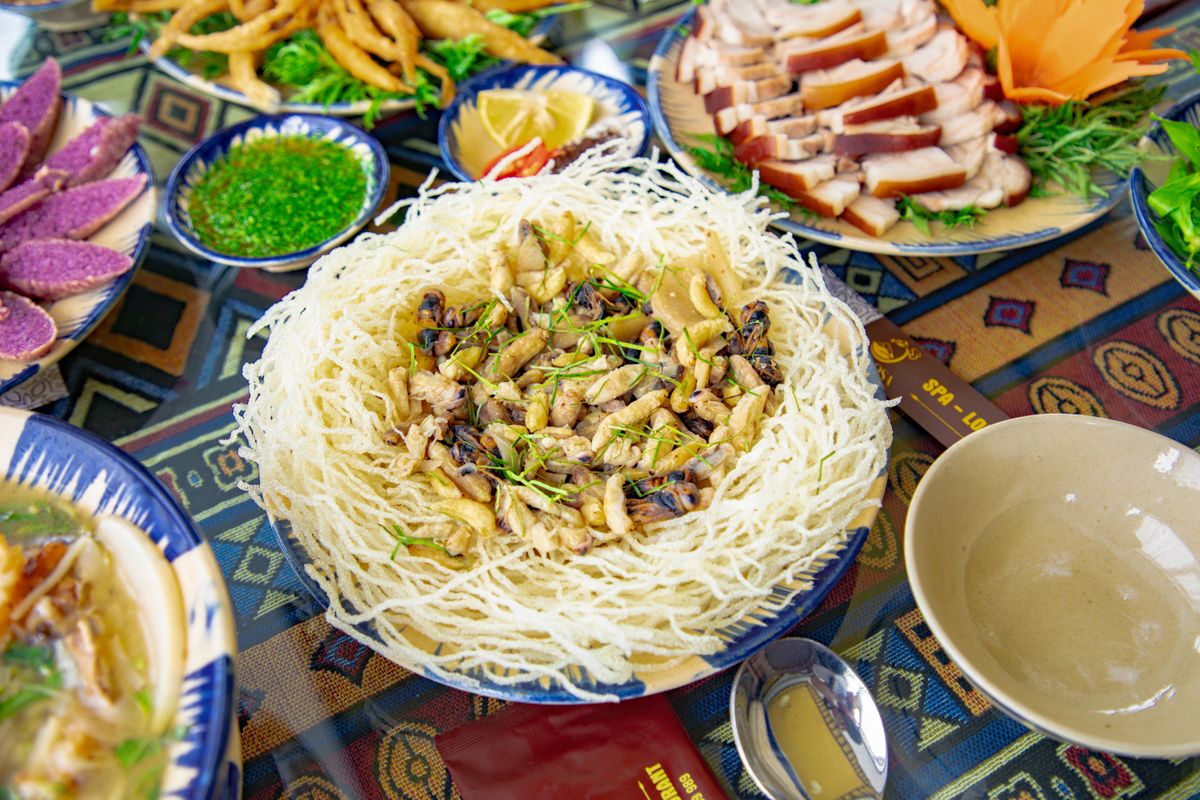
At the centre of yum cha — quite literally — is tea. The tea order comes before food is even discussed. A waiter arrives at the table with a pot of boiling water, and the selection of tea sets the tone for the meal. The most traditional choice is pu-erh (普洱 / po2 lei5 in Cantonese), a deeply fermented, earthy, and robust tea from Yunnan province. Cantonese believe pu-erh aids digestion — an important consideration given the richness of many dim sum dishes. Its dark, mineral flavour is the taste most directly associated with yum cha for those who grew up with it.
Other popular choices include chrysanthemum (菊花 / guk1 faa1), which is light and fragrant and considered cooling in Chinese medicine; jasmine tea (香片 / hoeng1 pin3), which is green tea scented with jasmine flowers; and bo lei guk faa (普洱菊花), a popular blend that combines the robustness of pu-erh with the floral delicacy of chrysanthemum. Choosing your tea is a quiet declaration of taste and character, and experienced Cantonese diners will have opinions about it.
The Rituals: Knocking, Lifting, and Pouring
Yum cha is layered with ritual and etiquette that a newcomer might find baffling but a Cantonese person performs without thinking. One of the most famous is the finger-tap (gong cha — 拱茶): when someone pours tea for you, you express gratitude by lightly tapping two bent fingers on the table — traditionally index and middle finger. This gesture originates in a story about Emperor Qianlong of the Qing dynasty, who allegedly disguised himself as a commoner and poured tea for his servants, who dared not reveal his identity by bowing — so they tapped their fingers on the table as a discreet bow instead.
Another key ritual is the teapot lid signal. When your teapot is empty and you need a refill, you do not wave for the waiter — you simply tilt the teapot lid slightly ajar. This small gesture, known across Hong Kong's tea houses, tells the server wordlessly that more hot water is required. It is the kind of unspoken communication that defines yum cha: a whole social system encoded into small gestures, shared between people who know the same language.
The Dishes: Beyond Har Gow and Siu Mai
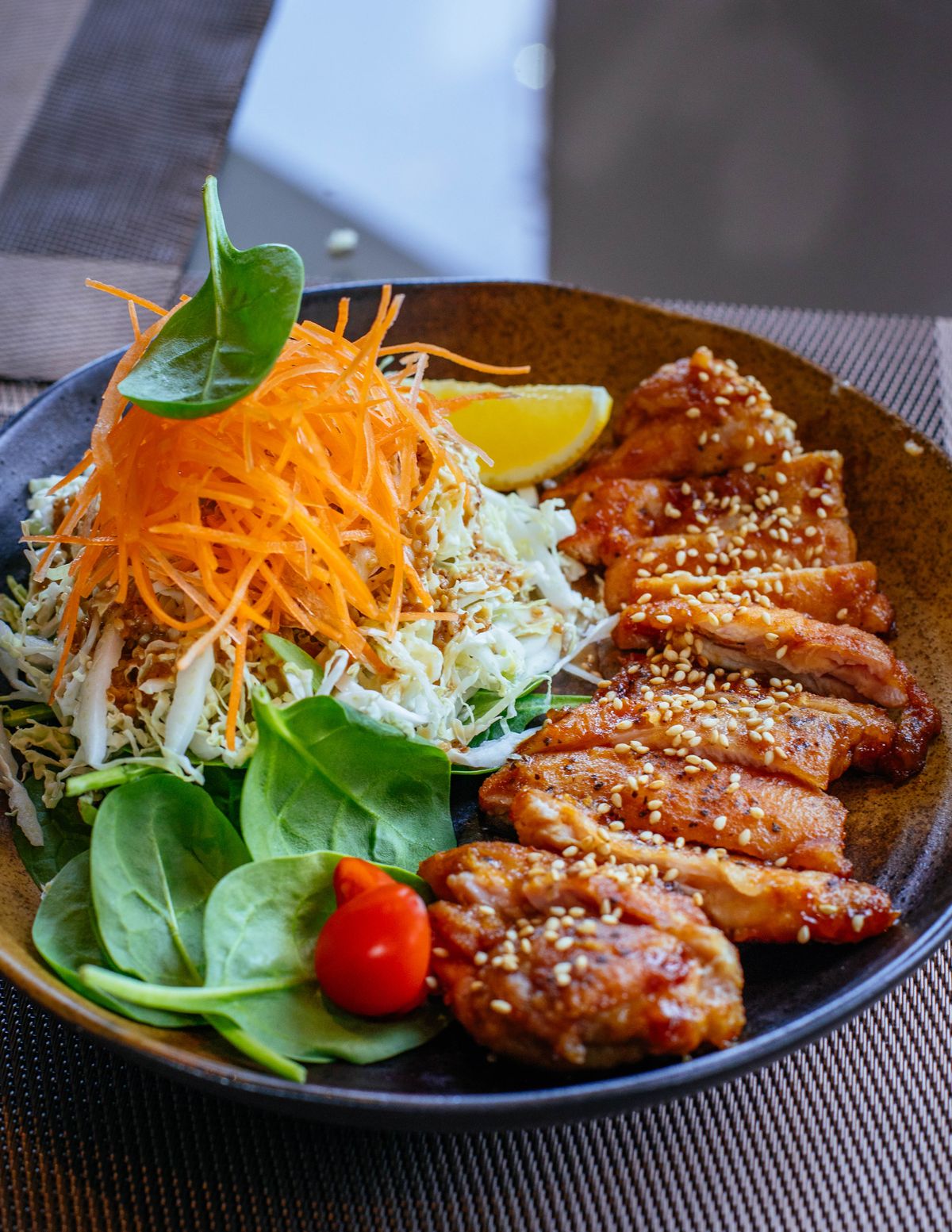
While har gow (蝦餅 / haa1 gaau2, steamed prawn dumplings with a translucent skin) and siu mai (燒賣 / siu1 maai2, open-topped pork and prawn dumplings) are the two most globally recognised dim sum dishes, the full repertoire of yum cha cuisine spans dozens of preparations. Cheung fun (腸粉 / coeng4 fun2) — silky steamed rice rolls — can be filled with BBQ pork, prawn, or beef, and are dressed with sweet soy sauce, sesame oil, and hoisin. Lo mai gai (糖米雞 / lo4 mai5 gai1) is sticky glutinous rice filled with chicken, mushroom, and Chinese sausage, steamed in lotus leaf. Turnip cake (lo bak go — 蠹聆糖 / lo4 baak6 gou1) is pan-fried to a crisp crust, soft within, a textural masterpiece.
Then there are the dessert dim sum — the egg tarts (蛋撻 / daan6 taat1) with their short pastry shells and silky custard fills; the mango pudding (芒果布丁); the sesame balls (薱尖 / cin1 deoi1) fried to a crisp exterior with soft, sweet filling within. A complete yum cha is a journey through Cantonese culinary imagination, one small dish at a time.
Yum Cha in the Diaspora: Keeping the Family Table Together
For the global Cantonese diaspora, yum cha has served as one of the most powerful instruments of cultural continuity. In cities like Vancouver, Sydney, London, and San Francisco, yum cha restaurants have been community anchors — places where Cantonese was still spoken, where grandparents and grandchildren could share a meal that needed no translation, where the food itself carried memory. The Sunday yum cha outing is a fixture of Cantonese family life that has survived immigration, assimilation, and the pressure of every modern distraction. Some things are too important to lose.
Explore more about Cantonese food culture in our post on Dim Sum Culture: More Than Just Food, It's a Way of Life, and discover more about Cantonese dishes beyond the dim sum table.
📖 Related Articles
👉 Shop Cantonese Guy — Modern Streetwear for the Global Cantonese Community