

In 1888, a Cantonese labour contractor named Yip Sang opened an import-export firm on Pender Street, a few blocks east of the young city of Vancouver. He called it Wing Sang (永生) — "everlasting." The building he raised the next year still stands. It is, remarkably, the oldest structure in Vancouver's Chinatown, and it now houses the Chinese Canadian Museum. The story of Vancouver's Chinatown runs through that one address — Cantonese immigrants from Guangdong, a railway that swallowed thousands of them, and a neighbourhood that outlasted every attempt to erase it.
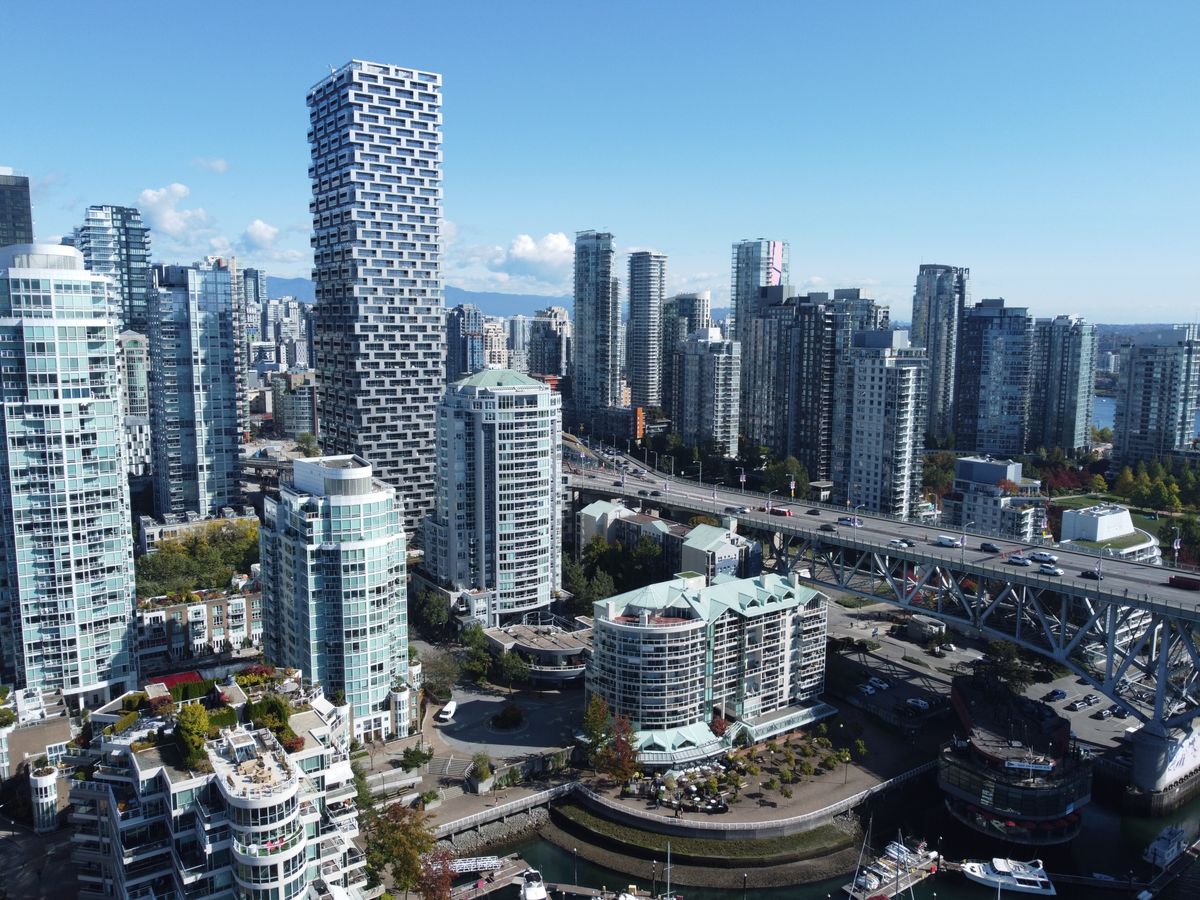
The Guangdong migration that built a Canadian neighbourhood
Vancouver's Chinatown was first settled in the 1880s, making it one of the oldest Chinatowns in Canada and, for most of the twentieth century, its largest. The people who built it came almost entirely from one place: Guangdong province. Specifically, the Siyi (四邑) and Sanyi (三邑) districts — a cluster of counties southwest of Guangzhou, mostly Yue (Cantonese) speakers. If you walked down Pender Street in 1900 and stopped to eavesdrop, you'd have heard Cantonese and its regional cousin, Taishanese.
Why so many of them? The Canadian Pacific Railway. In the 1880s, tens of thousands of Cantonese workers were recruited to blast tunnels and lay track through the Rockies. When the railway was completed, many stayed on the coast, gathering in a Chinatown on the outskirts of the newly incorporated city of Vancouver. By 1901, that Chinatown had a population of nearly 2,900 people and about 60 businesses.
Yip Sang and the Wing Sang Building
Every Chinatown has a founding patriarch. Vancouver's was Yip Sang. Arriving from Guangdong via San Francisco, he worked his way up from labourer to labour contractor — recruiting and paying the Cantonese workforce that built the CPR — and then, in 1888, opened the Wing Sang Company on East Pender. His firm handled goods import-export, dry salt herring, money remittance for workers sending wages home to Guangdong, and much else. He built the Wing Sang Building at 51 East Pender in 1889 and extended it in 1901 into the three-storey structure that still anchors the block today.
Yip Sang was a co-founder of the Chinese Benevolent Association, the Chinese School and Vancouver's Chinese Hospital. When he died in 1927, his funeral procession was reported to be the longest Vancouver had ever seen. In 2023, the Wing Sang Building reopened as the Chinese Canadian Museum — a full-circle moment for the building where Chinatown began.
Dr. Sun Yat-Sen Classical Chinese Garden — the first of its kind outside China
Walk south from the Millennium Gate and you'll reach one of Vancouver Chinatown's most remarkable landmarks. The Dr. Sun Yat-Sen Classical Chinese Garden opened at 578 Carrall Street on April 24, 1986, timed to Expo 86. It's the first authentic full-scale Ming Dynasty–style scholar's garden ever built outside of China, and every craggy limestone rock, koi pond, latticed window and pavilion follows classical feng shui and Taoist principles of balancing opposites.
The garden is named for Sun Yat-Sen, the "father of modern China," who stopped in Vancouver three times during his early-twentieth-century world tours to raise funds and awareness for the Chinese nationalist movement. National Geographic once named it one of the world's top city gardens.
The Millennium Gate and the Chinatown revival
Walk along West Pender toward Taylor Street and you'll see the Chinatown Millennium Gate — an enormous ceremonial arch that officially opened in 2002, marking Chinatown's entry with layered eastern and western symbolism and gold-leafed characters. In 2011, Vancouver's Chinatown was formally recognized as a National Historic Site of Canada, cementing the neighbourhood's status as a founding piece of Canadian urban history.
Not just a museum: the living Chinatown
For decades Vancouver Chinatown was the beating heart of Cantonese Canada — bakeries, herbal shops, roast-meat counters, family associations, cinema halls that screened Hong Kong films the same week they opened in Kowloon. The Cantonese diaspora that built it followed a familiar pattern: from Guangdong to San Francisco's Gold Mountain, to Vancouver, then east to Sydney, Manchester and beyond — the same script rewritten in different accents and rain patterns.
In recent decades, waves of Hong Kong migration to Richmond and West Vancouver have shifted the centre of gravity of Cantonese life away from the historic Pender Street streets. But Chinatown remains — a heritage district, a museum, a place families still return to for weekend yum cha and grandma's memories. It's older than most of the city around it.
A Cantonese word to keep with you
華埠
waa4 fau6 — Jyutping romanisation
Meaning: Chinatown — literally "Chinese town/quarter."
Explanation: The classical Cantonese term for any overseas Chinatown. 華 means "Chinese," 埠 is an old word for "port town" or "trading settlement" — a reminder that these neighbourhoods almost always grew out of ports where Cantonese labourers first landed.

Why Vancouver Chinatown still matters
A Chinatown is never just a neighbourhood. It's a physical proof that people from a particular corner of the world showed up, worked, stayed, and built something none of the surrounding city planners quite planned for. Vancouver's Chinatown is proof that Cantonese Canadians helped make British Columbia — not as guests, but as founders. The Wing Sang Building is older than most of downtown Vancouver's grand hotels. The garden is older than most of the condo towers surrounding it. Every time a Cantonese family walks through the Millennium Gate to buy their weekly barbecue duck, they're re-writing a claim their great-grandparents began writing in 1888.
📖 Related Articles
👉 Shop Cantonese Guy — Modern Streetwear for the Global Cantonese Community