

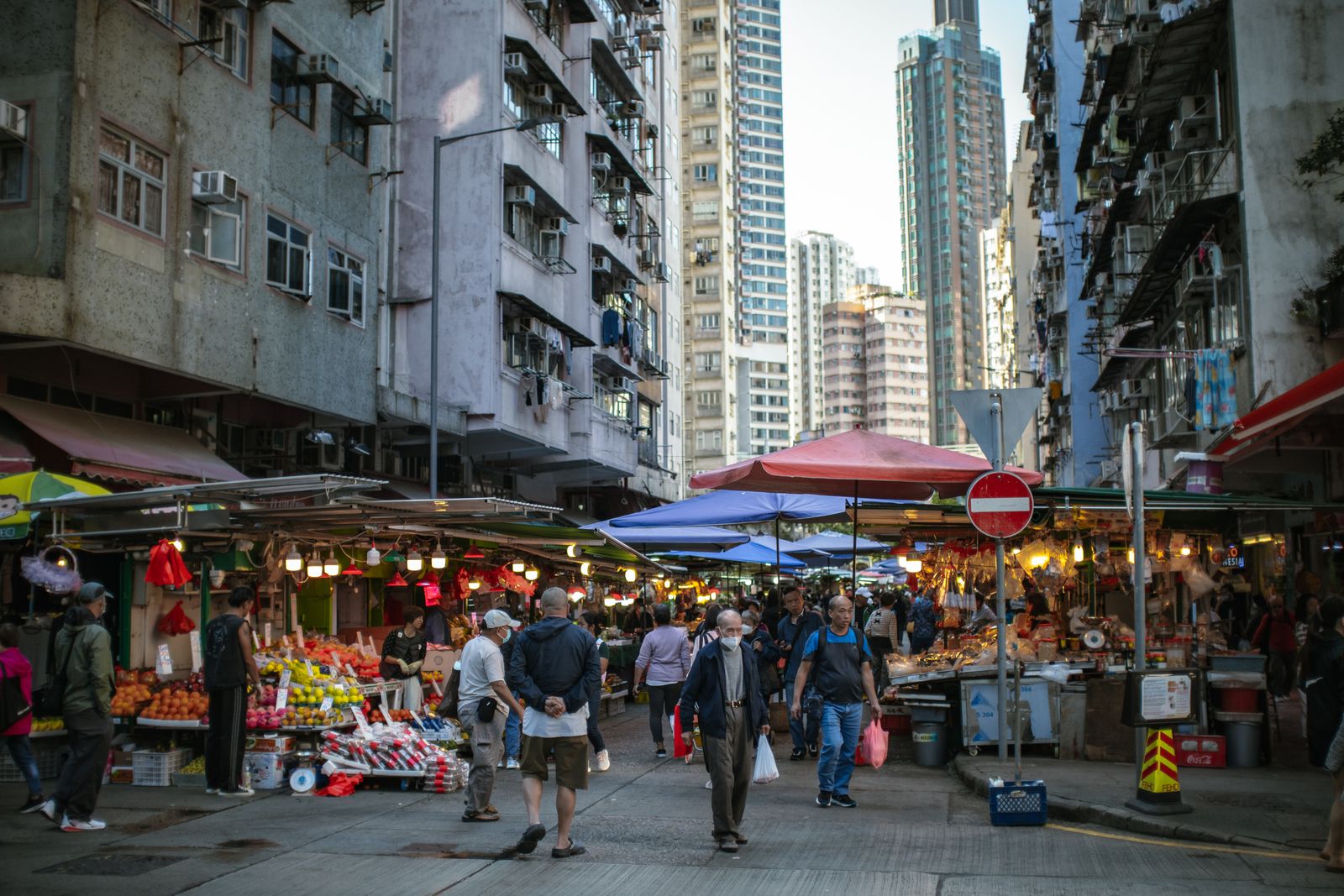
Hong Kong is a city that runs on compressed frustration. 7 million people stacked onto a few habitable square kilometres, MTR carriages at 300% capacity, landlords, weather, in-laws, work emails at 11pm — Cantonese had to build a vocabulary for anger that an English speaker just does not have. "I'm angry" barely scratches the surface of what a Hong Konger feels when the lift stops two floors below theirs and someone wedges a trolley into it.
So here are 10 Cantonese words every Hong Konger uses to express frustration, rage, bitterness and the quiet fuming kind of mad — the kind that doesn't yell but makes everyone at the dinner table go silent. If you want more everyday vocabulary, our previous Vol. 117 on love and flirting words covers the other side of this emotional spectrum.

The core angry word every Hong Konger learns first
1. 嬲
nau1 — Jyutping romanisation
Meaning: angry; mad; annoyed.
Explanation: The character 嬲 is one of the few Cantonese characters that visually tells a story — two 男 (men) around one 女 (woman) — and it is the basic, do-it-all angry verb. A kid is 嬲 at a parent. A parent is 嬲 at a kid. You are 嬲 at your boss, your boyfriend, the delivery guy, Hong Kong summer humidity.
2. 火滾
fo2 gwan2 — Jyutping romanisation
Meaning: fuming; boiling with anger.
Explanation: Literally "fire boiling." Cantonese anger is almost always described in heat metaphors — your stomach fire rises, your face burns, you reach a rolling boil. 火滾 is what you feel when you just walked into a MTR carriage that reeks of durian and the doors shut behind you.
If "fire boiling" sounds dramatic, it tracks with Cantonese body-and-food logic in general — the same thinking that gave us leung cha herbal tea to cool off that same inner fire. The streetwear version of a cool head is our Hea heavyweight tee — the Cantonese philosophy of just letting it go.
3. 爆炸
baau3 zaa3 — Jyutping romanisation
Meaning: to explode (used metaphorically — losing it).
Explanation: One step past 火滾. The pressure cooker finally goes. 爆炸 is what Hong Kong office workers say when the fifth client email of the day lands at 7pm asking for "a small change."
4. 黑面
hak1 min6 — Jyutping romanisation
Meaning: to scowl; put on a "black face."
Explanation: Cantonese anger has a visible form, and that form is 黑面. The silent treatment with your eyebrows pulled low. Mums do it. Spouses do it. Bosses do it in Monday meetings. You don't need to be told someone is upset — the whole room reads a 黑面 in under a second.
The expressions you yell when the day collapses

5. 死火
sei2 fo2 — Jyutping romanisation
Meaning: damn it; oh no; we're screwed.
Explanation: Literally "the fire died" — originally the groan of a cook when the stove went out mid-service. In modern Hong Kong it is the all-purpose "oh no" of mild panic and self-directed anger: you missed the last minibus, left your Octopus at home, replied-all by mistake. 死火.
6. 扯火
ce2 fo2 — Jyutping romanisation
Meaning: to lose one's temper (literally "pull fire").
Explanation: Think of it like pulling the pin on a grenade — the fire isn't just there, you have actively drawn it out. 扯火 is active, visible, the moment the voice goes up. People will say 「唔好扯火!」("don't lose it") the way an English speaker would say "calm down" — and like "calm down," it almost never calms anyone down.
7. 激氣
gik1 hei3 — Jyutping romanisation
Meaning: exasperated; provoked to annoyance.
Explanation: 激 means to stimulate or provoke, 氣 is breath/qi. 激氣 is the stewing frustration where another person is actively winding you up — a sibling who won't stop asking, a colleague who keeps interrupting, a toddler on the fifth "why." It is the Cantonese version of "I'm about to lose it."
8. 發爛渣
faat3 laan6 zaa2 — Jyutping romanisation
Meaning: to throw a tantrum; to kick off.
Explanation: The visibly bad behaviour kind of angry — stomping, slamming doors, throwing phones, raising the voice three octaves. Hong Kong parents use it to describe toddlers. Hong Kong kids use it to describe their parents on parents' night.
9. 唔忿氣
m4 fan6 hei3 — Jyutping romanisation
Meaning: resentful; refusing to accept it.
Explanation: The Cantonese version of "it's not fair!" said when you have lost but your brain refuses to concede. Sports teams are 唔忿氣 after a bad call. Siblings are 唔忿氣 at the one who got the bigger piece of char siu. It is anger plus pride plus a tiny bit of hope that the universe will somehow fix it.
唔忿氣 is the exact posture of a 硬頸 Cantonese stubborn mindset — refusing to bow out when the world says you should. We wear it on our chest with the Hard Neck sweatshirt.
10. 嬲到爆
nau1 dou3 baau3 — Jyutping romanisation
Meaning: furious to the point of exploding; livid.
Explanation: The nuclear option. 嬲到爆 is 嬲 plus 到 (to the point of) plus 爆 (burst). This is the final level in the Hong Kong anger tree — reserved for betrayals, missed MTRs with 30-minute waits, and the specific kind of boss email that starts with "Hope you had a good weekend."
Why Cantonese needs so many angry words
A linguist friend once pointed out that Hong Kong's vocabulary for frustration is bigger than its vocabulary for joy — and that this probably says something true about the city. The density, the rents, the noise, the schedule, the heat — Cantonese had to invent precise names for each shade of upset the way the Inuit invented precise names for kinds of snow.
But there is a shared Cantonese joke that threads through this whole list: nobody stays angry for long. By the time you have finished 嬲, 火滾, 扯火 and 嬲到爆, someone has usually poured you a cup of tea and asked whether you have eaten yet. For the quieter release valve, see our Vol. 116 tired and burnt-out dictionary — because exhausted usually comes before explosive.
👕 Wear the attitude
- 準時收工 Clock Out On Time tee — because 嬲 often starts at the office when nobody leaves on time.
📖 Related Articles
👉 Shop the Cantonese Slang collection
Modern streetwear for the global Cantonese community.