

You know the sound before you know the smell: a wok hitting a jet of gas, a spatula scraping steel, a plastic stool being shoved back on a Central pavement so someone can shout an order over the traffic. That's a dai pai dong (大排檔) — Hong Kong's disappearing open-air street food stall — and the city cooked its way through the twentieth century on the shoulders of about a thousand of them. Today, only 17 remain. But the story of how they got here starts with a war, a filing cabinet full of oversized licences, and a government trying to keep the widows of dead civil servants from starving.
Born from the rubble of 1945
When the Second World War ended in 1945, Hong Kong was in ruins. The Japanese occupation had gutted its economy, killed tens of thousands, and left surviving families without breadwinners. Widows and disabled dependants of civil servants who had died during the war needed a way to earn a living, and the colonial government needed cheap food for a city that was hungry, broke, and rebuilding all at once. So it did something unusual for a British administration: it started handing out permits to set up cooked food stalls on the pavement. The scheme prioritised families of deceased or disabled civil servants — the assumption being that if the government had owed the father a livelihood, it now owed the widow one too. Overnight, a first generation of woks appeared on street corners across Central, Sheung Wan, Sham Shui Po and Mong Kok.
Why they're called “Big Licence Stalls”
The name is literal. Most Hong Kong government licences of the era were the size of an envelope. The cooked-food-stall licence was oversized — a large, framed document that had to be displayed openly, and (unlike anything else) included a photograph of the licensee. Locals started calling the stalls 大排檔, or “big licence stall” (dai6 paai4 dong3), and the name stuck long after nobody remembered why the paperwork was different. Every dai pai dong you walk past in Central today still hangs that oversized licence on the metal shutter as a small green plate. If you look, you'll see the original licensee's face on it — sometimes their grandchild's, if the family managed to renew the transfer before the rules tightened. And that generational hand-down is the same thing our 食飯 Dinner is Ready embroidery heavyweight tee honours — the quiet Cantonese tradition of calling everyone to the table.
The golden era of 1950s–70s Hong Kong
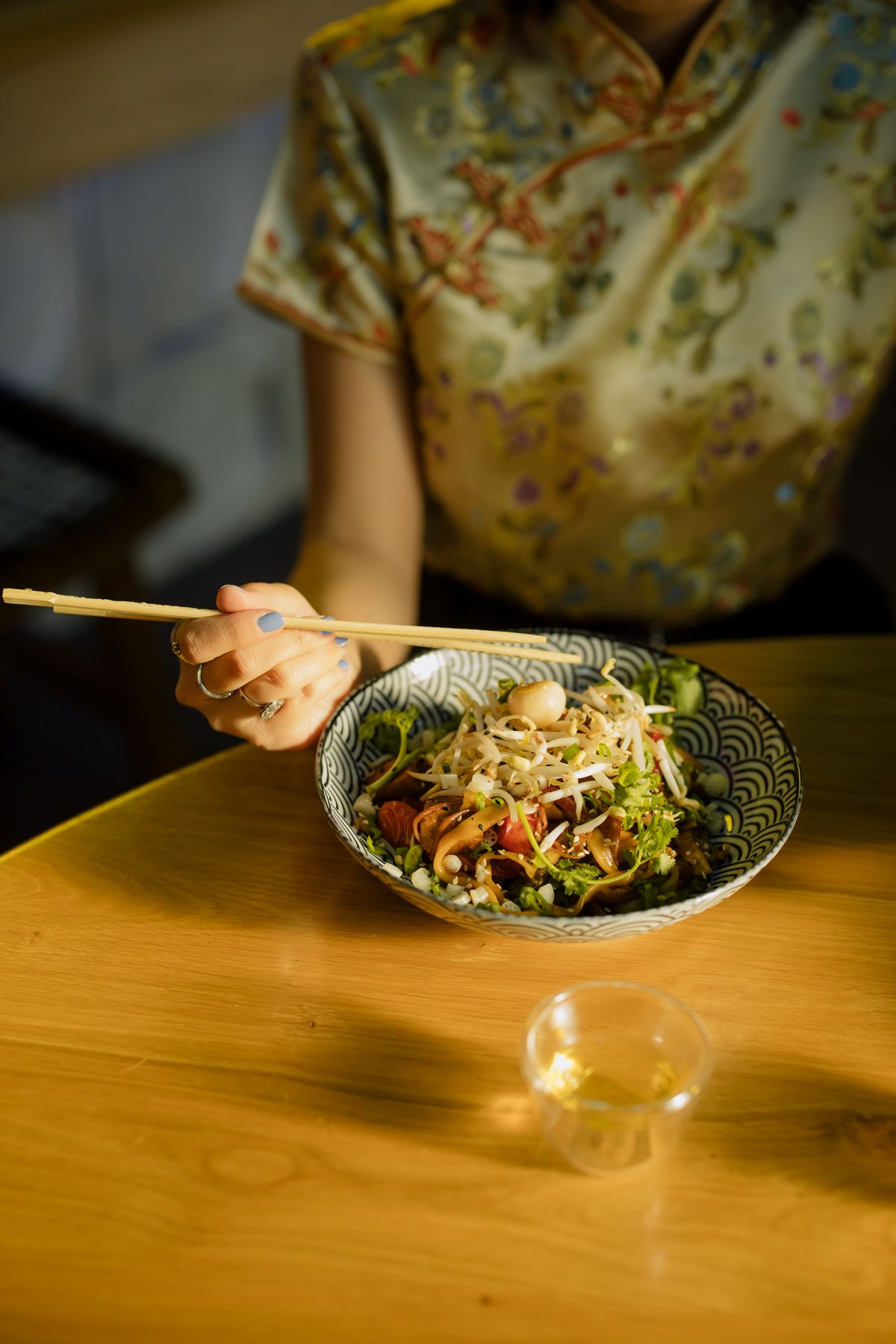
Through the fifties, sixties and seventies, dai pai dong were how working-class Hong Kong ate. A dockworker on the Wan Chai waterfront could get a bowl of clay-pot rice, a plate of stir-fried greens, and a cup of yuenyeung for the price of a bus fare. Late-shift accountants ate them at 11pm on the way home. The stalls opened before sunrise for the market porters and were still going at 2am for the taxi drivers. Every stall had a specialty — one was known for beef brisket, one for fried noodles, one for congee — and regulars ate a full rotation across three or four different pavement corners in a single week. This was Cantonese street cooking in its most compressed form: cheap ingredients, high heat, minimal fuss. The wok hei (鎬氣) — the smoky, seared flavour that only a screaming-hot wok produces — came from equipment that would horrify a modern food inspector. And that was the point.
Then the government stopped renewing the licences
In 1956, the Hong Kong government stopped issuing new dai pai dong licences. Reasons varied over the decades — traffic congestion, hygiene concerns, complaints from developers who wanted the pavement clean — but the end result was the same: the total number could only go down. From the 1970s onwards, transfer of an existing licence was banned outside of a narrow window of direct family inheritance. When the licensee died, the licence usually died with them. In the early 1980s there were still several hundred stalls citywide. By 2014 there were 25. As of July 2024, according to Hong Kong's Food and Environmental Hygiene Department, only 17 licensed dai pai dong remain in Hong Kong. Every death in that community is a small extinction event for the culture.
Where you can still find them
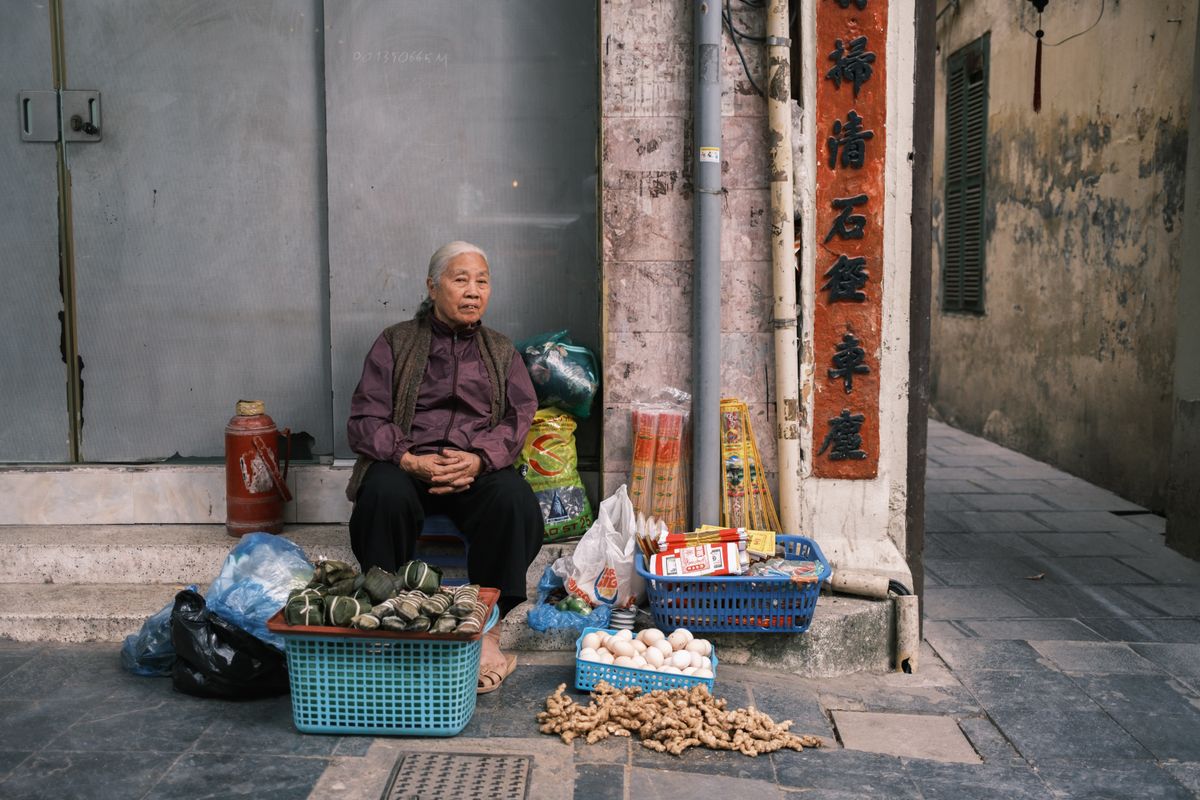
The survivors cluster in a few corners of the old city. Central's cluster on Stanley Street and the Gage Street area is the tourist-friendly one — stalls like Sing Heung Yuen (盛香園) are on every Hong Kong food guide. Sham Shui Po holds the working-class heart: Wing Kee Noodles, Yee Kee Beef Brisket, and a handful of stalls tucked between hardware shops on Yiu Tung Street and Nam Cheong Street. The formula is the same in every one: a green metal cart, a jet burner, hanging bulbs, plastic stools, and a menu written in marker on the wall in shorthand only the regulars fully understand. Sitting down at one is part of the same everyday Cantonese ritual our 得閑飲茶 Let's Catch Up sweatshirt is built around — you don't book, you just show up.
The dishes that made the dai pai dong famous
The dai pai dong menu is a Cantonese greatest-hits reel of small-format cooking. Wok-tossed beef ho fun (乾炒牛河) is the most-copied dish in the world of Cantonese cuisine, and the original comes from a burner exactly this size. Clay pot rice (bou zai faan) needs a live gas flame, an old iron ring, and about eleven minutes of a cook's undivided attention. Salt-and-pepper spareribs, tomato pork chop rice, black-bean sauce fish, and fried instant noodles with corned beef and egg are all dai pai dong staples that middle-class restaurants later borrowed. The instant-noodle plate is where a lot of Cantonese kids first tasted the phrase wok hei — the tiny smoke-scented burn that separates a stall's plate from a home kitchen's. That palate memory is exactly what our 叉燒 Char Siu oversized tee puts back on the chest — the unmistakable flavour of Cantonese street cooking.
What they mean to the diaspora
For Cantonese people who left Hong Kong, dai pai dong is the food memory that never quite gets replicated. Even the best Cantonese restaurants in Vancouver, London, Sydney, or New York can't cheat the physics: you need pavement, a burner strong enough to strip paint, a metal cart older than most cooks, and no ventilation hood. The whole thing runs on grease-blackened air. When Hong Kong emigres visit home, half of them make a Central-and-Sham-Shui-Po dai pai dong pilgrimage on day one, before yum cha, before family, before anything. That's how deep the tie runs. And it's why every remaining dai pai dong licence-holder is quietly a cultural monument — seventeen people still holding the line for a whole city's culinary memory. Cooking on plastic stools, wearing an oversized green licence like a family heirloom, still calling out the same shorthand orders their grandparents did in 1946.
📖 Related Articles
👉 Shop the Mami Says collection
Modern streetwear for the global Cantonese community.