

In 1986, on a small island in what was then Yugoslavia, a 32-year-old Hong Kong actor jumped from a castle wall onto a tree branch — a stunt he'd rehearsed all morning. The branch snapped. He fell about 12 metres, cracked his skull on a rock, and had blood pouring from his ear. Surgeons flew in from Switzerland. A piece of bone was permanently embedded in his brain, and he still has a plastic plug in his skull today. When he woke up in hospital, he asked whether the footage was any good.
That's Jackie Chan. And that stunt — the near-fatal fall from Armour of God — is not even in his top five injuries. To understand him you have to go back to a small child in Kowloon whose parents signed a contract handing him over for ten years of the most brutal apprenticeship in twentieth-century entertainment.
A Cantonese Boy Named Kong-sang
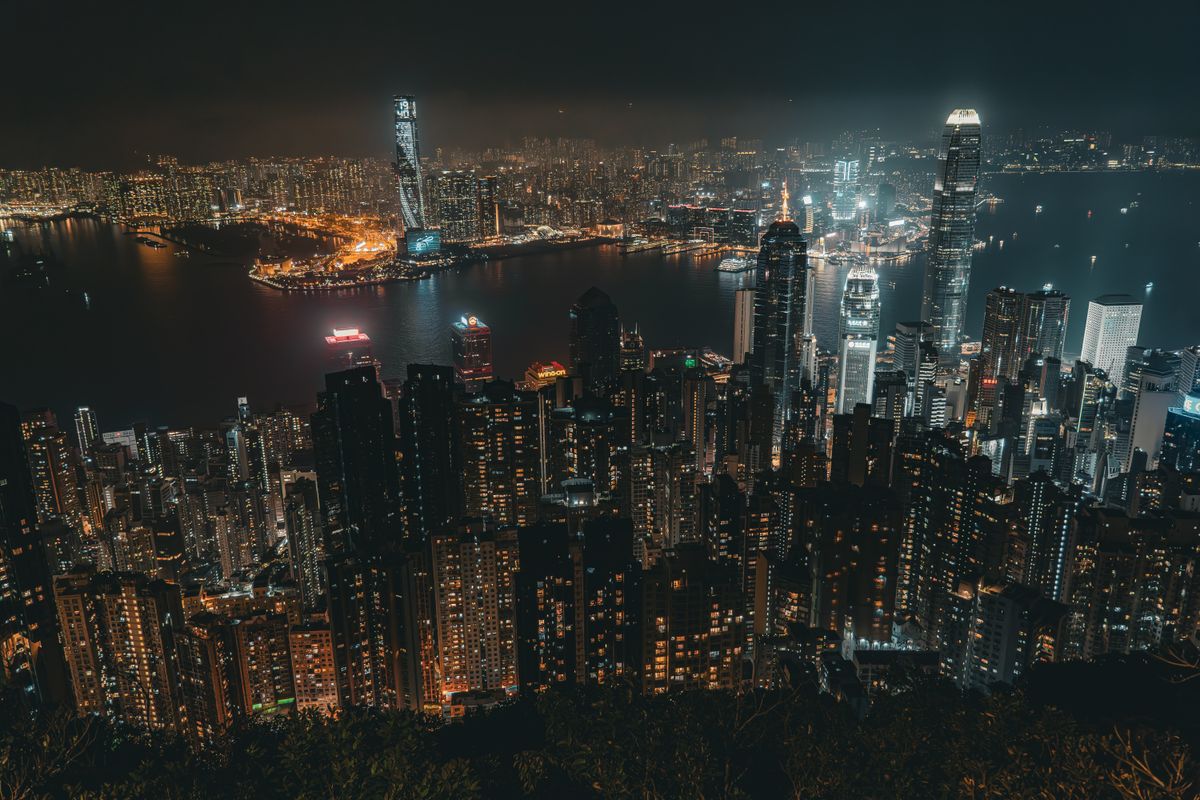
Jackie Chan was born Chan Kong-sang (陳港生) on 7 April 1954 in British Hong Kong, the son of Charles and Lee-lee Chan — political refugees from the Chinese Civil War. His name literally means "born in Hong Kong," and the city is stitched into every frame of who he became. He grew up in the servant quarters of the French consul's residence on Victoria Peak, where his father worked as a cook. When his parents emigrated to Australia in 1960, they made a decision that changed film history: they enrolled Jackie at the China Drama Academy, a Peking Opera school in Kowloon run by a former opera master named Yu Jim-yuen.
Jackie was six years old. The contract was for ten years. The training was brutal.
The Seven Little Fortunes
Days at the academy ran from before dawn until late at night: acrobatics, martial arts, singing, mime, gymnastics, weapons. Discipline was administered with a bamboo rod. The kids who survived formed a stage troupe called the "Seven Little Fortunes." Look at the roster. Jackie Chan. Sammo Hung. Yuen Biao. Yuen Wah. Corey Yuen. Almost every action star of Hong Kong's golden era went through that hallway together. Sammo, the oldest and toughest, became Jackie's big brother for life. If you've ever loved a Hong Kong action film, you owe something to a room full of exhausted children in Kowloon.
🎬 The Name That Almost Wasn't
After Bruce Lee died in 1973, Hong Kong studios tried to manufacture a successor. Jackie was cast as one of many "new Bruce Lee" hopefuls and flopped in film after film. His stage name at the time was Chan Yuen-lung (陳元龍), then Sing Lung (成龍) — literally "becoming the dragon." Only after he stopped trying to be Bruce and pivoted to comedy did the name start to fit.
🥂 The Movie That Changed Everything
In 1978, director Yuen Woo-ping (later the fight choreographer for The Matrix) gave 24-year-old Jackie a shot at Snake in the Eagle's Shadow and told him to do whatever he wanted. He blended pratfalls with kung fu and something clicked. Later that year Drunken Master arrived — the swaying, hiccupping fight style, the underdog persona, the goofball grin. Suddenly nobody wanted the new Bruce Lee. They wanted a Jackie.
💥 The "Glass Story" Finale
On the set of Police Story (1985), Jackie slid down a pole wrapped in electrified lightbulbs, then crashed through a glass canopy. The mall shootout climax broke so many panes of sugar glass that the crew nicknamed the film "Glass Story." Jackie burnt his hands, dislocated his pelvis, and did the pole stunt in one take because a second take would have literally killed the lightbulbs. It remains one of the most influential action scenes ever filmed.
🎤 Yes, He Sings — in Five Languages
Cantopop fans know a secret Western audiences often miss: Jackie is a genuine singer. He's released Cantonese, Mandarin, Japanese, Taiwanese, and English albums, sang the theme songs to most of his own films, and performed the closing number for the 2008 Beijing Olympics. His voice is warm, unpolished, and unmistakably Cantonese — the sound of a Kowloon kid who never quite lost his accent even after decades of Hollywood.
A Body Held Together by Cinema
The list of injuries reads like a hospital chart, not a filmography: broken nose (three times), broken ankle, cracked cheekbone, dislocated sternum and pelvis, chipped teeth, brain hemorrhage, permanent hearing loss in his left ear, brow ridge injury during Drunken Master that nearly took his eye, near-suffocation on The Young Master, legs crushed between two cars, arm slashed by a sword. And of course — the skull. He puts his stunts at the end of every film so if he dies, the studio can still finish the picture.
A Little Cantonese to Remember Him By
成龍
sing4 lung4 — Jyutping romanisation
Meaning: "Becoming the dragon" — Jackie Chan's Chinese stage name.
Explanation: The name was picked in the mid-70s when the industry still hoped he'd be the next Bruce Lee. Instead he became the first Sing Lung.
大哥
daai6 go1 — Jyutping romanisation
Meaning: "Big Brother" — an honorific used throughout Hong Kong film for a senior figure.
Explanation: In Cantonese cinema circles, calling someone Daai Go signals respect, seniority, and family loyalty. Sammo Hung is Jackie's Daai Go. Jackie, in turn, is Daai Go to a generation that came after.
Why Jackie Still Matters
In 2016 he became the first Asian actor to receive an honorary Oscar. He accepted it holding it up in front of a black-and-white photo of himself as a kid at the opera school. That gesture said everything. Jackie Chan is the Cantonese diaspora's proof that the boy in the back of the classroom, the one who barely spoke English, the one whose parents worried he'd never amount to anything — that kid could become the most recognisable smile on the planet.
He also reminds us that pop-culture greatness has a price. When Hongkongers say 小龍哥 — "Little Dragon Brother" — there's affection in it, but also a kind of protective ache. He gave the world seven decades of joy at the cost of a body that will hurt him every day for the rest of his life. That is a Cantonese story: work hard, keep smiling, never let them see the pain.
📖 Related Articles
👉 Shop Cantonese Guy — Modern Streetwear for the Global Cantonese Community