

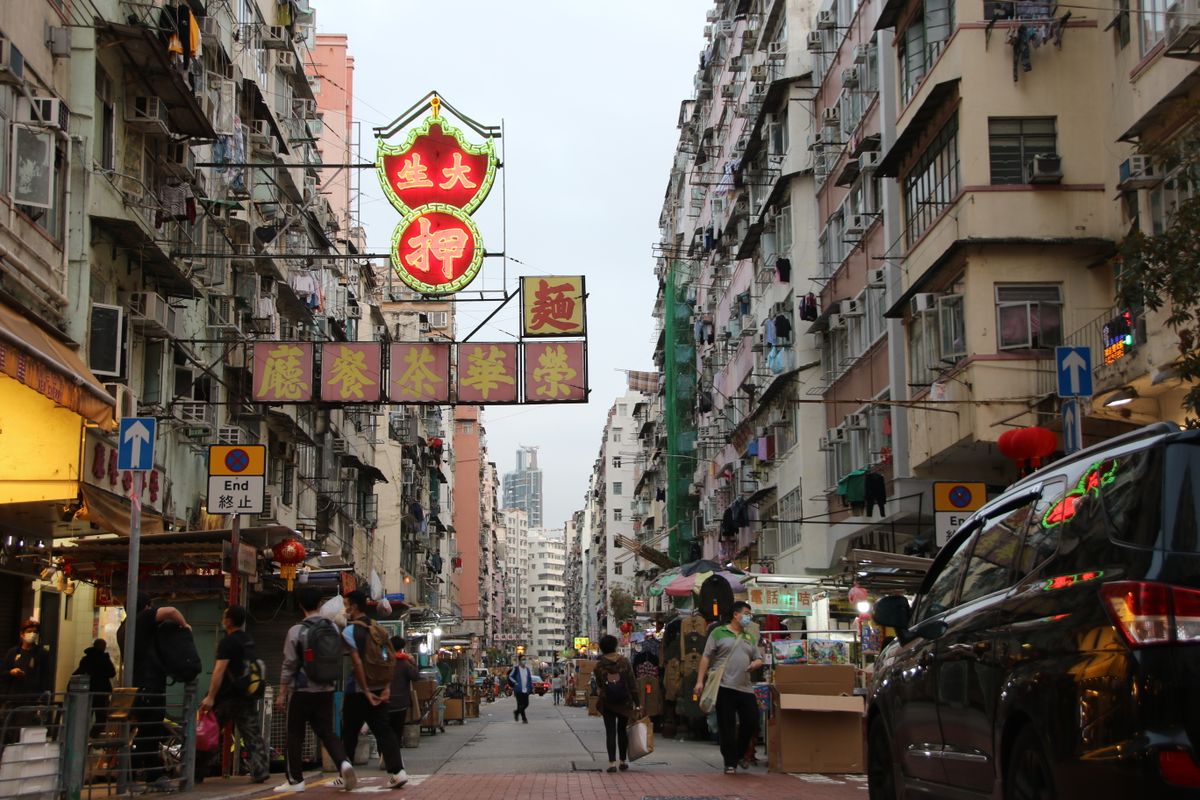
Walk down any narrow street in Guangzhou, Foshan, or old Kowloon and you'll spot the same scene: a shopfront no wider than a doorway, a row of ceramic bowls behind the counter, and somebody knocking back a small cup of something dark, bitter, and steaming. That's leung cha — the Cantonese herbal tea Guangdong has been drinking for centuries as its answer to a humid, punishing subtropical climate. It tastes like burnt roots. It's meant to. And it's one of the most quietly stubborn traditions in Cantonese culture.
What Leung Cha Actually Is
The literal translation of 涼茶 (loeng4 caa4) is "cooling tea" — but the "cooling" isn't about temperature. In Chinese medicine, foods and drinks are classified by their effect on the body's internal balance. Guangdong's summers are hot, wet, and dense; the local diet leans on fried, roasted, and rich foods. That combination, in the traditional view, generates too much "heat" (熱氣, jit6 hei3) in the body — leading to sore throats, mouth ulcers, breakouts, sluggish digestion, and general grumpiness.
Leung cha is the antidote. It's a category, not a single drink: dozens of herbal formulas designed to cool the system down, boiled from combinations of chrysanthemum, honeysuckle, mulberry leaf, licorice root, kudzu, and up to two dozen other ingredients. Some are mild and floral. Some are so bitter they make grown adults shudder. All of them are drunk as fast as possible, ideally in one go, because sipping only prolongs the pain.
A Southern Chinese Invention, Not a Chinese One
Leung cha is specifically Cantonese — a Guangdong, Guangxi, and Hong Kong tradition. Records of Southern Chinese using "cooling medicine" go back as far as the Song Dynasty (960–1279), and by the Qing Dynasty drinking herbal tea had become part of daily life for Cantonese-speaking populations. Northern Chinese cuisines and climates never developed the same fixation. This is a drink shaped by mangrove-heavy coastlines and monsoon summers, by dai pai dong grease and roast goose fat, by a culture that treats the body as a system that needs constant tuning.
🍵 The Doctor Who Started an Empire in 1828
The most famous leung cha brand, Wong Lo Kat (王老吉), was founded in Guangzhou in 1828 by a herbal doctor named Wong Chak Bong. His single-cup recipe — a bitter blend of chrysanthemum, honeysuckle, and other cooling herbs — became so popular that it spread across the Pearl River Delta within a generation. Nearly two hundred years later, Wong Lo Kat is still one of the biggest beverage brands in China, sold in cans nationwide and stocked in Chinese supermarkets from Vancouver to London. Not bad for a recipe that started in a single Guangzhou herb shop.
The Big Five Formulas Every Cantonese Kid Knows
There are dozens of leung cha recipes, but a handful have become household names in Cantonese-speaking homes. The most infamous is 廿四味 (jaa6 sei3 mei6) — "24 flavours" — a formula so bitter it's practically a rite of passage. Milder are 五花茶 (ng5 faa1 caa4, "five flowers tea"), a floral blend for mild heat; 菊花茶 (guk1 faa1 caa4), chrysanthemum tea, drunk during summer for eye strain; 感冒茶 (gam2 mou6 caa4), a cold-remedy formula; and 黄菊露 (wong4 guk1 lou6), a lighter, sweeter version often sold pre-brewed to kids and tourists.
A UNESCO-Listed Tradition, Officially
In 2006, Chinese herbal tea was added to China's first national list of intangible cultural heritage, with formulas from Wong Lo Kat and other historic brands specifically protected. In Hong Kong, leung cha shops received official recognition as an intangible cultural heritage element of the city. This kind of protection matters: as fewer young people learn to blend traditional herbs and as bubble tea and matcha lattes take over the shopfronts, the old leung cha stalls have been quietly disappearing for a generation. The listing is a way of saying: this tradition is Cantonese, and it's worth keeping.
How Cantonese People Actually Drink It
The etiquette is unspoken but real. You approach the shop, tell the auntie behind the counter what you're feeling — "too much heat," "sore throat," "acne," "had roast pork three days in a row" — and she recommends a bowl. You pay a few dollars. You drink it standing at the counter, in three or four fast gulps, then chase it with the small cube of preserved plum or piece of dried liquorice the shop provides to kill the bitterness. Ten seconds. Done. Back to your day. There's no ceremony. There's no Instagram photo. It's less a drink than a running maintenance check on your own body.
Read alongside our features on Cantonese slow-cooked soups and Hong Kong milk tea, leung cha completes the picture of a food culture that treats what you drink as seriously as what you eat.
Why Leung Cha Still Matters
You can now buy Wong Lo Kat in cans at any Chinese grocery from Sydney to Toronto. But that mass-market version is a distant cousin of the real thing. Real leung cha is what a grandmother pushes into your hands after you've spent the weekend eating fried noodles and drinking beer. It's what your cousin swigs before a big exam. It's what a Guangdong construction worker knocks back on his lunch break in July. It's a small daily reminder that Cantonese culture has always taken care of itself — with bitter roots, hot pots, and the knowledge that the body needs balance to survive a subtropical century.
📖 Related Articles
👉 Shop Cantonese Guy — Modern Streetwear for the Global Cantonese Community