

Ask any Cantonese kid what their mum made when they were sick, tired, stressed, heartbroken, or celebrating anything worth celebrating, and they will tell you the same thing: soup. Not soup like the thin appetiser Western restaurants serve before the mains. Soup like a religion. Soup that took six hours, five ingredients, and a lifetime of instinct to make. Soup called 老火湯 — lou fo tong — which literally means 'old fire soup'.
If dim sum is Cantonese food at its most social and char siu is Cantonese food at its most technical, lou fo tong is Cantonese food at its most emotional. It's how Guangdong families say 'I love you' without ever saying the words.
What Exactly Is Lou Fo Tong?
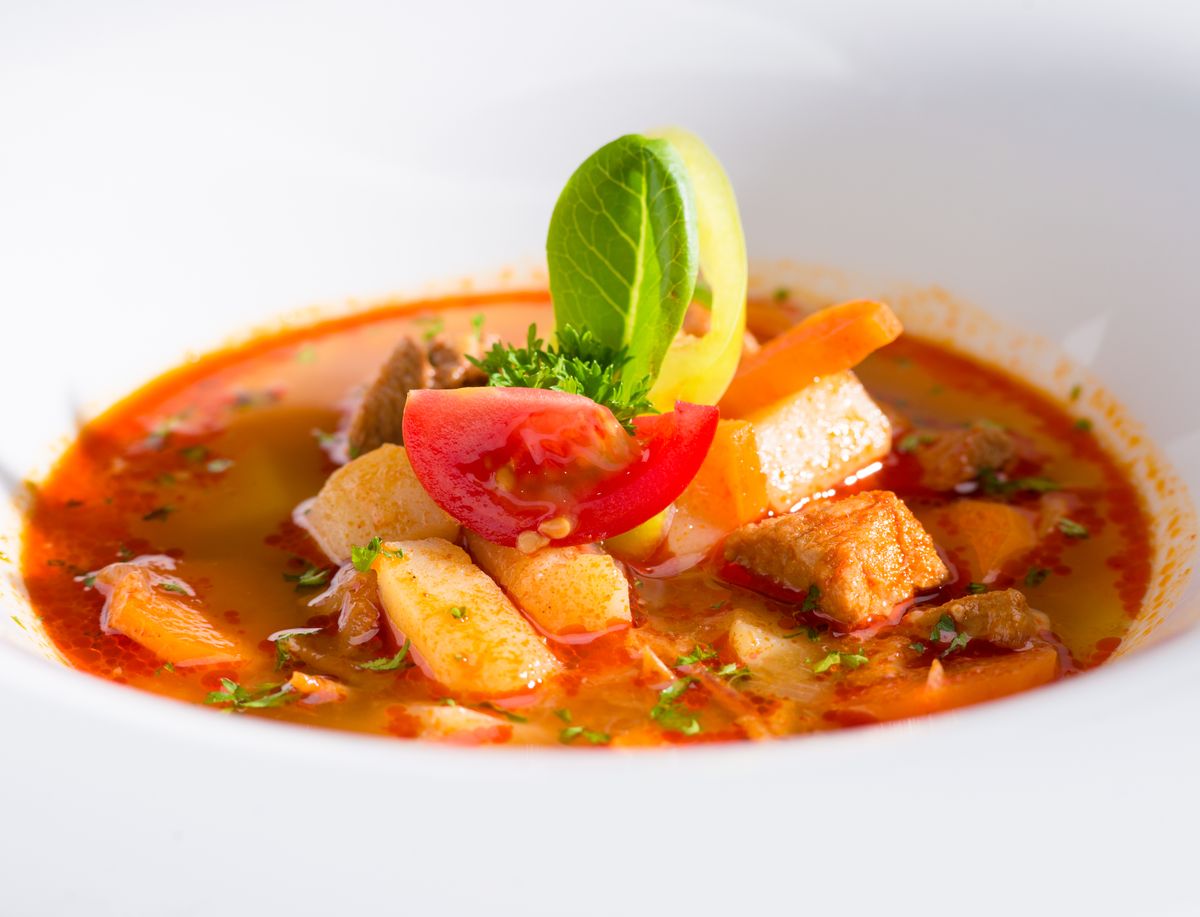
Lou fo tong is a clear broth simmered on low heat, usually for three to four hours, sometimes longer. It's the everyday household soup of Guangdong, Hong Kong, Macau, and every Cantonese kitchen in the diaspora. Unlike Western stocks that are strained and used as a base, lou fo tong is served as a meal itself — the liquid is the point. Ingredients like pork bones, chicken, dried scallops, wintermelon, watercress, dried figs, or apricot kernels go in early and cook down until every flavour has migrated into the broth.
The name is a giveaway. Lou fo literally means 'old fire' — fire that has been burning long enough to be patient, to be gentle, to have wisdom. Nothing about lou fo tong is rushed. That is the whole philosophy.
A 3,500-Year-Old Tradition
The roots of Cantonese slow-cooked soup trace back to early Chinese herbal medicine, where broths were the delivery vehicle for medicinal plants and animal ingredients. In the humid, sub-tropical Lingnan region — the Guangdong lowlands and the Pearl River Delta — the climate is heavy, sticky, and hard on the body. Local doctors and grandmothers developed hundreds of soup recipes tuned to counter the weather: cooling soups for summer, warming soups for winter, dampness-clearing soups for the rainy season, and lung-nourishing soups for smoggy months.
There's a saying every Guangdong local knows: 寧可食無菜,不可食無湯 — 'better to have no vegetables than no soup'. It sounds like an exaggeration until you sit down at a real Cantonese family dinner and see that yes, there is always soup.
The Ingredients: A Small Universe
A typical Cantonese pantry for lou fo tong holds dozens of dried ingredients that get rotated in and out depending on the season, the diner's constitution, and what the family needs that week. Common ones include:
Dried longan and red dates warm the body and support blood. Chinese yam and lotus seeds calm the stomach. Dried figs sweeten broth without sugar. Almond and apricot kernels soothe the lungs. Dried octopus and scallops add depth. Wintermelon cools you down in July heat. Watercress clears heat and moistens the throat. Fresh pork ribs or chicken bones supply the body of the broth.
A skilled home cook doesn't measure. She looks at you — how you slept, whether your voice sounds tired, whether the air outside is dry or damp — and decides what goes in the pot. That's how deep the practice runs.
The Ritual of Making It
Start early. Blanch the meat to remove impurities. Combine everything in a heavy clay or ceramic pot with cold water. Bring to a boil, then drop to the lowest simmer you can hold. Skim the foam once. Then leave it alone. For hours. The broth develops in silence — no stirring, no lid-lifting, no interference. Salt goes in only at the end, if at all. Many families barely salt lou fo tong; the sweetness comes from the ingredients themselves.
This is one of the things that makes Cantonese cooking so different from other Chinese regional cuisines. Sichuan cooks build heat. Shanghai cooks build sugar and soy. But Cantonese cooks build patience. The mastery is in how little you interfere with the ingredients, letting them speak for themselves — the same principle behind wok hei, steamed fish, and the whole Cantonese philosophy of freshness.

Why Cantonese Kids Miss It Most
Talk to anyone in the global Cantonese diaspora and lou fo tong is on the shortlist of foods they crave hardest. Dim sum you can get almost anywhere now. Char siu is on menus in every city. But the specific pork-and-watercress broth your mother made you on a rainy Wednesday when you were nine? That doesn't exist outside her kitchen. It's why so many diaspora kids call their parents asking for recipes they used to roll their eyes at.
There's also a health belief woven through it. Cantonese families have always believed that soup is medicine, and modern nutrition doesn't really argue — slow-cooked bone broth is genuinely full of minerals, gelatin, and easily absorbed nutrition. But the reason it heals isn't just biochemistry. It's that someone spent four hours making it for you.
Where to Try It
Outside a Cantonese household, the best places to try authentic lou fo tong are old-style Guangzhou soup restaurants, family-run cha chaan tengs, and clay-pot specialists in Hong Kong districts like Sai Ying Pun, Sham Shui Po, and North Point. In diaspora cities — Vancouver, San Francisco, Sydney, Toronto — look for the small, unglamorous places with Chinese-only menus and a hand-written soup of the day board. That's where the aunties still cook the way their mothers did.
More Than a Bowl
Lou fo tong isn't really a dish. It's a form of love. It's why a Cantonese grandmother will insist you stay for one more bowl even after you're stuffed. It's why your mum still packs Tupperware containers of soup when you visit. It's why the smell of watercress and pork simmering will make a grown adult tear up in a foreign kitchen. In a culture that doesn't say 'I love you' out loud very often, soup is how the words get spoken.
The Cantonese diaspora carries a lot of things across oceans: Cantonese, characters, festivals, songs. Lou fo tong is one of the deepest ones. Keep the pot on. Keep the fire old.
📖 Related Articles
👉 Shop Cantonese Guy — Modern Streetwear for the Global Cantonese Community