

Imagine a single wooden basin, the size of a small drum, arriving at your table. It's layered like an archaeological dig: braised pork belly, prawns, roast duck, fish balls, mushrooms, tofu skin, radish, all piled deep so the juices trickle down through every layer. This is Poon Choi (盆菜) — the Cantonese basin feast — and the story of how it ended up on Hong Kong tables starts almost 800 years ago, on a beach with a fleeing emperor.
A Dish Born From Wartime Improvisation
According to Cantonese village lore, Poon Choi dates back to the late Song dynasty, when Mongol armies pushed the young emperor south. The imperial party fled through what is now Guangdong Province and eventually reached the coastal area around present-day Hong Kong. Local villagers wanted to feed the emperor and his army, but they had no fine serving vessels. So they did what Cantonese people have always done best: they used what they had. They gathered every good ingredient in the village — roast meats, seafood, root vegetables, tofu — layered everything into large wooden washbasins, and served the whole thing communally.
That improvisation stuck. Over the centuries the dish became a fixture of the walled villages (圩城) of the New Territories — the ancestral settlements of the Punti and Hakka clans who fled south of the Chinese mainland during a series of invasions between the 13th and 17th centuries. Each village had its own Poon Choi recipe, guarded like a family recipe of char siu or a proper lo fo tong.
The Rules of the Basin
A real Poon Choi isn't just a big bowl of stew. The layering is deliberate and hierarchical: expensive ingredients on top, humble ingredients on the bottom. Braised abalone, roast duck, prawns and dried oysters occupy the crown of the basin; pork belly, chicken and mushrooms fill the middle; the base is packed with radish, tofu skin, dried bean curd, taro and vegetables that soak up all the sauces above them.
You eat top-down. As you clear the fancy layers, the humble ones underneath emerge — saturated with hours of dripping stock and fat. Some Cantonese elders insist the tofu skin at the bottom is the real prize. You spend three hours getting to it, and then you fight your cousins for the last piece.
A Ceremony, Not a Meal
Poon Choi has never really been "restaurant food." In the walled villages, it is prepared for religious rituals, ancestral worship, weddings, and 盆菜宴 (basin banquets) held in open village squares during Chinese New Year and Lunar festival days. Long tables are set up outdoors. Elders sit first. The basin arrives on a wooden trolley. Everyone eats from the same vessel — which is, more than anything else, the point.
The Cantonese phrase for this is 同一盆 (tung4 jat1 pun4) — "in the same basin." It means shared fate. A village that eats from one basin is a village that stays together. This is why Poon Choi still matters emotionally: it turns a whole family, or a whole clan, into a single hungry mouth.
From Walled Village to Hong Kong Takeaway
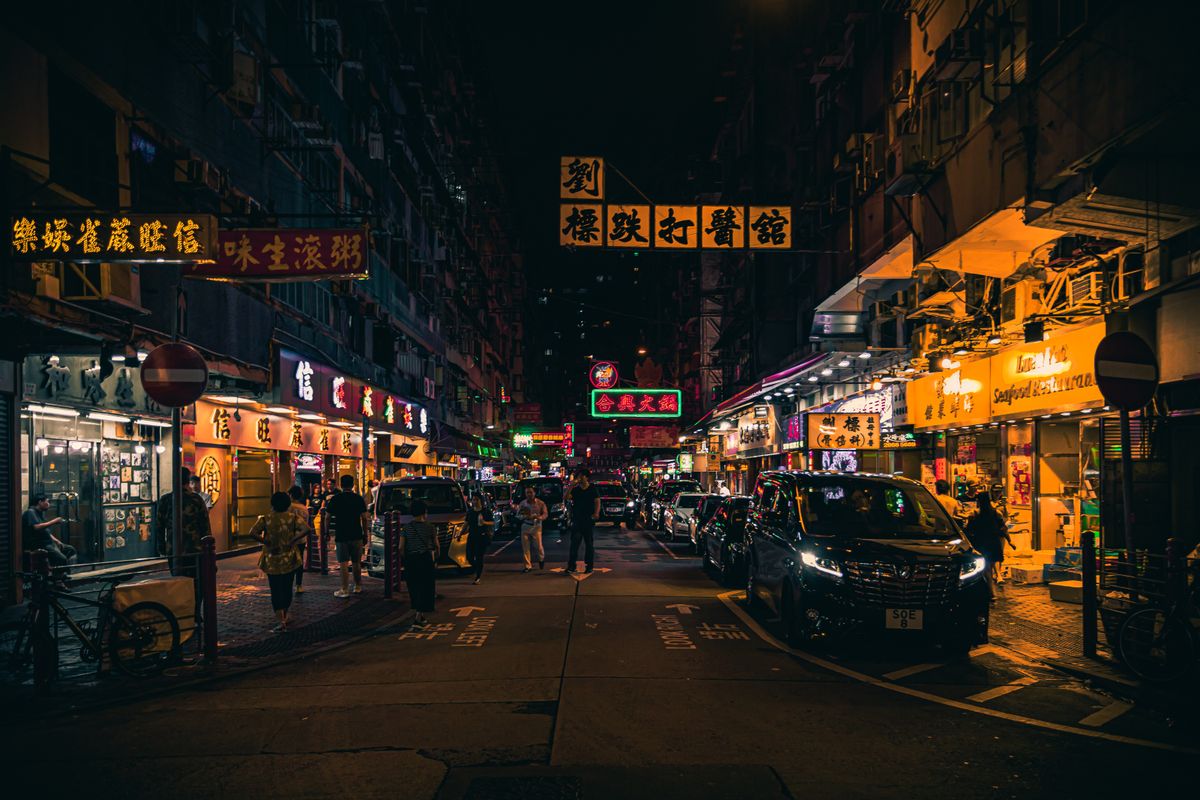
For centuries Poon Choi stayed inside the New Territories. Then, in the 1990s, urban Hong Kongers discovered it. Cantonese restaurants started offering festive basin dishes in autumn and winter, and around Chinese New Year every restaurant from Wan Chai to Sha Tin advertised its own version. By the 2000s you could order a Poon Choi for pickup at Cafe de Coral. In 2020, during the pandemic, sales exploded again: a whole family could eat from one delivery box.
Purists complain that supermarket Poon Choi is a shadow of the walled-village original — they're right — but the fact that a Song-dynasty crisis meal is now a modern convenience order says something incredible about Cantonese food's shape-shifting power. Like clay pot rice and Cantonese cuisine in general, it survives by adapting without losing its soul.
Why It Still Matters to the Cantonese Diaspora
In Vancouver, Sydney, London and San Francisco, Cantonese restaurants now sell Poon Choi for Chinese New Year takeaway. Many diaspora families first met the dish outside Hong Kong — grandparents insisting on ordering one because it was what their village ate. To eat Poon Choi in the diaspora is to eat what your ancestors' walled village would have eaten, in a delivery box, on the other side of the world. There is something perfectly Cantonese about that: no ceremony too old to translate into modern life, no meal too grand to eat with your family in slippers.
The basin doesn't just carry food. It carries memory, ritual, ancestral pride and a stubborn Cantonese belief that no one should ever eat alone if they can help it. Every layer of a Poon Choi is a small argument for that.
📖 Related Articles
👉 Shop Cantonese Guy — Modern Streetwear for the Global Cantonese Community