

In a city famous for moving fast, Hong Kong's most respected bowl of noodles is the one that takes the longest to make. Beef brisket noodles — 牛腰麺 (ngau4 naam5*4 min6) — is built on hours of low simmering, a sauce that hasn't been touched for decades and a queue down the street. Tony Leung eats here. Former Chief Executive Donald Tsang ate here. So does the auntie who's been having the same bowl every Wednesday since 1997.
A Bowl Built on Patience
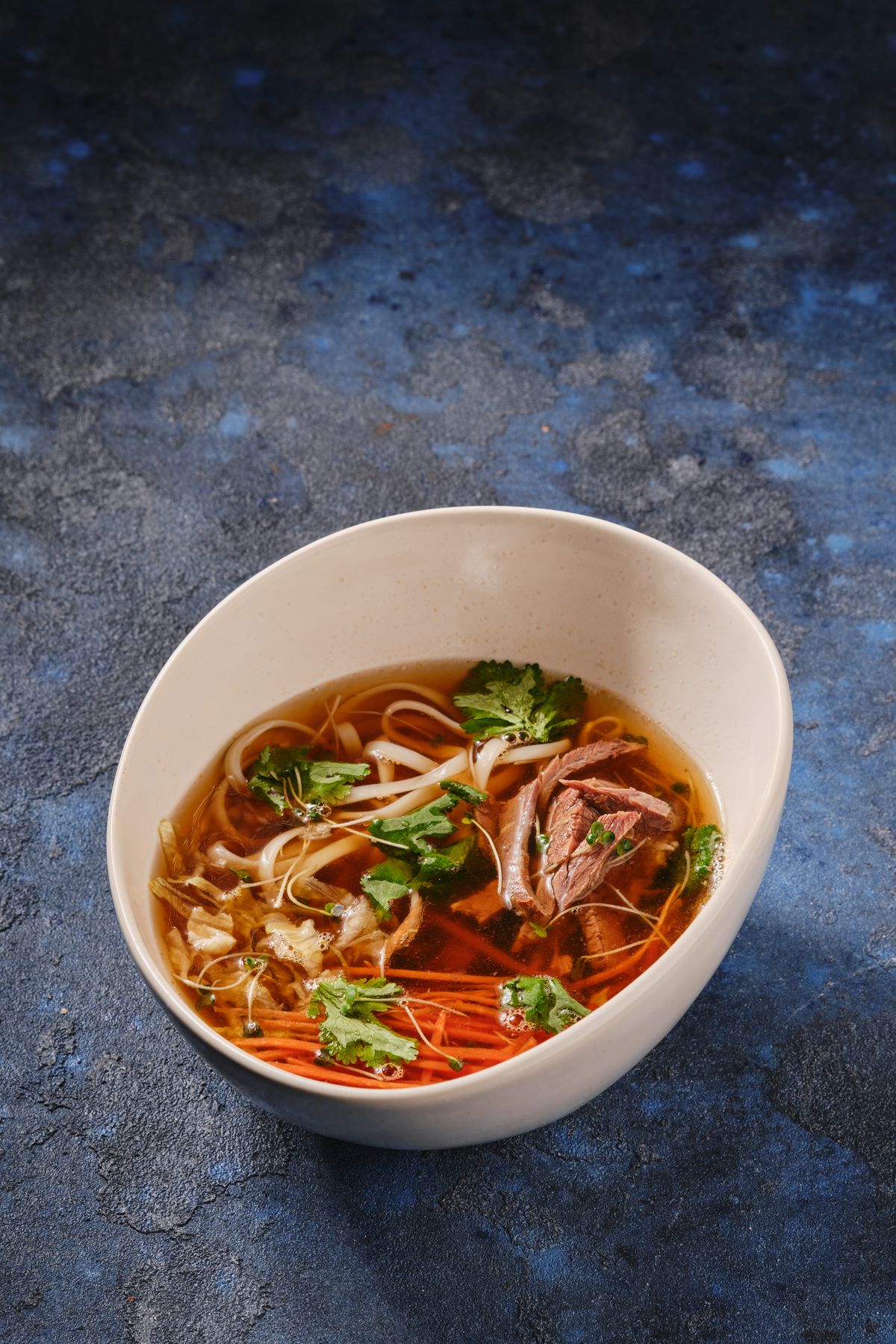
A real bowl of 牛腰麺 is the product of overnight cooking. The brisket — traditionally beef finger meat (坑腰 haang1 naam5) cut with the right ratio of meat, fat and connective tissue — is simmered for hours with aromatics until the collagen breaks down and the meat goes silky. Cantonese chefs swear by what they call 蝦眼水 (haa1 ngaan5 seoi2), "shrimp-eye water" — a simmer so gentle the bubbles are only the size of a shrimp's eye. Boil it harder than that and the broth goes cloudy. Patience is the recipe.
Day-old brisket is better than fresh. The meat soaks up the braising liquid overnight, the tendons soften further, and the broth thickens with collagen. Every famous brisket shop in Hong Kong serves yesterday's pot today, which is exactly why it tastes like it does.
Two Styles, One Identity
Cantonese beef brisket comes in two main schools:
清湯牛腰 (cing1 tong1 ngau4 naam5) — clear-broth brisket. Inspired by Chaozhou (Teochew) cooking, this version is all about clarity. The broth is light gold, perfumed with rock sugar, aromatics and sometimes a touch of preserved tangerine peel. The brisket is tender but not heavily sauced. Hong Kong's most famous practitioner of this style is Kau Kee (九記) on Gough Street in Central, on the Michelin Bib Gourmand list for years and a fixture of celebrity must-eat lists.
柱侯牛腰 (cyu5 hau6 ngau4 naam5) — chu hou brisket. Darker, richer, deeply savoury, this style is braised with chu hou paste — a Guangdong sauce of fermented soybean, garlic, ginger and spices invented in Foshan in the Qing Dynasty. The braise turns the meat mahogany-coloured, the broth thick and almost gravy-like, and it's the version most overseas Cantonese restaurants serve.
Both are correct. Asking which is better is a Hong Kong dinner-table fight that never ends.
Kau Kee: The Shop That Made the Dish Famous
Kau Kee (九記) started as a roadside stall in the 1930s run by a man whose nickname was 阿九 — Ah Kau — hence "Kau Kee." When Hong Kong tightened rules on street stalls, his son moved the operation to a small shopfront on Gough Street in Sheung Wan, and that's where it still is. Lunch service is famous for the queue, which often stretches around the block.
The two signature bowls are clear-soup brisket noodles and curry beef tendon noodles — the curry version uses a Cantonese-style curry that's mellow, coconut-rich and bears almost no resemblance to anything Indian. Tendons here are the secret weapon: long-braised, gelatinous, jiggling like soft jelly when the bowl arrives.
The Right Way to Order
A Hong Kong brisket shop menu reads like a code, and locals order in shorthand. Some essentials:
牛腰 (ngau4 naam5) — just brisket. 牛箋 (ngau4 gan1) — tendon. 牛雜 (ngau4 zaap6) — mixed offal. Most regulars order 腰箋 (naam5 gan1) — brisket and tendon together — because the contrast between meat fibre and gelatinous tendon is the whole point. You'll also choose a noodle: 麺 (min6, egg noodle), 河 (ho2, flat rice noodle), 粉 (fan2, thin rice vermicelli) or 妖 (jou1 mai5, mai-fun). The wider the noodle, the more sauce it carries; the thinner, the cleaner the bowl. Add white radish (白萱 baak6 lo4) if it's available — it soaks up the braise.
Why It Matters Beyond Hong Kong
Beef brisket noodles travelled with the Cantonese diaspora the way wonton noodle soup did — every Chinatown from Vancouver to London has a noodle shop with a pot of brisket going somewhere in the back. The dish is one of the most reliable indicators of how Cantonese a Chinatown really is. A real one will serve clear-broth brisket without apology. A tourist one will swap in cheaper cuts and a thicker sauce.
More than that, brisket noodles represent a Cantonese philosophy that runs through the whole cuisine: long, slow, low. The good stuff takes time. The broth has to settle. You can't rush the tendon. In a city that famously can't sit still, the most Hong Kong meal of all is the one that asks you to wait.
📖 Related Articles
👉 Shop Cantonese Guy — Modern Streetwear for the Global Cantonese Community