

There is no pineapple in a pineapple bun. There has never been pineapple in a pineapple bun. If you go to any of the 1,200-plus bakeries in Hong Kong that make 菠蘿包 and ask for the pineapple version, the auntie behind the counter will look at you with the specific patient sympathy she reserves for tourists who didn't do their reading.
The bun is called \"pineapple\" because the golden, cracked, sugar-cookie crust on top looks like the checkered skin of a pineapple. That is the entire etymology. Inside is soft milk-bread dough. It is one of the most beloved objects in Cantonese food culture, sold every morning in every corner of Hong Kong, and in 2014 the Hong Kong government officially recognised its production as intangible cultural heritage.
This is the story of how a 1940s Kowloon bakery experiment became a HK$3-and-a-half breakfast that shaped a city.

The Bun That Doesn't Contain Its Own Name
A traditional bo lo bao has two layers. The bottom is a plain, slightly sweet milk-bread dough — fluffy, tender, unbothered. On top is the whole point: a thick topping of sugar, lard, egg, and flour, baked until it cracks open into a golden crust. That crackled crust is the pineapple. The Cantonese word 菠蘿 (bo1 lo4) means pineapple; 包 (baau1) means bun. Together: pineapple-skin bun.
The dough underneath is often just plain — no filling at all, which surprises people used to filled Chinese pastries. The whole architecture is built around the contrast: crisp sweet top, cloudy soft bottom, no distractions. It's the same design instinct that gave us the Hong Kong egg tart — minimal ingredients, maximum precision.
Where It Actually Came From (Nobody Really Knows)
Nobody has a definitive origin story for the pineapple bun. The most credible theory is that it emerged from Hong Kong bakeries in the 1940s, as local bakers experimented with a sweeter, more Western-influenced version of Chinese steamed buns. Some historians believe the topping was inspired by the Japanese melonpan — a bun with a cross-hatched sweet biscuit crust that looks like a melon rind — which was widely eaten in Hong Kong during the Japanese occupation from 1941 to 1945.
Others point to Mexican concha, or simply to inventive local bakers wanting to make a more indulgent Chinese-style sweet bread. What everyone agrees on: by the 1950s, the bun was a Hong Kong institution. Tai Tung Bakery in Yuen Long has been making them since the 1940s. By the 1960s, urban bakeries were producing up to 3,000 buns a day, accounting for the majority of their revenue.
The Boh Loh Yau: A Butter Slab Between Two Warm Halves
Then a genius at a cha chaan teng — nobody knows who, nobody knows when, though the 1960s are the best guess — sliced a hot pineapple bun in half and shoved a thick, cold slab of butter inside. The butter began to melt against the hot bread. The salt cut through the sugar. Something was born.
This is the 菠蘿油 (bo1 lo4 jau4) — literally \"pineapple oil\" — and it is arguably the most famous single item on any cha chaan teng menu. If you order one, they will bring it to you within 90 seconds: warm bread, cold butter, a small napkin, no ceremony. You take one bite and understand why this is one of the most iconic pieces of the cha chaan teng canon that also gave us silk-stocking milk tea.
Every Hong Konger has a favourite bakery for it. Kam Wah Cafe in Prince Edward is world-famous. Kam Fung Cafe in Wan Chai has a queue at 8am. 金華家餅 (Kam Wah) reportedly sells 1,500 buns a day. The rule at all of them: the bun must still be hot when the butter goes in.
👑 Wear the Breakfast
- 得閒飲茶 Let's Catch Up sweatshirt — the exact phrase you use when inviting someone for tea, milk tea, and a shared pineapple bun
2014: The Government Wrote It Into the Heritage Register
In June 2014, the Hong Kong government's Intangible Cultural Heritage Office published its first inventory of Cantonese cultural practices worthy of protection. Alongside Cantonese opera, incense-making, and traditional Chinese medicine, they listed the technique of making 菠蘿包. A bakery bun — elevated to the same protected status as centuries-old crafts.
This was not sentimentality. In the 2000s, Western chain bakeries and machine-produced buns had begun to squeeze traditional Hong Kong bakeries out of the market. The listing was a warning that if we didn't protect the craft, we'd lose the hand-cracked, small-batch, unmistakably local version.
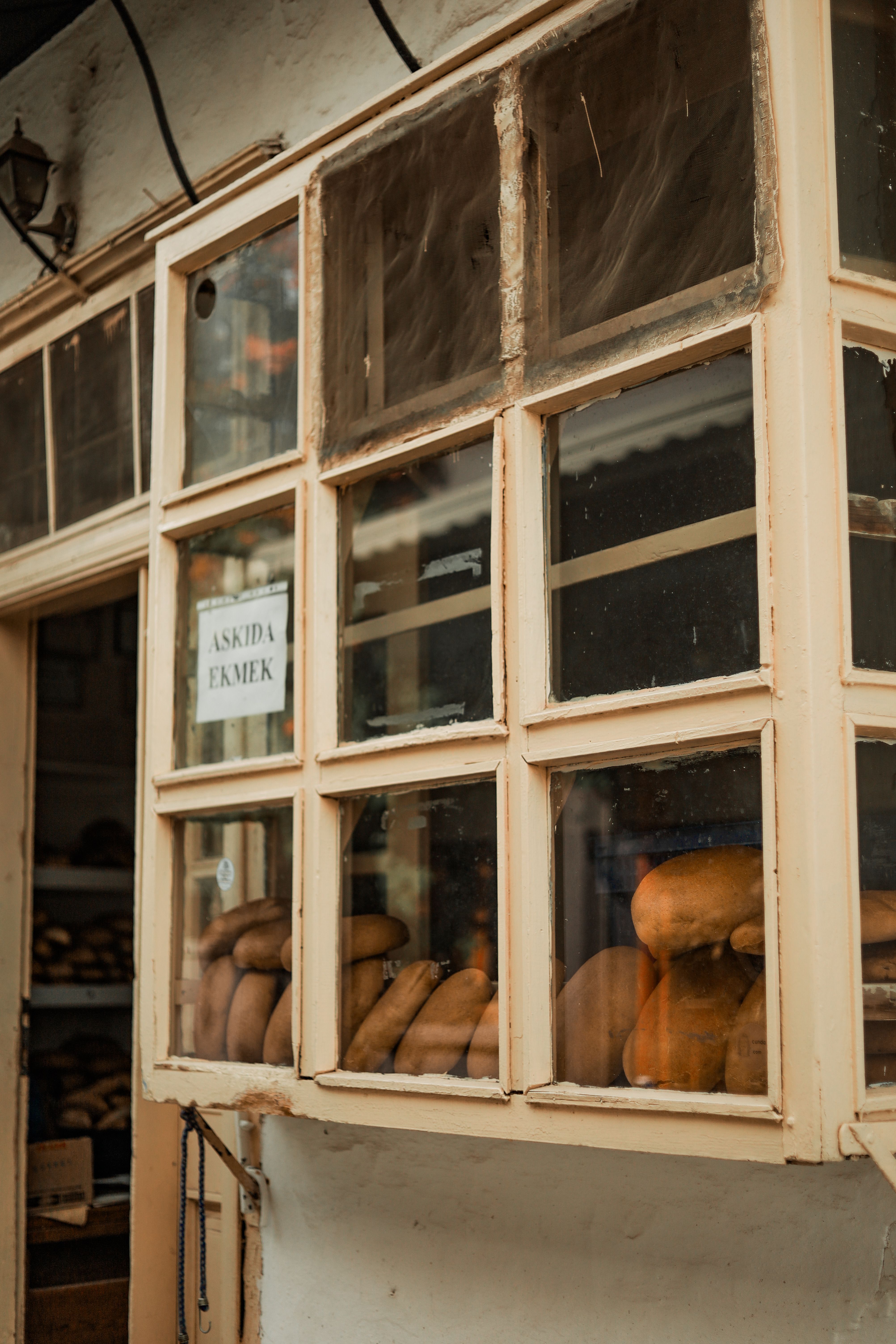
The Diaspora Version
Wherever Cantonese people settled, the pineapple bun followed. Vancouver, San Francisco, Sydney, London — every Chinatown bakery has a version. In Vancouver they're often plumper. In San Francisco they trend a bit sweeter. In London they're occasionally split for a chunk of cheddar (blasphemy, but delicious). The archetype survives because it's cheap, filling, unfussy, and it tastes like home.
If you grew up on these — walking home from primary school with a warm one in a paper bag, still steaming inside your uniform pocket — our 食飯 Dinner is Ready embroidery tee is that same childhood, printed on cotton. So is our 叉燒 Char Siu oversized tee, for anyone who thinks a good bakery is worth defending.
The 2015 Movie You Should Have Heard Of
In 2015, Hong Kong director Wong Kwan-yiu made a film called 麻麩菠蘿包 (Mahjong & Pineapple Bun), a coming-of-age story about a girl coming to terms with her father's bakery and her heritage. The film is a love letter to the pineapple bun, and to the neighbourhood 餐廳 (restaurants) that make them. It's not a huge international movie, but it's the kind of thing every diaspora kid should watch with a warm bo lo yau in one hand.
Why It Still Matters
The pineapple bun is a small miracle of naming, adaptation, and stubborn tradition. It doesn't contain a pineapple. It probably borrowed its idea from Japan or Mexico. Its most famous version was invented by an anonymous cha chaan teng cook. The government had to write a heritage regulation to protect it from getting factory-machined out of existence. And still, in 2026, if you walk into any Hong Kong bakery at 7:30am, someone is pulling a tray of them out of the oven — crackling golden tops, steam rising — for a queue of grandmothers, office workers, and one very quiet MTR driver on his break.
That's the bun. That's the city.
📖 Related Articles
👉 Shop the Mami Says collection
Modern streetwear for the global Cantonese community.