

In a post-war Hong Kong grocery shop somewhere in the early 1950s, a shopkeeper looked at a tray of broken eggs he was about to throw out and made a decision that would eventually feed millions of people across the world. He mixed those cracked eggs with flour, sugar and evaporated milk, poured the batter into a cast-iron plate full of tiny half-sphere moulds, and pressed it over a charcoal flame.
The result was a warm, crispy, bubble-covered pillow with a fluffy custard-like centre. He gave it a name: 雞蛋仔 (gai1 daan6*2 zai2) — literally "little chicken eggs." Seven decades later, that same snack is sold on every street corner in Hong Kong, has been declared part of the city's intangible cultural heritage, and has spread to New York, London, Toronto, Sydney, Melbourne and Vancouver. The humble Cantonese Egg Waffle is arguably Hong Kong's most successful cultural export after Bruce Lee.
Born From Broken Eggs and Post-War Thrift
The exact origin of the Egg Waffle is disputed — as most great Cantonese food origin stories are — but the most credible version places it in Hong Kong around the early 1950s. Hong Kong was still recovering from the Japanese occupation. Food was rationed. Nothing edible went to waste. The commonly told story is that a grocery shop owner, wanting to make use of eggs that had cracked in transit, developed a simple batter of sugar, flour and evaporated milk to bind them together.
He poured the batter into a two-plate honey-comb iron mould — the same kind used to make Belgian-style waffles — and held it over charcoal. What came out was completely different from any Western waffle: a chain of tiny hollow spheres, each one an eggy little pocket of air, crispy on the outside and fluffy inside.
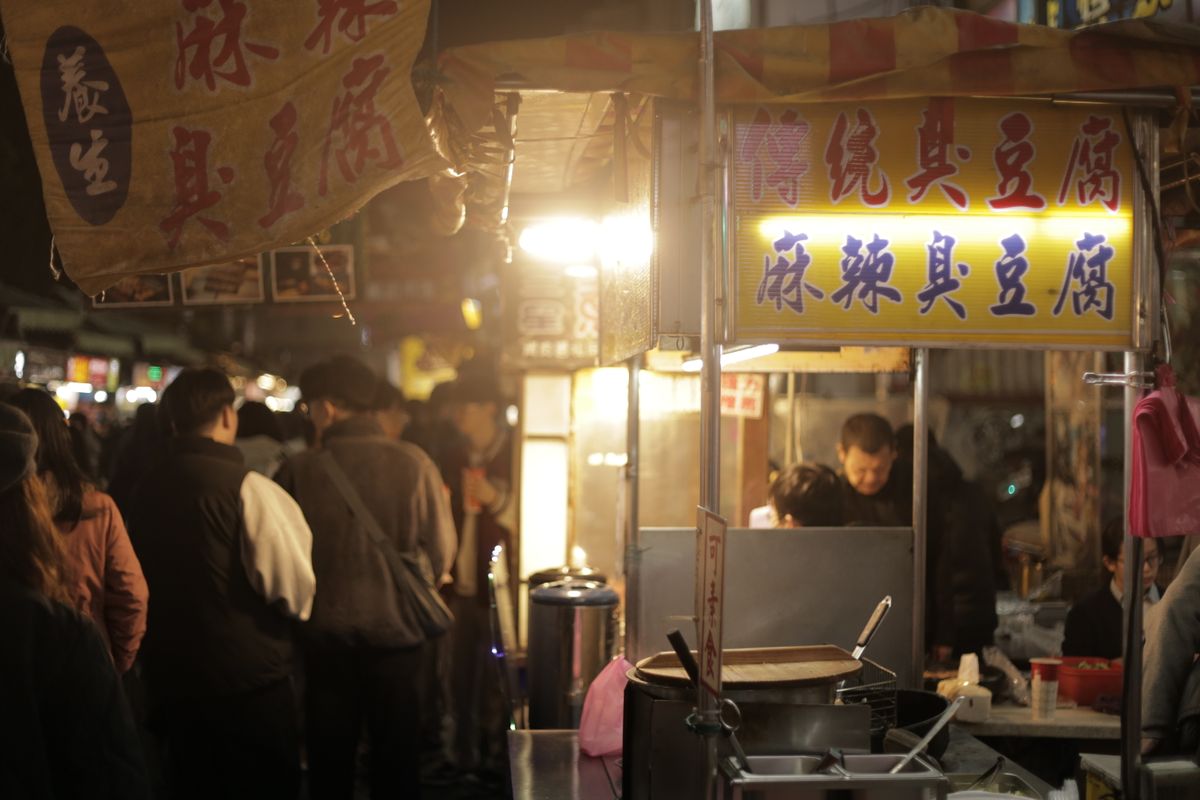
Street hawkers took the concept and ran with it. By the late 1950s, gai daan zai were being sold from tin-can charcoal stoves outside schools, in Mong Kok side streets, and near ferry piers. A whole generation of Hong Kong kids grew up with charcoal-blackened fingers and lips.
The Charcoal Method That Still Rules
Ask any Cantonese person over 40 and they will tell you the same thing: real gai daan zai must be cooked over charcoal, not gas. The difference is real. The smoky heat of charcoal caramelises the outside of each little sphere and gives the waffle a delicate crunch and a whisper of smokiness that gas simply cannot produce.
Modern health regulations have quietly pushed most vendors to gas or electric plates. But a small handful of legendary stalls — like Mammy Pancake in Tsim Sha Tsui and the disappearing charcoal veterans in North Point — still insist on the old way. Cantonese food critics will queue for 45 minutes just for the taste difference.
The Name That Only Makes Sense in Cantonese
雞蛋仔 literally means "little chicken eggs." The 仔 suffix is a distinctly Cantonese affectionate diminutive — the same one that makes 打工仔 a warm word for a working stiff. In this case, it turns "chicken egg" into something small, cute, and quintessentially Hong Kong.
Attempts to translate the name into English have created a decade of confusion. The most common translations — "egg waffle," "bubble waffle," "eggette," "puff waffle" — all miss the point. To Cantonese ears, the little sphere pockets look and feel exactly like a cluster of small eggs. The name is the perfect visual pun.
Ranked #1 Hong Kong Street Snack
In a widely-cited public survey of Hong Kong's 100 most-loved street snacks, gai daan zai came in first place. Ahead of curry fish balls. Ahead of stinky tofu. Ahead of siu mai. In 2014, Hong Kong's Home Affairs Bureau added the traditional charcoal-cooked egg waffle to the city's inventory of intangible cultural heritage — the same protected list that recognises Cantonese opera and Cheung Chau's Bun Festival.
That is a serious cultural promotion for a snack that started as a way to use up broken eggs.
The Modern Reinvention
In the mid-2010s, a small Hong Kong-diaspora shop in Manhattan called Eggloo did something ingenious: they folded the egg waffle around a scoop of ice cream, sliced fruit and toppings. Overnight, gai daan zai became Instagram bait. Long lines formed on the Lower East Side. Copycat shops opened in Toronto, London and Vancouver. The Cantonese street snack quietly became one of the first Asian foods to go truly globally viral.
Purists in Hong Kong have mixed feelings. On the one hand, no Hong Konger eats gai daan zai with matcha ice cream and edible glitter on top. On the other hand, the world finally started paying attention to Cantonese food beyond dim sum and roast duck.
How to Eat One Like a Hong Konger
There is a technique. Cantonese people don't fold the waffle in half like a book. They tear it lengthwise into strips, one small egg-pocket at a time. Each pocket is popped into your mouth whole. The tiny snap of the crust gives way to hot, eggy, custardy softness. You never let it cool down — gai daan zai are only really at their peak in the first two minutes.
The best pairing is either a hot cup of Hong Kong milk tea or a cold soybean drink. Anything else, and you're basically eating dessert.
Why It Still Matters
For the Cantonese diaspora, the egg waffle is a memory in edible form. It smells like a childhood after school. It sounds like the sizzle of charcoal irons opening at a Mong Kok corner. It tastes like the first thing your grandmother bought you when you got off the ferry from Central. When a Cantonese kid in London or San Francisco finally finds a stall that does it right, they will FaceTime their grandparents from the queue.
That is the real power of gai daan zai. It is not just a snack. It is Hong Kong's post-war ingenuity, its refusal to waste anything, its love of small delicious things eaten standing up on the street. Every bite is 70 years of Cantonese hustle wrapped in a bubble of hot egg.
Wear the Culture
Cantonese street snacks like the egg waffle are exactly the kind of everyday genius we celebrate at Cantonese Guy. Modern streetwear, rooted in Guangdong food, language and street life — built for the global Cantonese community that grew up on gai daan zai.
📖 Related Articles
👉 Shop Cantonese Guy — Modern Streetwear for the Global Cantonese Community