

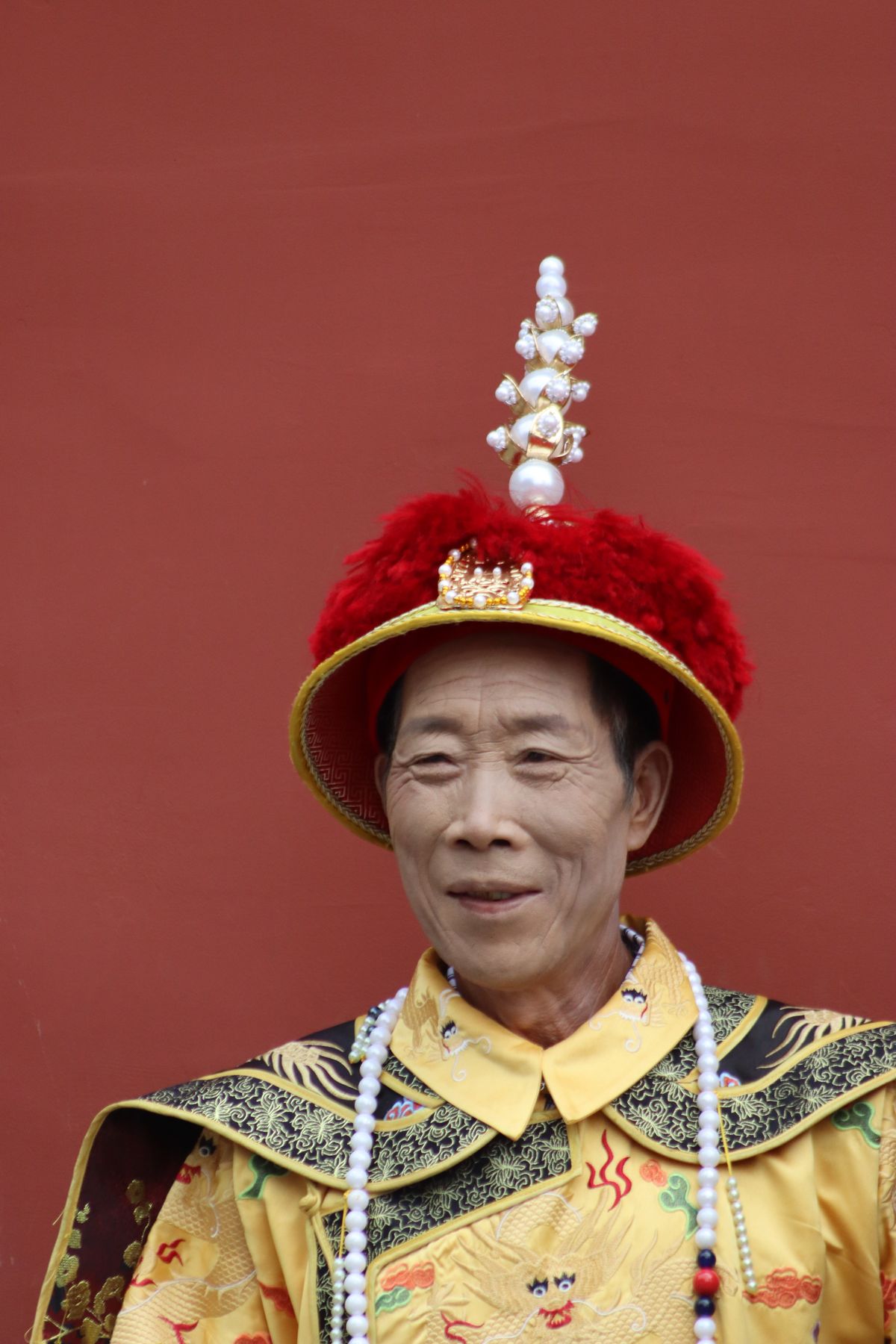
Walk into an old bamboo-scaffolded theatre in Kowloon on a mid-autumn night and you'll hear something the modern world barely still remembers: a live erhu bending a single note over a percussion crash, a performer in eight kilograms of embroidered silk holding a high falsetto for what feels like a full breath longer than possible, and an entire audience of grandparents mouthing the lyrics because they've known them for fifty years. This is 粵劇 — Cantonese opera — and it has been running in one form or another for about three hundred years.
In September 2009, UNESCO added it to the Representative List of the Intangible Cultural Heritage of Humanity. The inscription reads: "Yueju opera... combines Mandarin operatic tradition and Cantonese dialect." That single sentence sits on top of a very long story.
Where It Comes From
Cantonese opera grew up in Guangdong province in the late 17th and 18th centuries, when travelling troupes from other parts of China arrived in the Pearl River Delta and started blending their repertoires with local Cantonese language, folk music and street storytelling. By the late Qing dynasty, distinct Cantonese opera troupes were performing in Guangzhou, Foshan, Macau and Hong Kong, often on floating opera boats known as 紅船 ("red boats") that travelled between villages along the delta.
The red boats gave the art form one of its enduring legends: many kung fu grandmasters, including figures associated with Hung Gar and Wing Chun, are said to have trained on those boats — opera performers who doubled as martial artists so they could handle bandits and stage-fight in convincing style. Cantonese opera and Cantonese martial arts share the same DNA.
The Four Skills and the Painted Face
Every Cantonese opera performer is trained in what the tradition calls the four skills: 唱 (sing), 嘅 (recite), 做 (act) and 打 (fight). The singing is stylised and often falsetto, backed by a small orchestra of erhu, yehu (a Cantonese two-string fiddle), gaowu, dizi flute, gongs, cymbals, and a bank of woodblocks that dictate the pace of every scene.
The face paint is not decoration. It's a code. Red painted faces traditionally signal loyal and righteous characters. Black faces suggest fair judgement. White faces mark treachery. A single glance at the makeup and a Cantonese audience already knows who they are watching and how to feel about them. It's a visual grammar that took centuries to fix.
The Great Names
Two names loom over 20th-century Cantonese opera the way Elvis and Sinatra loom over American music. Yam Kim-fai (任劍輝, 1913–1989) was a woman who specialised in male roles — the scholar-lover 小生 — and became so beloved that when she died, tens of thousands of fans lined Hong Kong's streets. Her stage partner Bak Sheut-sin (白雪仙, born 1928, now in her late nineties) played the female lead 花旦 in dozens of legendary productions with her. Together they were the sound of Cantonese opera's golden age, and their recordings are still played on old radios across Kowloon every afternoon.
Bamboo Theatres and the Neighbourhoods That Still Show Up
During Cantonese festivals — particularly around the Hungry Ghost Festival, the Cheung Chau Bun Festival, and Tin Hau's birthday — Hong Kong villages still build temporary bamboo-scaffolded theatres called 竹棚戲棚 (zuk1 paang4 hei3 pang4) and stage full opera nights lasting several hours. It's one of the most vivid living traditions in Cantonese culture: a theatre built out of bamboo in three days, opera for three nights, then dismantled and gone until next year.
The Sunbeam Theatre (新光戲院) in North Point has been a flagship indoor Cantonese opera venue in Hong Kong since 1972. In 2019, the Xiqu Centre opened in West Kowloon Cultural District specifically to preserve and modernise the art form for a new generation. Meanwhile, Guangzhou has its own Cantonese Opera Art Museum. The infrastructure is there. The audience — that's the harder question.
The Struggle to Keep It Alive
The core audience of Cantonese opera is elderly. Younger Cantonese speakers grew up on Cantopop, Hong Kong cinema and Netflix, and the language of the opera — heavily literary, sung in a stylised classical register — can feel as distant to a 20-year-old as Shakespeare feels to a modern London teenager. Ticket sales have shrunk. Master performers are ageing. Very few young people are willing to spend the decade of training required.
The UNESCO recognition mattered because it gave governments in Guangdong and Hong Kong political cover to fund preservation seriously. New training schools, subtitle systems in theatres, streaming versions of classic productions, and youth-oriented shows on platforms like Bilibili have all started to appear. Whether it's enough is a live question.
A Word Every Cantonese Opera Fan Knows
戲棚
hei3 paang4 — Jyutping romanisation
Meaning: Temporary opera theatre — usually built from bamboo scaffolding.
Explanation: 戲 means "drama" and 棚 means "shed" or "stall." A 戲棚 is a pop-up bamboo theatre put together for a village festival. Even in 2026, on outlying islands and old New Territories villages, you can still find them at the right time of year.
Why It Matters
Cantonese opera is the largest single container of the Cantonese language's poetic history. Its lyrics preserve idioms that ordinary conversation has long forgotten. Its melodies carry musical traditions from the Pearl River villages of two centuries ago. Its costumes are among the last places you can still see full traditional Cantonese embroidery in daily use. Losing Cantonese opera wouldn't just be losing a theatre form. It would be losing a library.
For the diaspora, it's a reminder that Cantonese culture is more than food and Cantopop. There's an entire literary and musical tradition sitting quietly in North Point and West Kowloon, waiting for a new generation to walk in the door. It doesn't need to be worshipped. It just needs the audience to keep showing up.
📖 Related Articles
👉 Shop Cantonese Guy — Modern Streetwear for the Global Cantonese Community