

There's a particular sound Cantonese people carry in their bones: the metallic clang of a wok against a gas ring, the hiss of oil hitting hot steel, the shouted order from behind a cloud of steam. That sound is the dai pai dong (大牌檔) — Hong Kong's open-air Cantonese street kitchens — and it almost disappeared from the city entirely.
Once there were thousands. Today, fewer than 25 traditional licensed dai pai dong survive in Hong Kong. This is the story of how they got here, why they matter, and what the city would lose if the last green metal stall ever shut.
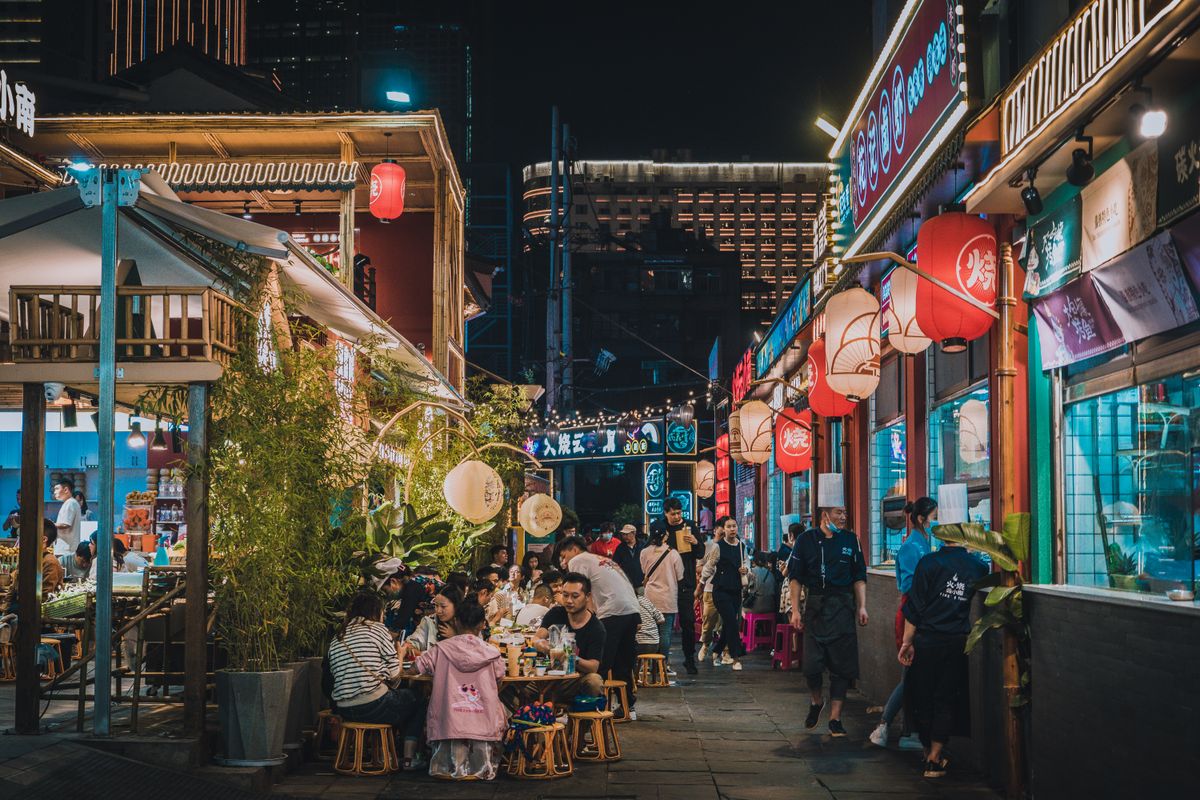
A Kitchen Born From a War
The name is literal: 大牌檔 means "big-licence stall." After the Second World War, Hong Kong's colonial government was overwhelmed by widows and injured workers whose husbands and fathers had died in service or in the fighting. To help these families feed themselves, the government began issuing special "cooked food licences" — permits to run open-air food stalls on public land. The licences were physically larger than the ones given to mobile hawkers, because they had to carry a photograph of the licensee, prominently displayed at the stall as the law required. Bigger licence, bigger stall, bigger legacy. That's how the dai pai dong got its name.
The first stalls sprouted along the alleys of Central, Sheung Wan, Sham Shui Po, and Wan Chai. Widows cooked congee at dawn, fishball noodle sellers set up by lunchtime, and by evening the same corner became a stir-fry kitchen fanning out plastic stools onto the pavement. Compensation, it turned out, tasted like garlic and wok smoke.
The Golden Decades: 1950s and 60s
By the 1950s and 60s, dai pai dong were everywhere. At their peak, thousands operated across Hong Kong Island and Kowloon. They fed the dockworkers, the tram drivers, the seamstresses coming off double shifts in the garment factories, the shopkeepers who couldn't leave the till, and the students who could afford one hot meal a day.
This is when the great Cantonese street dishes were codified: beef brisket noodles (牛腥麵), soy-sauce chow mein, black-pepper beef on rice, salt-and-pepper prawns, and the mythical "鐵板" (iron plate) sizzling beef. Legend has it that some of the more elaborate wok-fried dishes we now associate with Hong Kong seafood palaces — the ones that need serious 鐵鎬 (wok hei, the smoky "breath of the wok") — were perfected first over dai pai dong ranges by cooks who had 30 seconds and one burner to prove themselves.
The Slow Squeeze
In 1956, the government quietly stopped issuing new dai pai dong licences. From then on, the number could only ever go down. Existing licences could be inherited within a family — typically passed from father to son, or licence-holder to spouse — but never sold or transferred to outsiders.
Starting in the 1980s, the government went further: it began actively buying back licences from stall operators, citing hygiene, noise, and traffic concerns. Landlords wanted the pavement space. Property developers wanted the corners cleared. One by one, the stalls closed. The green metal frames — painted that specific shade of institutional dai pai dong green — were unbolted, folded up, and hauled away.
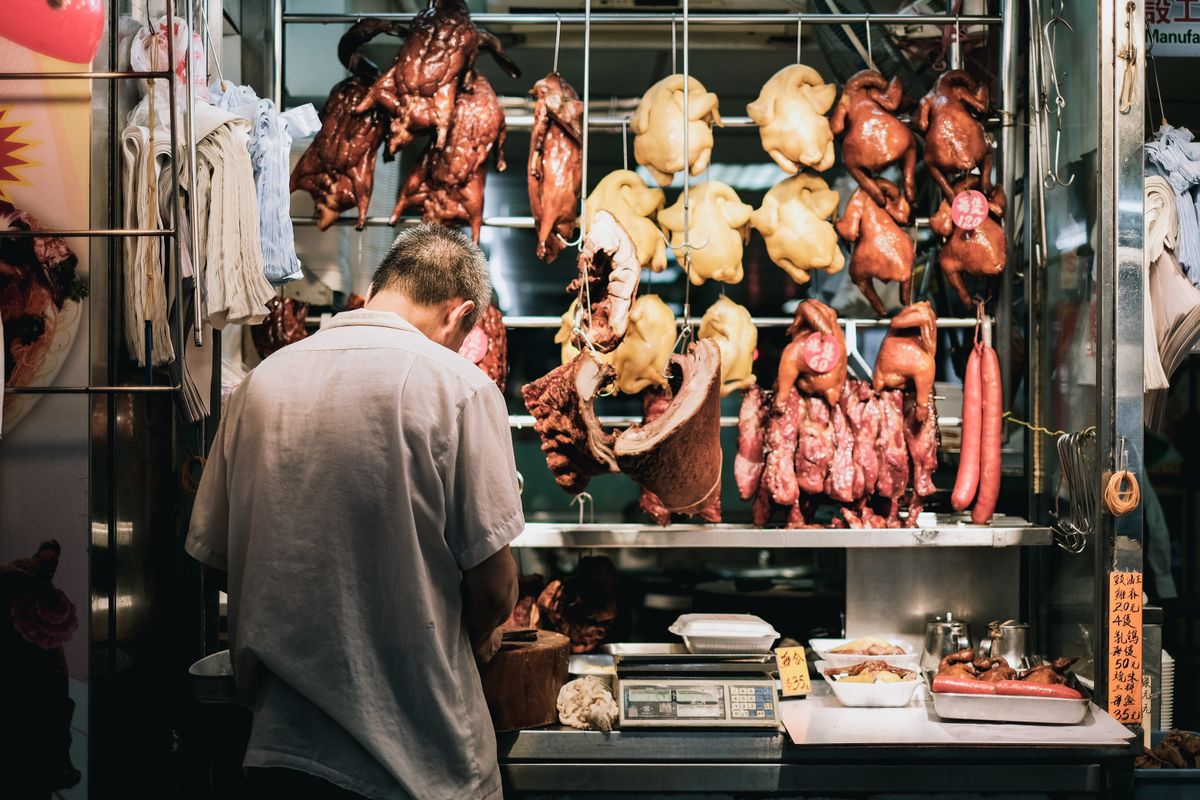
The Survivors
Today, fewer than 25 traditional licensed dai pai dong remain in Hong Kong. Most are clustered in Central (around Stanley Street and Elgin Street), Sham Shui Po (the last real stronghold, along Kweilin Street and Yiu Tung Street), and Wan Chai. Names like Sing Heung Yuen, Oi Man Sang, and Keung Kee have become pilgrimage sites for anyone who cares about Cantonese food heritage.
Recent years have seen a small revival. A new generation of Hong Kong chefs has started opening "neo dai pai dong" concepts — upscale restaurants that borrow the aesthetic, the plastic-stool intimacy, and the roaring wok energy, but operate under regular restaurant licences indoors. It's not the same. But it means the DNA is still being copied, still being loved, still being carried forward.
Why the Green Stall Still Matters
A dai pai dong isn't just cheap food. It's the Cantonese social contract in physical form. You sit on a plastic stool next to a taxi driver on his break and a banker in his shirt sleeves. You share a folding table with strangers because there's nowhere else to sit. You yell your order because the cook can't hear you over the wok. You pay cash, you eat fast, and you make room for the next person coming in. That's Hong Kong — 搵食 in its purest form, everyone finding their bowl at the same corner.
The same street-level Cantonese food culture birthed the wet market, the pineapple bun, and the neighbourhood cha chaan teng. All of them are threads in the same fabric — a Cantonese city fed, defended, and shaped by the people cooking on the pavement.
The Last Wok Fire
Ask any Hong Kong 叔叔 (sok1 sok1, uncle) about their favourite dai pai dong and they'll go quiet for a second, then start remembering. The one behind grandpa's shop. The one their mother took them to after school on the last day of the term. The one that closed in 1998 that nobody's been able to replicate since. Every dai pai dong is somebody's memory of home, cooked in front of them at 250 degrees Celsius on a burner that shouldn't legally exist.
If you ever get the chance to sit at one of the last 25 in Hong Kong — order the black-bean beef, the salted egg pumpkin, the noodles with wonton on the side — do it. Eat slowly. Look around. You're eating history that the city almost let disappear.
📖 Related Articles
👉 Shop Cantonese Guy — Modern Streetwear for the Global Cantonese Community