

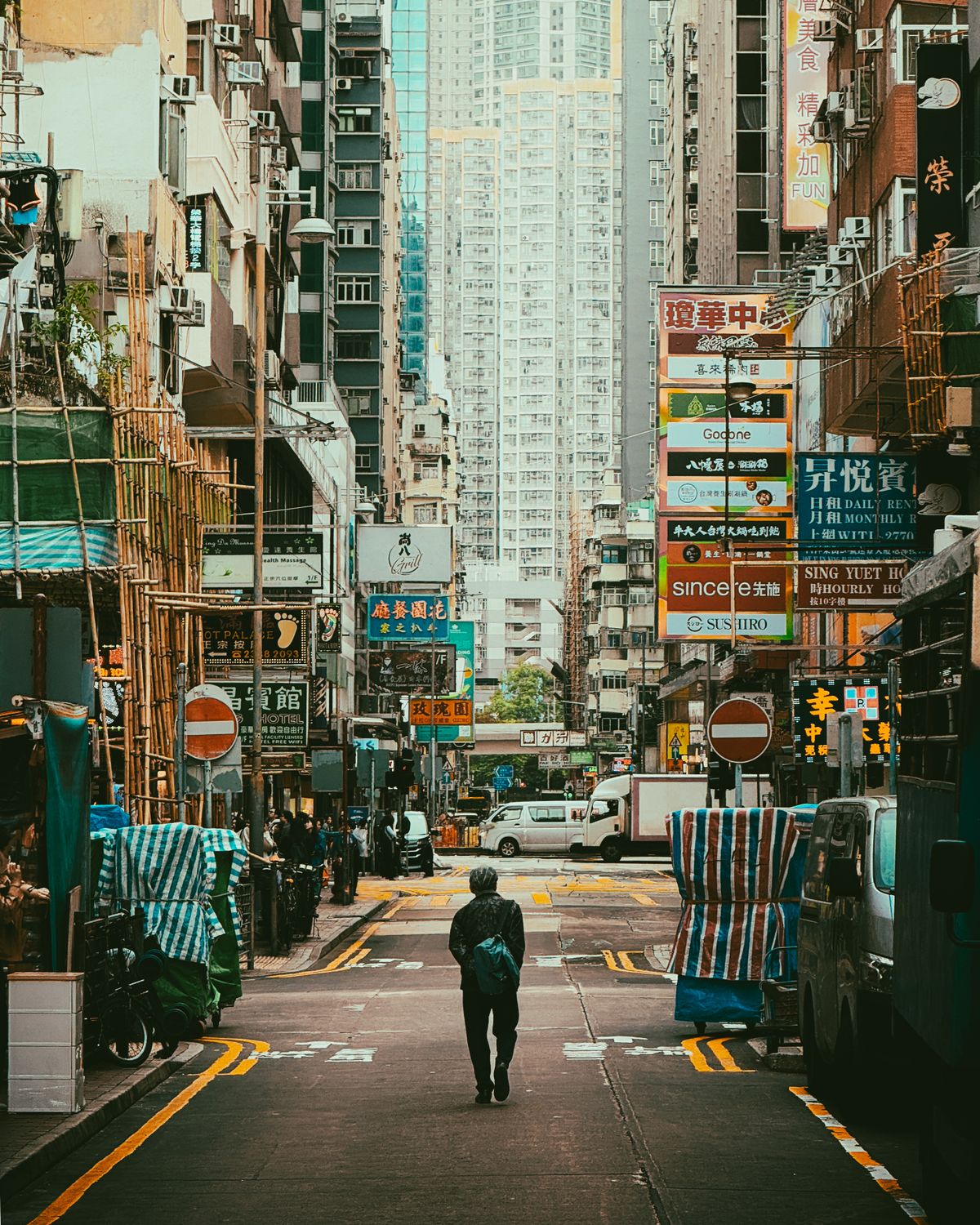
In Hong Kong, nobody asks "how much does this cost?" — they ask "幾多錢啊?" And when the answer comes back, it's rarely just a number. It's a word soaked in a hundred years of hustle: dockworker slang, cha chaan teng banter, market-vendor shorthand, and the quiet philosophy of a city where everyone's chasing a bowl of rice. This is Cantonese money talk — and it tells you more about Hong Kong than any economics textbook ever could.
10 Cantonese Money Words Every Hong Konger Knows by Heart
1. 錢
cin4 — Jyutping romanisation
Meaning: Money — the base word, the classical character, the one you'll see printed on every red packet.
Explanation: This is the formal word for money, but Cantonese speakers rarely use it alone in conversation. It gets combined with other words to talk about specific kinds of money — pocket money, lucky money, spending money — while everyday amounts get called by their slang cousins.
2. 蚊
man1 — Jyutping romanisation
Meaning: Dollar. Yes — literally the character for "mosquito."
Explanation: The story goes that "man1" was borrowed from the older character 文 (a small coin unit), then swapped over time to the mosquito character because it shared the sound. In everyday Cantonese, nobody says "one Hong Kong dollar" — they say "一蚊" (jat1 man1). It's the currency of dai pai dong bills and MTR fares.
3. 一舊水
jat1 gau6 seoi2 — Jyutping romanisation
Meaning: One hundred Hong Kong dollars (slang). Literally "a lump of water."
Explanation: "Water" (水) has meant money in Cantonese slang for generations — money flows, money runs dry, money is what keeps a city alive. A "lump" (舊) of it is a HK$100 note. You'll hear it at mahjong tables, market stalls, and anywhere someone's counting cash they'd rather not name aloud.
4. 荷包
ho4 baau1 — Jyutping romanisation
Meaning: Wallet, purse — but also, metaphorically, your entire financial situation.
Explanation: Originally a small embroidered pouch worn on the belt, "ho4 baau1" now covers everything from your leather billfold to your bank account's general vibe. When someone says their "荷包" is thin, they don't mean the wallet — they mean the situation.
5. 慳錢
haan1 cin4 — Jyutping romanisation
Meaning: To save money by spending less — the everyday Cantonese verb for being thrifty.
Explanation: "Haan1" is one of the great Cantonese verbs. It's not just "save" — it's the daily discipline of a city that turned frugality into a personality trait. Bring your own bags. Eat at home twice this week. Take the bus instead of the taxi. That's "慳."
6. 蝕本
sit6 bun2 — Jyutping romanisation
Meaning: To lose money in business or on a deal. Literally "the capital gets eaten."
Explanation: The character 蝕 originally described insects gnawing away at something. When a Cantonese speaker says a deal is "蝕本," they mean the profit didn't just vanish — it was eaten alive. Market vendors, small-business owners, and anyone who's ever tried to flip a side hustle knows this word intimately.
7. 老千
lou5 cin1 — Jyutping romanisation
Meaning: A con artist, a cheat, a swindler.
Explanation: Hong Kong cinema built an entire genre out of this word — the God of Gamblers films and dozens of others made the "lou5 cin1" into a folk figure. In real life, it's what your auntie calls the guy running the shady stall in Sham Shui Po. Wear it as a warning, never a compliment.
8. 老襯
lou5 can3 — Jyutping romanisation
Meaning: A sucker — someone who gets easily fooled or overcharged.
Explanation: If "lou5 cin1" is the con artist, "lou5 can3" is the mark. Cantonese speakers use it constantly — usually with a sigh, sometimes with a laugh — to describe the friend who paid tourist price for the same jade bracelet you got at half. Nobody wants to be the "lou5 can3."
9. 搵食
wan2 sik6 — Jyutping romanisation
Meaning: To earn a living. Literally "to find food."
Explanation: No other Cantonese phrase captures the Hong Kong working spirit quite like this one. It's not "to build a career" or "to pursue a dream" — it's simply to find your next meal. Taxi drivers, waiters, bankers, and billionaires all say it. It's honest. It's dignified. It's the shared vocabulary of a city that never stops hustling.
10. 米飯班主
mai5 faan6 baan1 zyu2 — Jyutping romanisation
Meaning: The person or thing your livelihood depends on. Literally "the rice-bowl boss."
Explanation: A gorgeous piece of Cantonese poetry hiding in plain sight. Your "米飯班主" is whoever keeps rice in your bowl — a client, a boss, a big customer, a loyal fan base. Actors call their audience their 米飯班主. Freelancers whisper it about their best client. To acknowledge someone as your 米飯班主 is to give respect where it's due.
Why This Matters
Every one of these words tells you the same story from a different angle: money in Cantonese is never abstract. It's mosquitoes and lumps of water. It's wallets running dry. It's the boss whose payments keep the rice cooking. That's not just slang — that's a whole worldview, worn smooth by a century of dockworkers, market aunties, and cha chaan teng waiters counting change.
If you want more Cantonese street language, our earlier MTR & transport dictionary covers the words you'll hear on every commute, and the friendship & brotherhood volume teaches the words people use with the friends they'd lend their last 一舊水 to.
📖 Related Articles
👉 Shop Cantonese Guy — Modern Streetwear for the Global Cantonese Community