

Hong Kong runs on rails, rubber and reclaimed harbour. Every day, more than 12 million trips are taken across the MTR, buses, minibuses, trams, ferries and taxis — a moving city that never quite stops. And the Cantonese language moves with it. From the growl of sak1 ce1 (traffic jam) to the beep of the Octopus card, these ten words are the ones locals actually use to get from A to B.
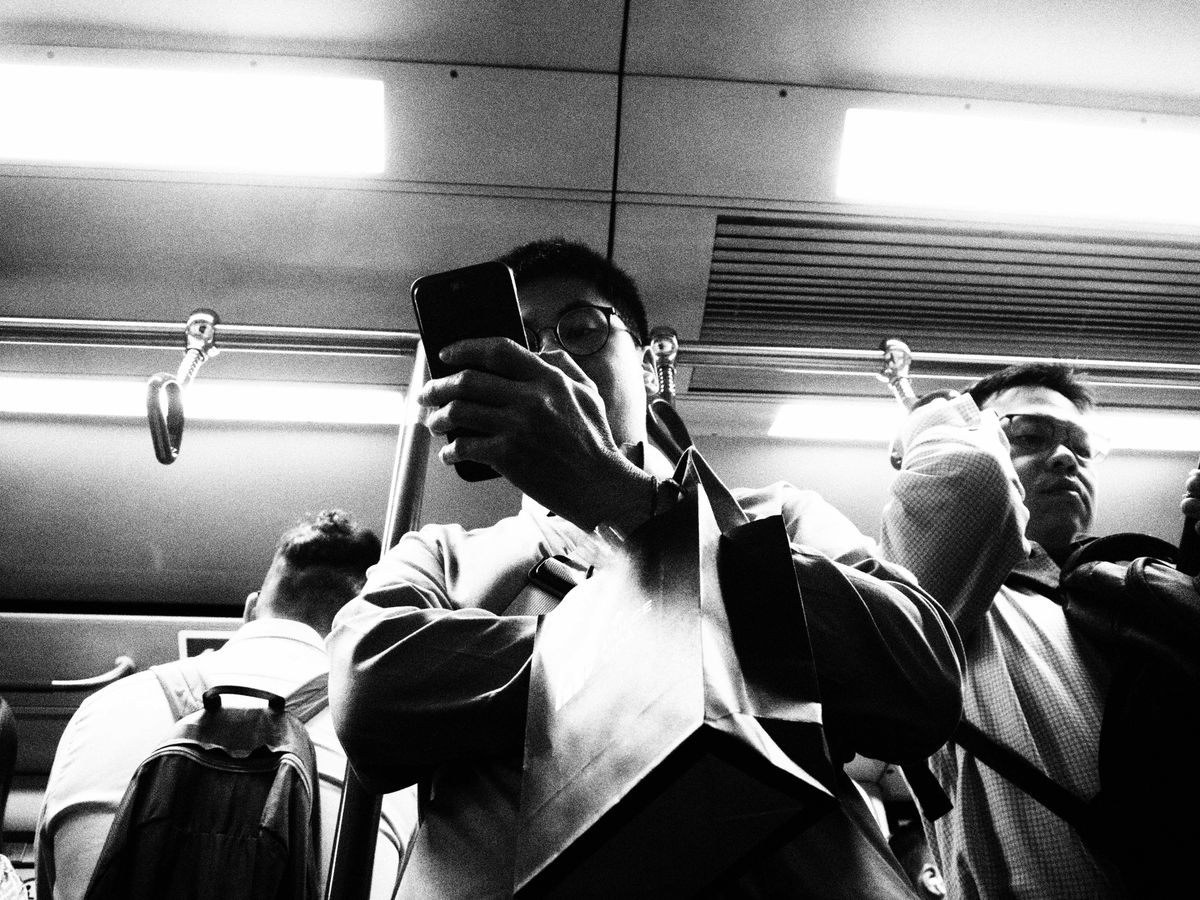
The 10 Words
1. 港鐵
gong2 tit3 — Jyutping romanisation
Meaning: The MTR — Hong Kong's Mass Transit Railway.
Explanation: Literally "Hong Kong Rail." Locals also casually say dei6 tit3 (地鐵, "underground rail"), the older name from before the network merged with the KCR in 2007. Both are still heard on the street.
2. 巴士
baa1 si2 — Jyutping romanisation
Meaning: Bus.
Explanation: A direct loanword from English "bus," absorbed into Cantonese back in the colonial era and now inseparable from the language. Hong Kong's iconic double-decker buses are a UK legacy that never left.
3. 的士
dik1 si2 — Jyutping romanisation
Meaning: Taxi.
Explanation: Another English loanword ("taxi"). Red taxis run in urban Hong Kong, green ones in the New Territories, and blue ones only on Lantau. The word travelled — Mainland China borrowed it back as 打的 daa2 dik1, meaning "to grab a cab."
4. 小巴
siu2 baa1 — Jyutping romanisation
Meaning: Minibus.
Explanation: The infamous 16-seater. Red-top minibuses have no fixed stops — you shout to the driver when you want off. Green-top ones are more orderly with set routes. Riding a red-top is a rite of passage.
5. 電車
din6 ce1 — Jyutping romanisation
Meaning: Tram — the famous "ding ding."
Explanation: Literally "electric vehicle." Hong Kong's double-decker trams have been rolling along the northern shore of Hong Kong Island since 1904 and still charge just a few dollars a ride. The onomatopoeic nickname ding1 ding1 comes from the bell.
6. 八達通
baat3 daat6 tung1 — Jyutping romanisation
Meaning: Octopus card — the tap-to-pay smartcard.
Explanation: The name means "reaching in all eight directions." Launched in 1997, Octopus was one of the world's first contactless payment systems and now works for transport, convenience stores, vending machines and even school lunches.
7. 落車
lok6 ce1 — Jyutping romanisation
Meaning: To get off (a vehicle).
Explanation: Literally "drop-car." Its opposite, soeng5 ce1 (上車, "board a vehicle"), doubles as slang for finally buying a Hong Kong flat — because both feel equally impossible during rush hour.
8. 塞車
sak1 ce1 — Jyutping romanisation
Meaning: Traffic jam.
Explanation: Literally "stuffed car." On any given weekday in Central or Mong Kok, this is the word you'll hear most often — and the reason your taxi driver just sighed loudly.
9. 轉車
zyun3 ce1 — Jyutping romanisation
Meaning: To transfer / change vehicles.
Explanation: Whether you're switching MTR lines at Admiralty or hopping off a bus onto the tram, this is your word. Hong Kongers say it a dozen times a week.
10. 天星小輪
tin1 sing1 siu2 leon4 — Jyutping romanisation
Meaning: The Star Ferry.
Explanation: The 130-year-old green-and-white boats connecting Central and Tsim Sha Tsui — arguably the cheapest and most beautiful commute on Earth. The name means "Star Little Ferry." Locals just say siu2 leon4.
Why These Words Matter
Hong Kong's public transport is so seamless that transit vocabulary has become a shared civic language — a rhythm every local shares whether they grew up in Sham Shui Po or the diaspora suburbs of Vancouver. Master these ten words and you don't just get around Hong Kong — you sound like you belong there. If you want more essential vocab, check out our Vol. 56 sleep and tiredness words or the Vol. 48 cha chaan teng ordering guide.
📖 Related Articles
👉 Shop Cantonese Guy — Modern Streetwear for the Global Cantonese Community