

If you close your eyes on Des Voeux Road in Central, you'll hear it before you see it — a soft, high metallic chime: ding-ding, ding-ding. That's a tram warning cars and pedestrians to move. That sound is why Hong Kongers don't call the tram by its formal name 電車 (din6 ce1, "electric car"). They call it 叮叮 (ding1 ding1). And for over 120 years, that little bell has been the soundtrack of Hong Kong Island's north shore.
The Only System of Its Kind in the World
Hong Kong Tramways is the only public tram system in the world that operates exclusively with double-decker trams. Not "one of." The only one. About 165 trams run in service, along roughly 30 kilometres of track from Kennedy Town in the far west of Hong Kong Island to Shau Kei Wan in the east — with a branch that loops around Happy Valley racecourse for good measure.
And the fare? A flat HK$3 (a bit under 40 US cents) for adults — cheaper than a plastic bottle of water at a 7-Eleven. Seniors ride for HK$1.50. Nowhere else in the developed world does a functioning urban transport system charge this little.
A Colonial Idea That Outlived the Colony
The tram opened for service on 30 July 1904. At the time, Hong Kong Island's north shore was rapidly urbanising, and horse-drawn carts couldn't keep up. The colonial administration awarded a franchise to a British company, which imported single-deck electric trams from England. Within a year, ridership was so high that a second, uncovered deck was added on top. Passengers loved the upstairs view. It never went away.
Fully enclosed double-deck bodies arrived in the 1920s. The livery evolved. The bells stayed. The route was extended east and west over the decades but never fundamentally redrawn. A Ding Ding riding down Des Voeux Road today is following, mostly, the exact same iron line laid by British engineers before World War I.
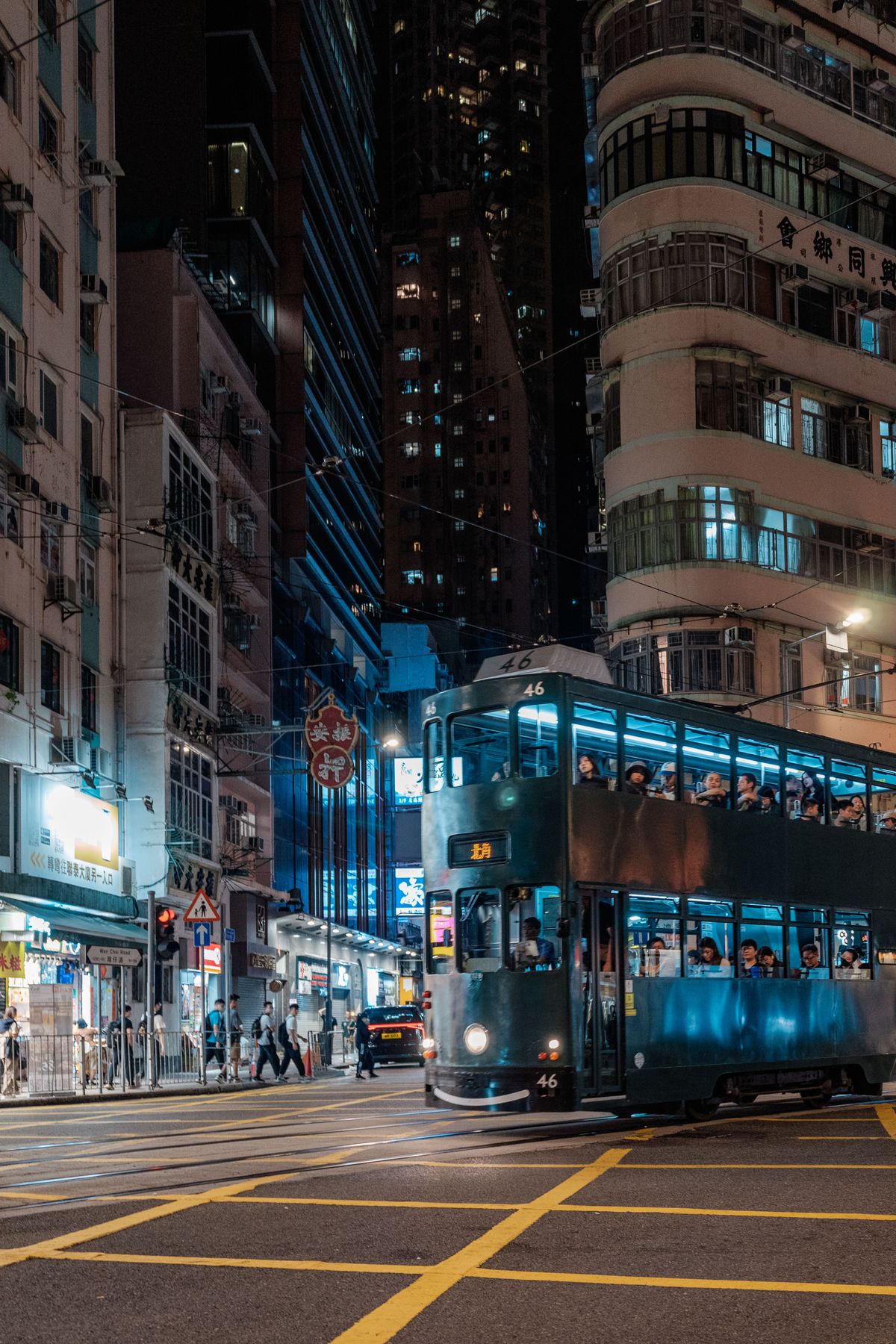
How Cantonese People Actually Use It
The Ding Ding is slow. Its top speed is around 40 km/h, but with traffic, tram-only lane rules, and constant stops, the working average is closer to 12 km/h — barely faster than a determined jog. Commuters in a hurry take the MTR. But everyone else, at some point, takes the tram.
You board at the back, tap your Octopus card on the way off at the front. You climb the tight spiral staircase to the upper deck. You grab the front seat if you can. And then, for the price of nothing, you get one of the best rolling views in Asia — through Sheung Wan's dried seafood shops, past the colonial-era Legislative Council building, through the concrete canyons of Central, along the shopping crush of Causeway Bay, and past the neon-blazing shophouses of North Point.
The Cantonese verb for a Ding Ding ride isn't 坐車 ("take a car"). It's 坐叮叮 (co5 ding1 ding1). The word is basically an onomatopoeia that became a way to travel.
A Living Museum That Still Carries 150,000 People a Day
Here's what makes the Ding Ding so specifically Cantonese: it never became a museum piece. It's still a real transport system carrying around 150,000 riders on a normal weekday. Office workers use it. Old men on their way to yum cha use it. Schoolchildren use it. Tourists use it. It quietly threads together the rich north-shore neighbourhoods and the working-class ones in a way that the MTR, faster and more expensive, doesn't.
When property developers or transport planners have suggested cutting the tram to widen car lanes, the pushback has been ferocious. There have been public campaigns to save the tram. Cantonese people, quietly and firmly, refuse to give it up. It's older than the airport, older than the MTR, older than most Hong Kong buildings that stand today. It's part of the furniture of the city in a way that money can't buy.
Filmed to Death — and Still Real
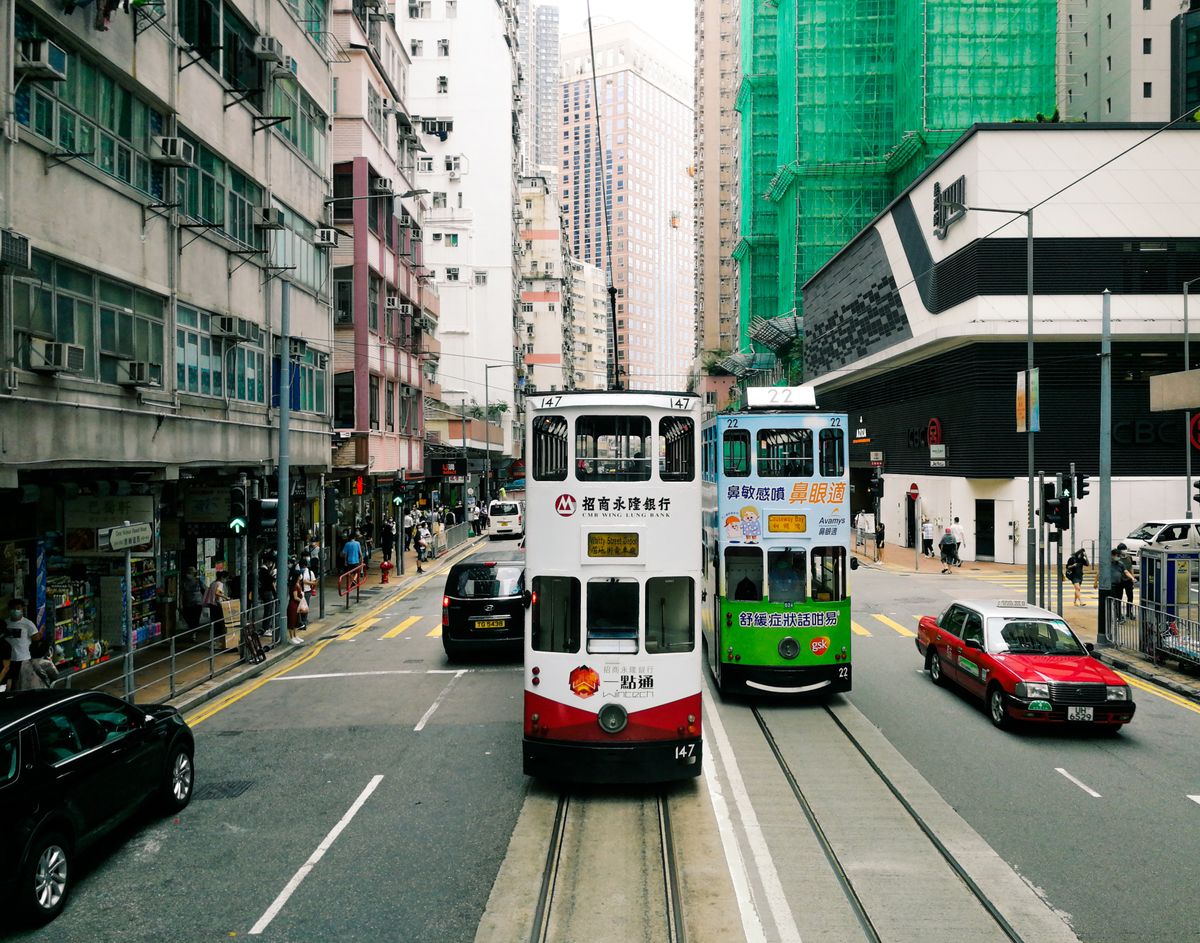
The tram is one of Hong Kong cinema's most reliable set pieces. Wong Kar-wai has parked heartbroken characters in front of them. Leslie Cheung waited for trams in Days of Being Wild. Advertisers rent whole trams and wrap them in vinyl for campaigns. Fashion labels, streetwear brands, and tourism boards all queue up to plaster their logos on the sides. Hong Kong Tramways has become one of the most photographed street objects on earth.
And yet the tram itself keeps clanging along, uninterested in celebrity, warning drivers to move with the same slightly annoyed ding-ding as always.
A Cantonese Kind of Modernity
You could read the Ding Ding as a metaphor for Cantonese Hong Kong itself. Old, adaptive, stubborn, cheap, unfashionable to the wrong eye and priceless to the right one. Not the fastest thing in the city. Not the shiniest. But the one that keeps carrying everyone home, decade after decade, at a price nobody can complain about.
If you're ever in Hong Kong, skip the taxi. Skip the MTR for one afternoon. Pay your three dollars, climb to the top deck, and let the tram show you a slow, low, ground-level Hong Kong — the one that the Star Ferry shows on water. It's the best three dollars you'll spend on a Cantonese Guy trip.
📖 Related Articles
👉 Shop Cantonese Guy — Modern Streetwear for the Global Cantonese Community