

Step off the MTR at Sheung Wan, walk one block up, and turn left into Graham Street. The air changes immediately. There is the smell of scallions, the shine of wet concrete underfoot, the rattle of vegetable crates, the sound of a butcher's cleaver hitting the block in a rhythm that has not changed in a century. Roast ducks hang glossy in a window. A woman in her seventies is haggling over the price of pea shoots. Somewhere behind you, a live fish flips in a tank.
This is a 街市 (gaai1 si5) — literally "street market," the Cantonese wet market. There are more than 200 of them scattered across Hong Kong. They are older than most of the city around them. And even in the age of supermarkets, refrigerated logistics, and grocery delivery apps, they are still where Cantonese cooking begins.
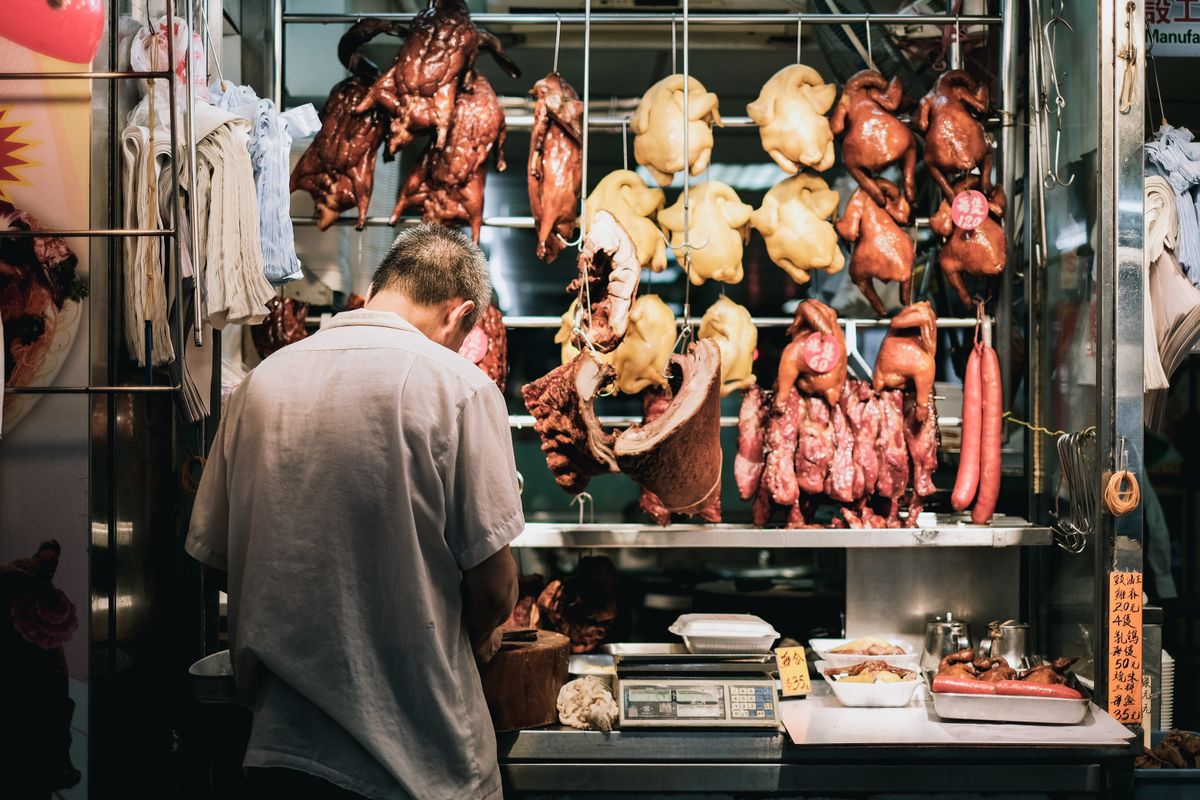
What a Gaai Si Is (And Isn't)
In English they are called "wet markets" because the floors get hosed down constantly to keep the fish and produce fresh. But the Cantonese term 街市 is broader — it covers both the classic open-air lane markets like Graham Street and the more modern multi-storey market buildings that sit inside government-run complexes. Whether they are literally on the street or inside a building, they are all gaai si.
A traditional gaai si stall is small — usually 20 to 40 square feet — and specialised. One stall sells only pork. The next only leafy greens. The next only tofu. The next only live seafood. This division of labour is central to Cantonese food culture: freshness is everything, and the person who touches only one ingredient all day knows that ingredient better than any supermarket buyer ever could.
A Very Old Hong Kong Institution
Central Market, the mother of Hong Kong wet markets, opened on 16 May 1842 on Queen's Road — barely a year after Hong Kong became a British colony. Before there were skyscrapers, before there was an MTR, before there was even a Statue Square, there was a market selling meat, vegetables, poultry, salt fish and fresh fish to the city's earliest residents.
The maze of lanes around Graham Street in Central has been a continuous open-air food market for at least 170 years, making it one of the oldest still-functioning street markets in Asia. When you walk it today, you are walking on the same route Cantonese housewives walked when Queen Victoria was still on the throne.
How the System Actually Works
There are more than 200 indoor markets in Hong Kong. Of those, 97 are run by the government's Food and Environmental Hygiene Department (the FEHD), 78 are operated by the Link REIT, and 22 by the Housing Authority, with a handful under other management bodies. The government-run FEHD markets are the classic model — dozens of stalls under one roof, cheap rent, tightly regulated hygiene, and often a cooked-food centre (熟食中心) upstairs where the stallholders themselves eat lunch.
Every ingredient in the gaai si tells a story about how Cantonese cuisine works. The pork stall knows which cut is best for slow-simmered soup. The fishmonger will scale, gut, and clean your grouper for free because he knows you will steam it that evening. The greengrocer will throw in a bunch of coriander with your order because your mother-in-law is coming over. This is not a transaction — it is a network.
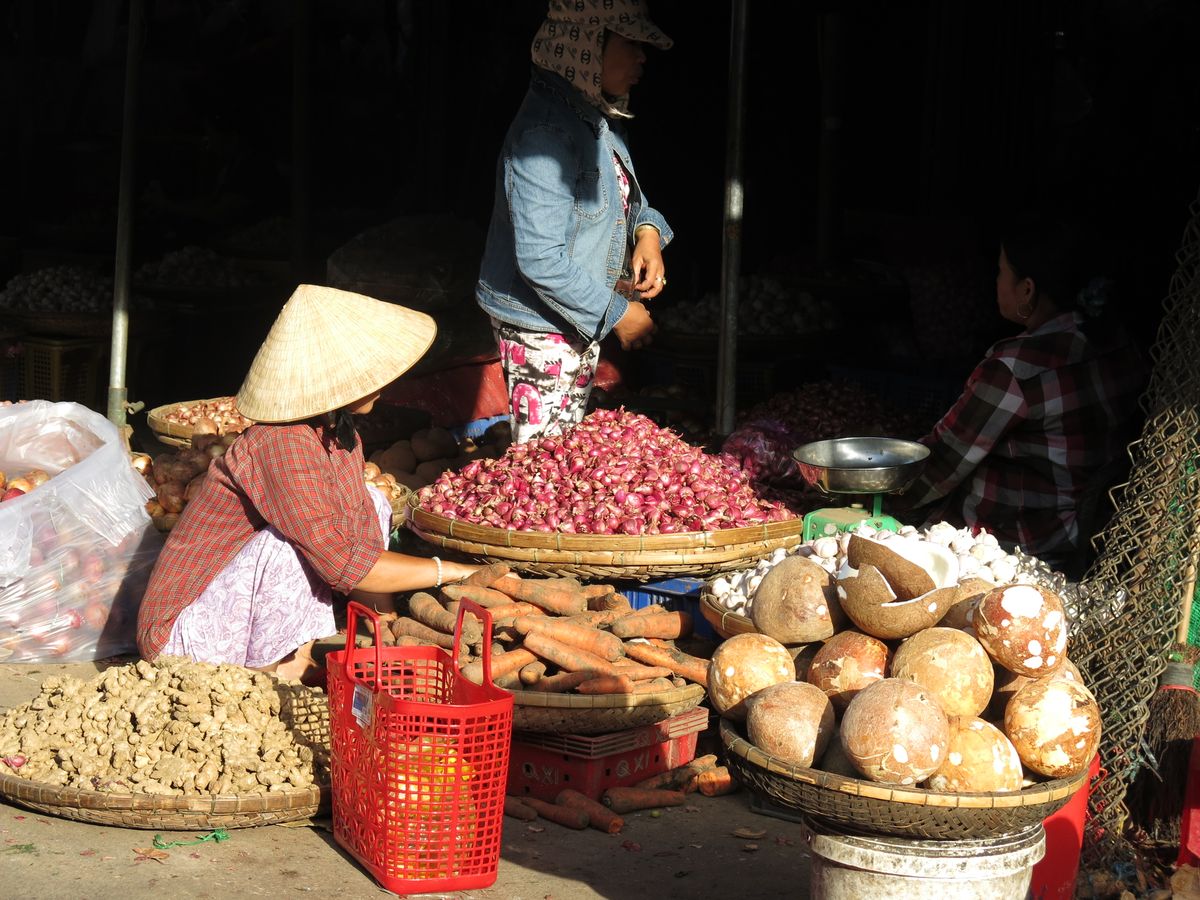
The Sounds and Smells That Define a Cantonese Morning
There is nothing in Hong Kong quite like the acoustic texture of a wet market at 8am. The chop of the cleaver. The scale of a fish snapping open. The shopkeeper calling out prices in Cantonese numerals that a first-time visitor could not possibly follow. The steam rising from a stall boiling live crabs. The smell of ginger and scallion cut fresh in front of you.
And then, layered over everything, the sound of aunties. The 阿嬸 (aa3 sam2) — the middle-aged and elderly women who are the wet market's most powerful demographic — negotiate every purchase like it is the closing of a major deal. "Cheaper, la!" is called out in Cantonese hundreds of times a morning. It is theatre. It is also, quietly, one of the most functional consumer negotiations left in modern retail.
Under Siege — But Not Yet Gone
The wet market's biggest enemies today are not other markets but supermarkets and property developers. Chains like ParknShop and Wellcome have moved into every neighbourhood, offering climate-controlled shopping and pre-packaged produce that skips the mess of a real wet market entirely. Government redevelopment has closed dozens of historic stalls in Central, Wan Chai and Sai Ying Pun. Younger Hongkongers grew up shopping at Fusion instead of the gaai si around the corner.
But the endurance is stubborn. A refurbished Central Market reopened in 2021 after years of restoration, keeping the old Bauhaus building intact. Neighbourhoods like Sham Shui Po and Mong Kok still centre their daily rhythm around their local wet markets. Even in 2026, plenty of Cantonese cooks refuse to buy fish from anywhere but a stall where the tank is bubbling.
Why the Gaai Si Still Matters
Cantonese cuisine is built on a single principle: use the freshest possible ingredients, then get out of their way. The wet market is the physical expression of that principle. It is where a chef, a grandmother, and a housewife stand in the same queue for the same head of gai lan because the vegetable was cut three hours ago.
Beyond the food, the gaai si is also one of the last places in Hong Kong where a neighbourhood is still visible — where a shopkeeper knows your name, where three generations of a family have run the same stall, where the transaction itself carries centuries of Cantonese social knowledge. If you want to understand Cantonese food, you go to a restaurant. If you want to understand Cantonese life, you go to the gaai si before it opens.
Wake up early. Bring cash. Point, ask, haggle a little. Watch the aunties. Order the fish alive. That is how Hong Kong has eaten for 180 years. And it is still, quietly, how the best cooks eat today.
📖 Related Articles
👉 Shop Cantonese Guy — Modern Streetwear for the Global Cantonese Community