

Between the skyscrapers of Central and the shopping streets of Tsim Sha Tsui, there's still a slower way across Victoria Harbour — a fifteen-minute crossing on a little green-and-white boat that costs less than a coffee. It's been running, in some form, since 1888. Hong Kong has built rail tunnels under it, road tunnels around it, and skyline after skyline above it. But the Star Ferry (天星小輪, tin1 sing1 siu2 leon4) keeps going, one horn-blast at a time, and the Cantonese city still climbs aboard.
A Parsi Baker With a Steamboat
The Star Ferry began as a side business. In 1888, a Parsi merchant named Dorabjee Naorojee Mithaiwala — who had arrived in Hong Kong from Bombay in 1852 as a teenaged stowaway and worked his way up to become a baker and hotelier — started running a small steamboat between Hong Kong Island and Kowloon. His first boat was the Morning Star. Officially called the Kowloon Ferry Company at first, it was renamed the Star Ferry in 1898. Every vessel since then has carried a celestial name: Celestial Star, Twinkling Star, Solar Star, Night Star, Shining Star, Silver Star. A quiet Parsi joke, still running 130 years later.
The Boats Themselves — Green, White, Wooden-Slat Seats
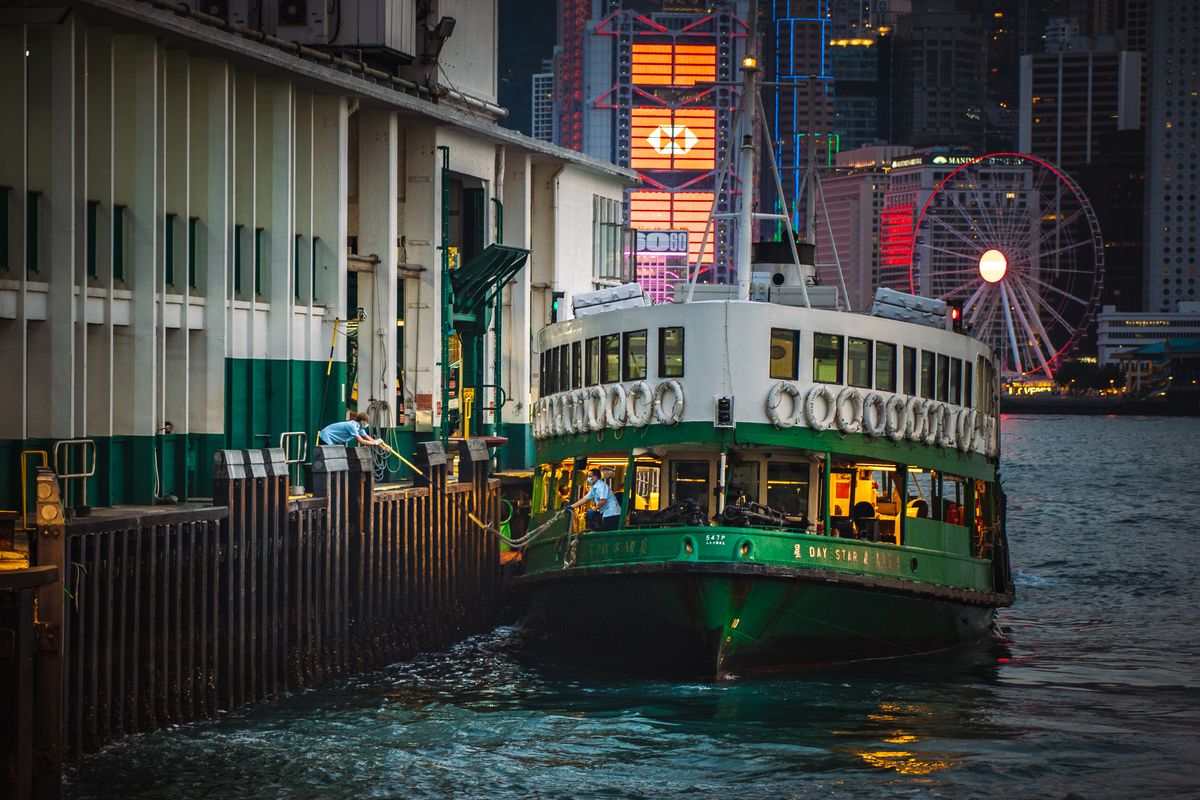
A Star Ferry is not modern. The seats are wooden slats, hinged so passengers can flip the backrest to face either direction — an ingenious detail that means the boats don't need to turn around at each port. The interiors smell faintly of diesel and harbour salt. Uniformed sailors in short-sleeved shirts still throw thick ropes to catch the pier. The livery is white and dark green, the same colour scheme it's had for the better part of a century. There's a lower deck and an upper deck (a few cents more expensive), and the moment you sit down you're facing one of the most photographed cityscapes on Earth.
⛴️ The Riot Over a Five-Cent Fare
In April 1966, the Star Ferry Company applied to raise its first-class fare by five Hong Kong cents. In a city where wages were low and every daily commute was scrutinised down to the coin, the announcement hit hard. A young activist named So Sau-chung began a hunger strike outside the Tsim Sha Tsui pier on April 4. Peaceful protests followed. By the evening of April 6, they had turned into three nights of unrest across Kowloon — stones thrown along Nathan Road, arson, looting from Tsim Sha Tsui up to Sham Shui Po. One person was killed, dozens injured, and over 1,800 people arrested. The event became known as the 1966 Star Ferry Riots — the first modern political flashpoint in post-war Hong Kong.
⛴️ The Pier That Was Torn Down and Never Forgotten
In 2006, the government demolished the old Star Ferry pier at Edinburgh Place in Central to make way for reclamation. The pier's iconic clock tower had chimed above the harbour since 1957. Protesters occupied the site in the weeks before demolition, and its removal became a turning point in Hong Kong's conservation movement — a moment when Hongkongers realised that heritage in a city obsessed with reinvention had to be actively defended. The current Central pier, opened in 2006, is a modern imitation of an Edwardian design. It's not the original. Ask any local older than forty and they'll tell you.
Two Routes, One Harbour
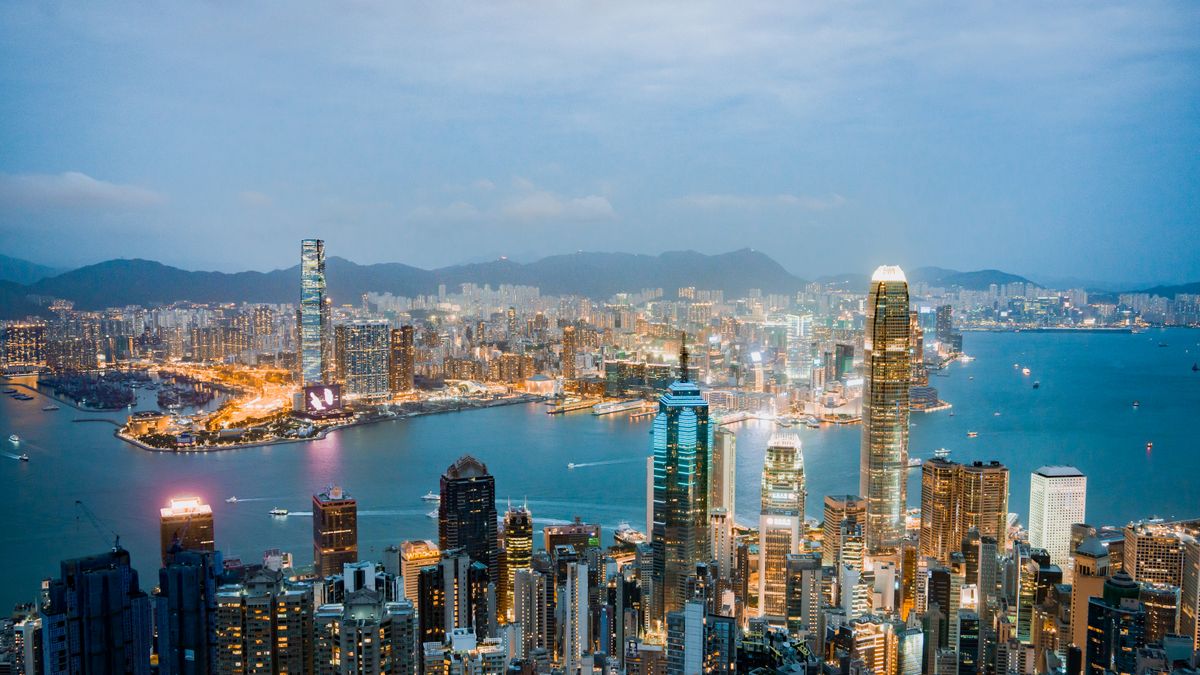
Today the Star Ferry runs two franchised routes across Victoria Harbour: Central to Tsim Sha Tsui, and Wan Chai to Tsim Sha Tsui. That's it. It once operated more services, but the MTR harbour-crossing tunnels of the 1970s and 1980s stole most of its commuter traffic. Now the ferry survives on a mix of daily-commute loyalists, tourists chasing the postcard shot, and Hongkongers who simply prefer the harbour breeze to a subway ceiling. Ticket prices remain absurdly low — a few Hong Kong dollars for the crossing, less than the price of a bottle of water at the pier's convenience store.
A Cantonese Icon in Global Cinema
Anyone who's watched more than a couple of Hong Kong films knows the Star Ferry silhouette. It appears in The World of Suzie Wong, in Bruce Lee's Way of the Dragon, in dozens of Wong Kar-wai frames — always as a symbol of the harbour crossing, of transit, of a slower Hong Kong you can still, for fifteen minutes, physically visit. It's featured in tourism campaigns for the Hong Kong Tourism Board and has been named one of the most spectacular ferry rides in the world by international travel publications. National Geographic put it on a list of the world's 50 best travel experiences. Not bad for a 135-year-old boat.
Read alongside our features on the Peninsula Hotel and Mong Kok, the Star Ferry completes the picture of the Kowloon-Hong Kong Island axis that defines the Cantonese city.
The Ritual of Crossing
There's a certain type of Hong Kong local who will always take the ferry, even when the MTR would be faster. They know which side to sit on for the best view (facing Central, upper deck, right-hand side, at sunset). They tap through the turnstile with an Octopus card. They stand up thirty seconds before the boat docks and drift down the wooden staircase with the practiced ease of someone who's done this five thousand times. The whole crossing takes eight to twelve minutes, depending on tide and traffic. In that eight minutes the skyline moves past the window like a slow, familiar film reel — a reminder that Cantonese Hong Kong is, at heart, a harbour city, and always was.
Why the Star Ferry Still Matters
The MTR is faster. The buses are more frequent. The Uber is more convenient. And yet the Star Ferry is still here, quietly running the same crossing it ran when Kowloon was rice paddies and Central was mid-19th-century godowns. In a city that tears down more than it keeps, that persistence is its own statement. Every ferry horn is a small act of memory. Every crossing is a Cantonese ritual that costs a few coins and delivers a view no other city on Earth can match. Long may it run.
📖 Related Articles
👉 Shop Cantonese Guy — Modern Streetwear for the Global Cantonese Community