

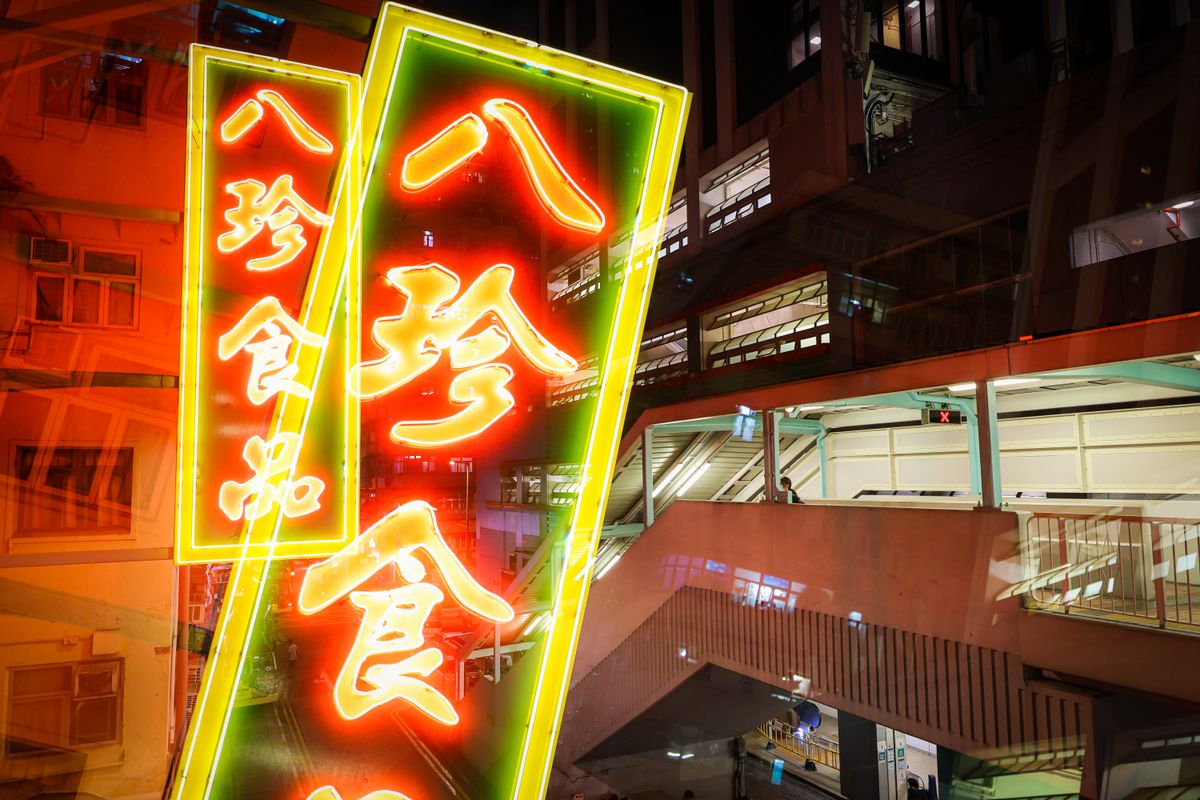
130,000 people per square kilometre. Neon signs stacked eight storeys high. Sixty sneaker shops in a two-block stretch. Aquarium plastic bags bulging with tropical fish hung on shop-front hooks. Cantonese shouted across a pavement so narrow that pedestrians walk in the road because it's easier.
This is Mong Kok (旺角) — officially, per Guinness World Records, the most densely populated place on Earth. Unofficially: Hong Kong's Cantonese heart, the neighbourhood that never sleeps, and the one district that has stubbornly refused to become anywhere else.
From Fishing Village to Busy Corner
The name Mong Kok is often translated as "busy corner" or "prosperous corner" — fitting for a district that turned into Kowloon's commercial engine. The area was originally named for the abundance of ferns (芒草, mong cou) that grew there and the shape of its sharp coast before land reclamation, and it started life as a small fishing village during the Qing Dynasty.
Everything changed with the arrival of the Kowloon-Canton Railway in the early 20th century. Laundries, textile-dyeing factories, soy sauce works, and tobacco factories rushed in. By the 1950s, Mong Kok was the landing pad for waves of migrants from across Guangdong Province — the workers, hawkers, and small shopkeepers who packed into its tenement blocks and opened the tiny businesses that still define the streetscape today.
Every tenement block was a village. Every corner ran a wet market. Every rooftop was someone's makeshift extension. The density that would later win Mong Kok its Guinness title wasn't a design choice — it was the natural outcome of putting a fifth of Guangdong's diaspora inside one square kilometre and telling them to build a life.
The Markets That Rule Mong Kok
If you visit Mong Kok, you're really visiting its markets — open-air, hyper-specialised, and each one a self-contained economy. The three most famous:
Ladies' Market (女人街) on Tung Choi Street stretches for about a kilometre, packed with stalls selling clothing, watches, handbags, cosmetics, and household bits. It got its name from the fashionable women's clothing that dominated its early days. The bargaining is aggressive, the crowd is thick, and half the fun is arguing your way from HK$200 down to HK$60 for a t-shirt.
Sneaker Street (花園街) on the southern section of Fa Yuen Street holds more than 50 shoe shops selling almost nothing but sneakers — Nike, Adidas, Asics, New Balance, plus regional labels stocked shoulder to shoulder. It's been drawing sports fans since the 1980s and remains the world's most concentrated stretch of bo1 haai4 retail.
Goldfish Market (金魚街) on the northern part of Tung Choi Street lines shop after shop with plastic bags of tropical fish hanging outside the doors. Goldfish are believed in Cantonese culture to bring good luck — which is why generations of Hong Kong flat-dwellers have bought them here for decoration, feng shui, and the pleasure of watching something alive in a tiny apartment.
The Density Nobody Else Has Matched
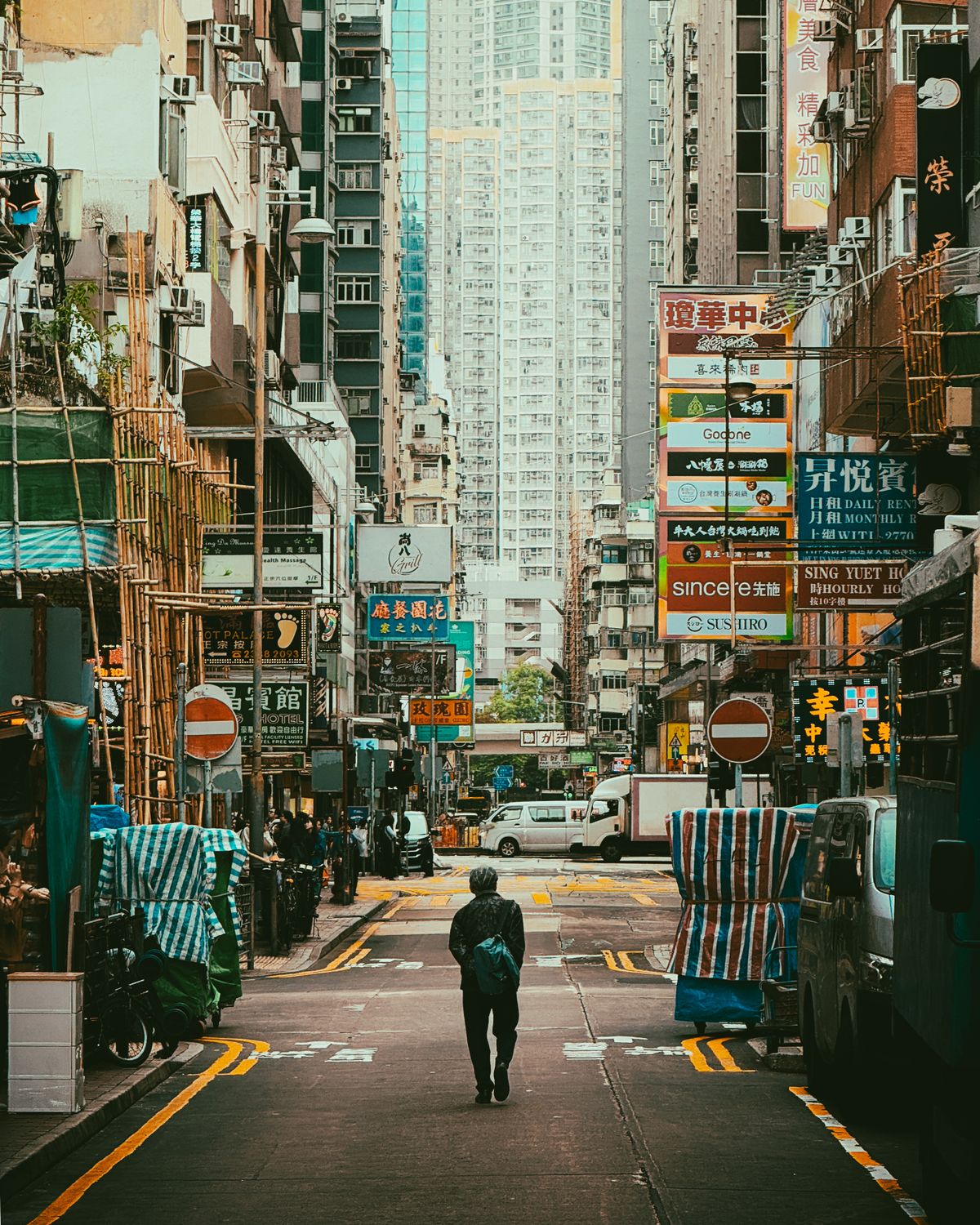
Guinness clocks Mong Kok at roughly 130,000 people per square kilometre — more than four times the density of Manhattan. That number understates the on-the-ground reality, because it doesn't count the millions of visitors who pass through weekly. On any given Saturday afternoon on Sai Yeung Choi Street South, you can feel the density in your body: shoulders touching strangers, pavements overflowing into the road, buskers competing with pop music blasting from phone shops.
The tenement architecture is the physical expression of it — skinny 10- and 12-storey walk-ups, ground-floor storefronts, and mezzanine businesses stacked on top of each other. The mahjong parlours are up one flight of stairs. The reflexology places are up two. The tutorial schools, the karaoke joints, and the underground restaurants live in the same building as the wet market on the ground floor.
Why Mong Kok Is the Most Cantonese District in Hong Kong
Central is corporate. Tsim Sha Tsui is touristic. Causeway Bay is luxury retail. Mong Kok is where actual Cantonese life still happens — unfiltered, argumentative, in Cantonese slang so fast you catch only every third word.
You'll hear the language everywhere: hawkers calling out prices, uncles arguing about horse racing, aunties negotiating fish prices, teenagers roasting each other in LIHKG slang. Mong Kok is where you learn Cantonese by osmosis, whether you want to or not.
The food matches the language. Curry fish balls at street stalls. Egg waffles at 30-year-old counters. Cha chaan tengs serving milk tea to construction workers at 6 a.m. Late-night noodle shops slinging wonton min at 2 a.m. Whatever Cantonese comfort food you crave, someone within a five-minute walk is making it right now.
Mong Kok in Cantonese Pop Culture
Mong Kok is the backdrop of Hong Kong cinema at its rawest. Wong Kar-wai shot chunks of Fallen Angels in its streets. Andy Lau's early triad films practically lived here. The 1996 cult classic Made in Hong Kong was filmed almost entirely in and around Mong Kok tenements. Any time a Hong Kong film needs to show "real Hong Kong" — crowded, neon-lit, alive — the camera comes here.
Cantopop lyrics namecheck it constantly. Mong Kok appears in songs by everyone from Sam Hui to Eason Chan, standing in for youth, restlessness, and the honest working-class Cantonese Hong Kong that the glossy commercial districts don't represent.
The Neighbourhood That Refused to Change
Redevelopment has nibbled at Mong Kok's edges — new luxury malls, boutique hotels, chain coffee shops. But the core still resists. The Ladies' Market vendors still shout their prices. The sneaker uncles still cut deals in cash. The dai pai dong survivors still fire up the wok at dinner service. The Goldfish Street bags still bulge with tetras.
In a Hong Kong that changes fast — sometimes too fast — Mong Kok is a stubborn defender of the old Cantonese way of doing things. Loud. Cheap. Crowded. Alive. Whatever survives the next 50 years of change in Hong Kong, this corner probably will too. It's too dense to demolish, too popular to close, and too Cantonese to lose.
📖 Related Articles
👉 Shop Cantonese Guy — Modern Streetwear for the Global Cantonese Community