

Walk into any cha chaan teng (茶餐廳) at 8am and you enter a specific rhythm: the hiss of a pan, an aunty shouting orders in a shorthand nobody outside Hong Kong understands, plastic-covered menus taped to the wall, silk-stocking milk tea being poured through a nylon sock at the front counter. This is not a restaurant. This is Hong Kong's living room. And for seventy years it has quietly been one of the most important cultural inventions the city ever produced.
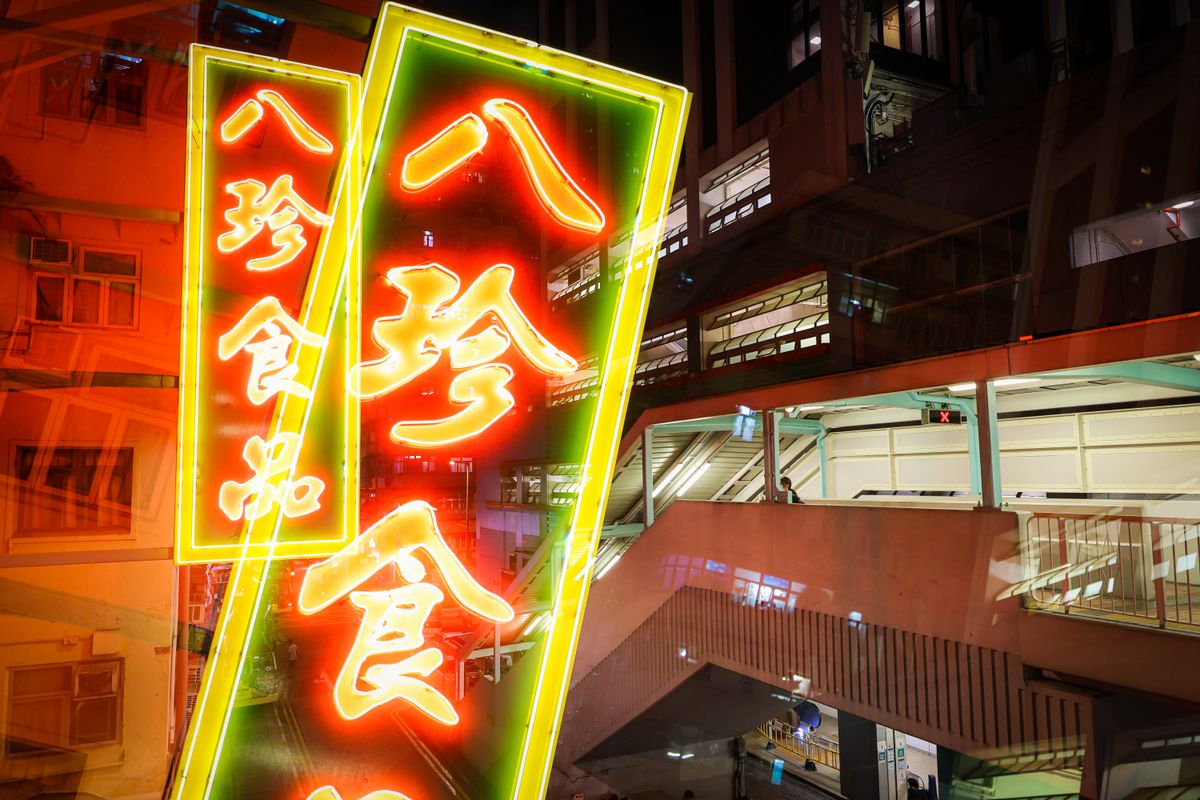
Before the cha chaan teng, there was the ice room
To understand the cha chaan teng you have to start with what came before it: the bing sutt (冰室), or "ice room." In 1920s and '30s Hong Kong, Western food existed — but only for expatriates and the wealthy elite. A proper Western meal at a colonial hotel cost more than a working Hongkonger earned in a week. Bing sutt filled the gap in the middle. They served affordable versions of Western light meals: coffee, milk tea, sandwiches, toast, red bean ice (紅豆冰). They gave ordinary Cantonese Hongkongers their first casual taste of European food, translated through a local kitchen.
Then came the 1950s. Post-war Hong Kong was filling up with refugees from the mainland. Wages were rising. Demand for cheap, fast, hybrid food exploded. Bing sutt owners expanded their menus and their kitchens, added rice, noodles, macaroni soup, pork chops, curry, congee. The name changed to cha chaan teng — literally "tea meal hall." A new kind of restaurant was born: everything on one menu, priced for a factory worker, ready in seven minutes.
Where East meets West on a Formica table
The cha chaan teng is often called Hong Kong's edible metaphor — a menu that could only have been invented by a colonial port city with a Cantonese soul. On the same plastic-covered table you might find macaroni in ham broth (a British import), Portuguese-style baked rice (via Macau), Hainanese chicken rice (from Singapore), instant noodles with a Spam-and-egg topping (post-war American surplus), a Hong Kong-style French toast dripping with condensed milk, and a bowl of Cantonese congee.
The genius of it isn't fusion for fusion's sake. It's translation. Each imported dish was rebuilt around Hong Kong's palate: less butter, more soy; a bit of oyster sauce where there'd otherwise be Worcestershire; congee at 3am when the wonton noodle shop next door had already closed. This is where dishes like sai do si (西多士), yuenyeung (鸳鴦), and Hong Kong-style silk-stocking milk tea were perfected.
The rituals that make a cha chaan teng a cha chaan teng
Anyone who grew up eating in one can list the codes without thinking. The seating is shared — you'll be seated with strangers if the shop is full, and no one will mind. The menu changes throughout the day: a breakfast set (早餐), a lunch set (午餐), an afternoon tea set (下午茶) at 3pm sharp, a dinner set. Orders are shouted at the counter in a shorthand so specific that regulars can decode a table's whole meal from a fifteen-word yell.
A few classics of the shorthand: faai3 caan1 (快餐, "quick meal" set), dung3 (凍, cold), jit6 (熱, hot), zau2 tong1 (走汯, no soup), haa6 hoi2 (下海, extra thick milk tea — literally "down to sea"). Say them right and the aunty at the counter will nod without breaking eye contact. Say them wrong and you'll get a very Hong Kong look of disappointment.
Cultural heritage — finally recognised
In 2007, a Hong Kong legislative councillor proposed submitting cha chaan teng culture to UNESCO's Intangible Cultural Heritage list. It never made it onto the international register. But in June 2014, four cha chaan teng staples — Hong Kong-style milk tea, yuenyeung, pineapple bun, and egg tart — were officially added to the first Intangible Cultural Heritage Inventory of Hong Kong. It was a quiet acknowledgement that the city's most humble restaurant tradition had shaped its identity more than any Michelin star ever would.
Today, cha chaan teng chains have gone international. You'll find them in London, Toronto, Vancouver, Sydney, San Francisco — anywhere the Cantonese diaspora settled. Second-generation kids who grew up in London or Vancouver often meet the food of their parents for the first time in these overseas branches: pineapple buns, macaroni in ham broth, silk-stocking milk tea. The cha chaan teng became a diaspora bridge without ever meaning to.
Why it still matters
Rents have quietly killed some of the oldest cha chaan tengs in central Hong Kong. Newer ones lean chain and lose the shabby Formica charm. But the institution itself keeps evolving, and the culture around it — the shared seating, the shouted orders, the impossibly cheap set meal, the East-West blur on a single plate — remains something no other city in the world has managed to copy properly. A cha chaan teng is a Hong Kong parliament. Politics, gossip, complaints, deals, and love confessions all happen over the same HK$45 lunch set.
📖 Related Articles
The next time you slide onto a cha chaan teng bench, remember: you're eating on top of a hundred years of colonial history, refugee ingenuity, and Cantonese kitchen instinct. The city built itself one macaroni soup at a time.
👉 Shop Cantonese Guy — Modern Streetwear for the Global Cantonese Community