

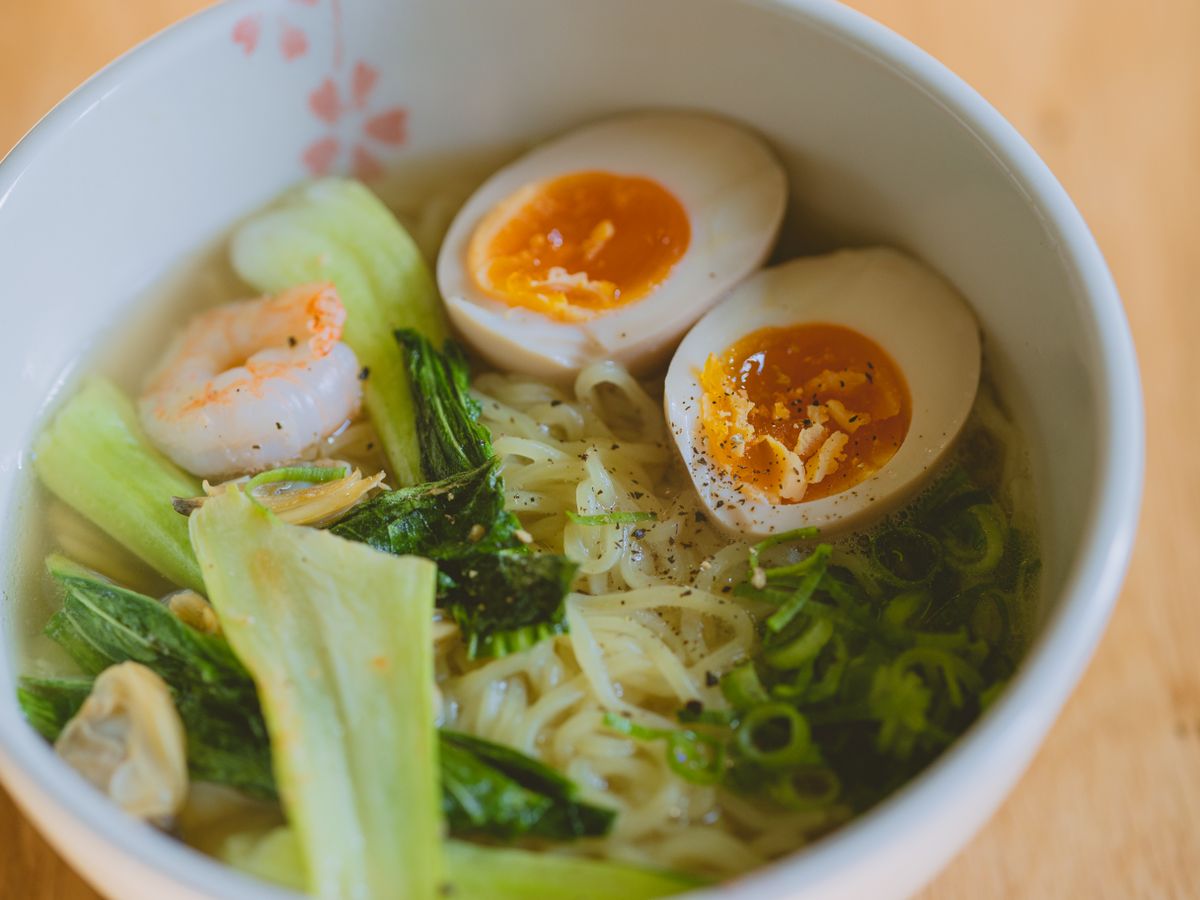
The Cantonese word for wonton — 雲呑 (wan4 tan1) — literally translates to 'swallowing cloud.' Which is exactly what a good bowl of wonton noodle soup feels like: a golden broth, translucent wrappers floating on the surface, prawn tails curled like tiny question marks, and a nest of springy alkaline noodles you have to work down through with chopsticks.
It's the dish that took over Hong Kong. But wonton noodles weren't born in Hong Kong — they migrated south, refined over generations in the tea houses of Guangzhou, then travelled with families fleeing war until they became one of the most quietly technical bowls of soup in Cantonese cuisine.
Born in Guangzhou, Perfected on Wooden Stools
Wonton itself has a much older history in Chinese cuisine — dumpling-like pastries filled with meat go back centuries. But the specific dish we recognise today — thin-skinned prawn-and-pork wontons in a golden broth over egg noodles — took shape in Guangzhou's Xiguan district in the early 20th century. Local vendors began experimenting with lighter, more delicate wrappers, shrimp-heavy fillings, and springy 全蛋麵 (cyun4 daan6 min6, 'all-egg noodles') made without water.
The result was a bowl designed for balance: rich but never heavy, textured but never chewy, savoury but never salty. It was noodle-shop poetry.
How It Came to Hong Kong
Despite how deeply Hong Kongers now claim wonton noodles as their own, the dish is a relatively recent arrival. It only really became widely available in Hong Kong in the early 1940s. The most famous story belongs to Mak Woon-chi (麥焕池), a Guangzhou wonton master whose family had been in the noodle trade since the 1930s. During World War Two, the Mak family migrated to Hong Kong and set up a wonton shop in Central.
By 1968, the family had opened a dai pai dong on Gilman Street called 'Mak Un Kee' — the first Mak's Noodle. That shop went on to become one of Hong Kong's most iconic wonton noodle houses, later earning a Michelin star and helping cement wonton noodles as a signature bowl of the city.
The Anatomy of the Bowl
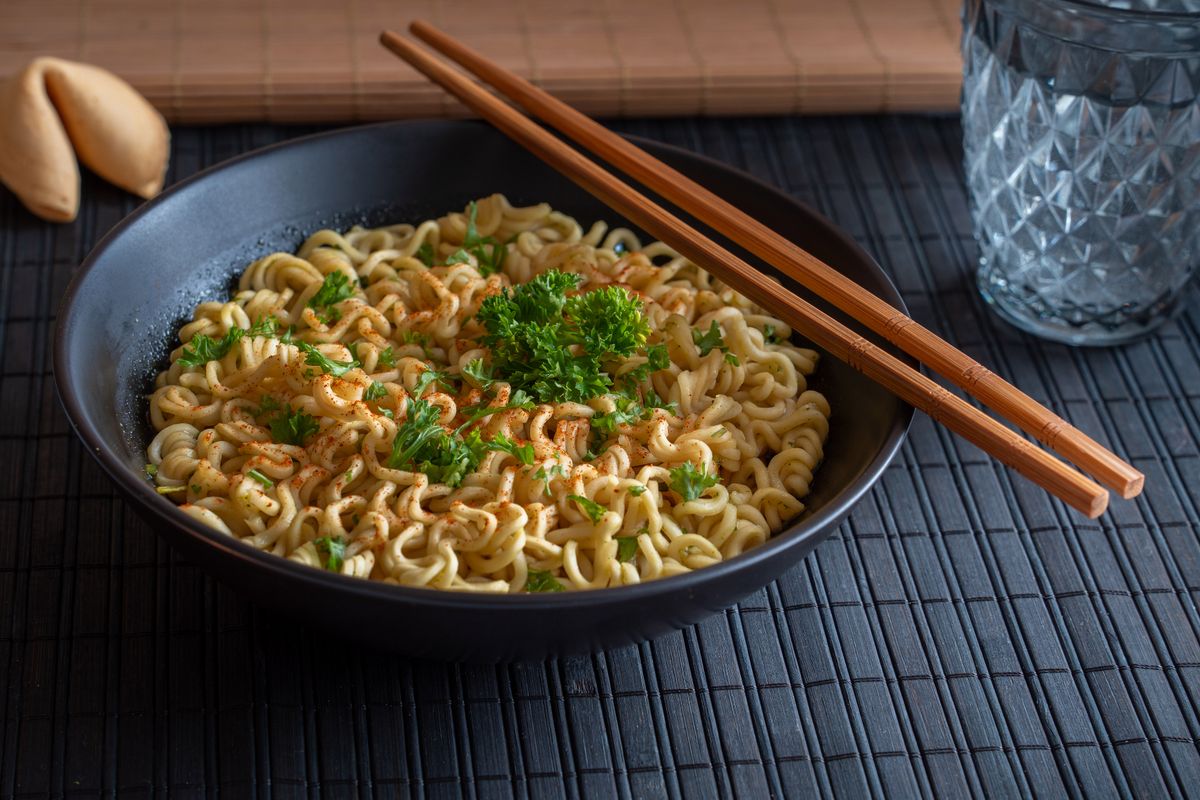
To understand why a proper Cantonese wonton noodle soup is quietly obsessive craftsmanship, look at how it's assembled:
The broth is built from dried flounder (大地魚), pork bones, shrimp shells, and sometimes dried shrimp roe. It's simmered for hours until it turns a specific shade of pale gold. Legendary shops guard their broth recipes like family secrets.
The wontons should be tiny — traditionally around the size of a large coin. The wrapper is thin enough to see the pink of the shrimp through it. Traditional Hong Kong wontons are around 70% shrimp and 30% pork, with the shrimp cut into rough chunks (not paste) so you get a bite of texture.
The noodles are the underrated star. Real Cantonese egg noodles use only egg — no water — and are pressed under a large bamboo pole (a technique called 竹昇打麵, bamboo-pole noodle pressing) to develop a signature elastic bite. The best shops still do this by hand.
The build. A proper bowl is layered: wontons first at the bottom, then a shallow ladle of broth, then noodles nested on top, then a splash more broth and a few chives. The noodles sit above the liquid so they don't oversoak while you take the first bite. Order at your own pace — the bowl is engineered to give you about seven minutes before the noodles surrender.
Small Bowls, Big Rules
One of the first things visitors notice about a Hong Kong wonton noodle shop is how small the bowls are. This isn't stinginess — it's tradition. Old Hong Kong shops served 細蓉 (sai3 jung2, 'small bowl') because dockworkers and taxi drivers ate wonton noodles as a between-shift snack, not a full meal. You were supposed to finish it in seven or eight minutes. Any bigger, and the noodles would go soft, and the delicate broth would get lost.
Today, most shops still offer 細蓉 as the standard order — a nod to a working-class food culture that never left. If you want two portions, you order two bowls. That's the rule.
Wonton noodles slotted into the wider ecosystem of Cantonese comfort food — the same universe that gave us the cha chaan teng, har gow, and the whole calligraphy of Hong Kong's daily eating rhythms.
Why the Word 'Wonton' is Beautiful
The characters 雲呑 don't actually correspond to the older written form 餅飩 (wan4 tan4) — the classical name for wonton across China. When Cantonese speakers rewrote it as 雲呑 ('swallowing cloud'), it was a poetic swap. The wontons floating in broth do look a little like clouds. Their curly tails fan out in the soup, ethereal and half-suspended. Only Cantonese would rewrite a food name to make it sound more like a haiku.
A Bowl That Travelled the World
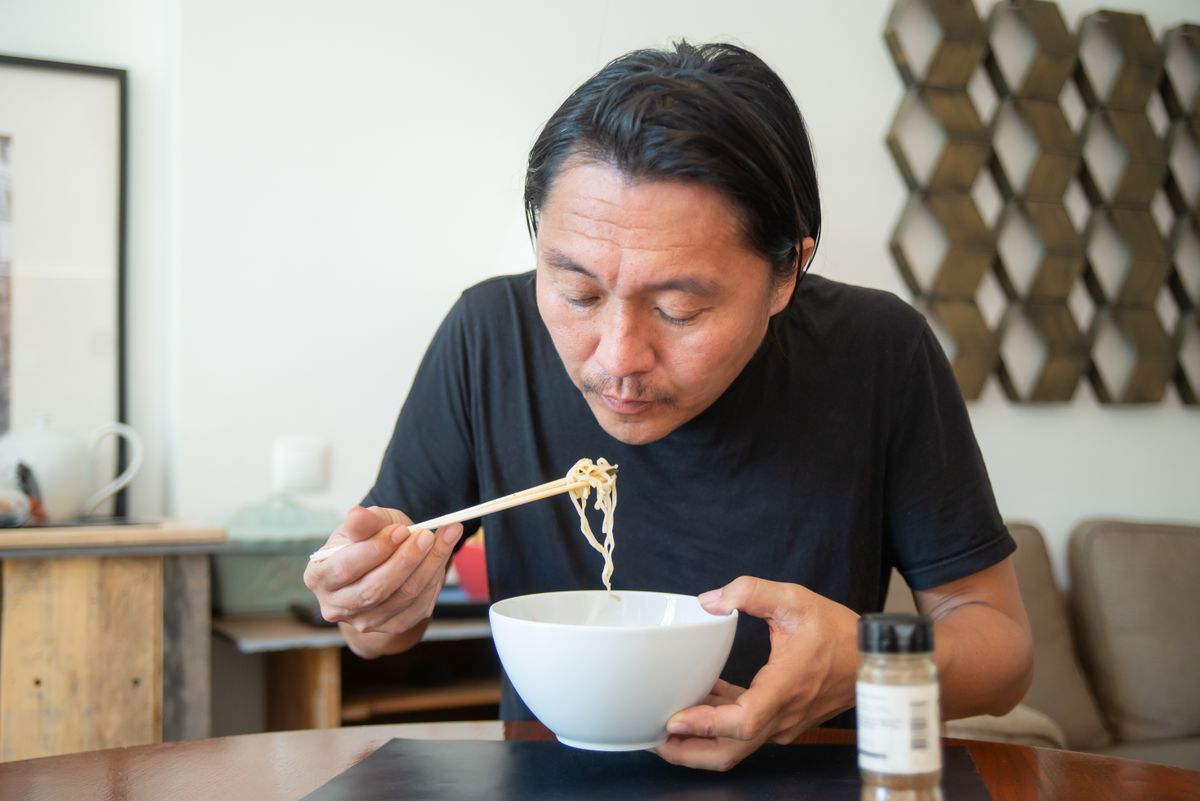
Wonton noodles are now one of the most exported Cantonese dishes on earth. Every major Chinatown from London to Sydney to San Francisco has its wonton noodle spot — usually run by a family who left Hong Kong or Guangzhou in the 1970s or '80s. The bowl adapts a little: bigger portions, slightly softer noodles, sometimes a splash of soy sauce that would horrify a traditionalist. But the core stays: little cloud dumplings, gold broth, egg noodles, and the memory of a home your grandparents left behind.
Order 一碗雲呑麵 (jat1 wun2 wan4 tan1 min6) anywhere in the Cantonese-speaking world, and you're not just ordering soup. You're ordering a hundred-year tradition, poured into a bowl the size of your two hands cupped together.
📖 Related Articles
👉 Shop Cantonese Guy — Modern Streetwear for the Global Cantonese Community