

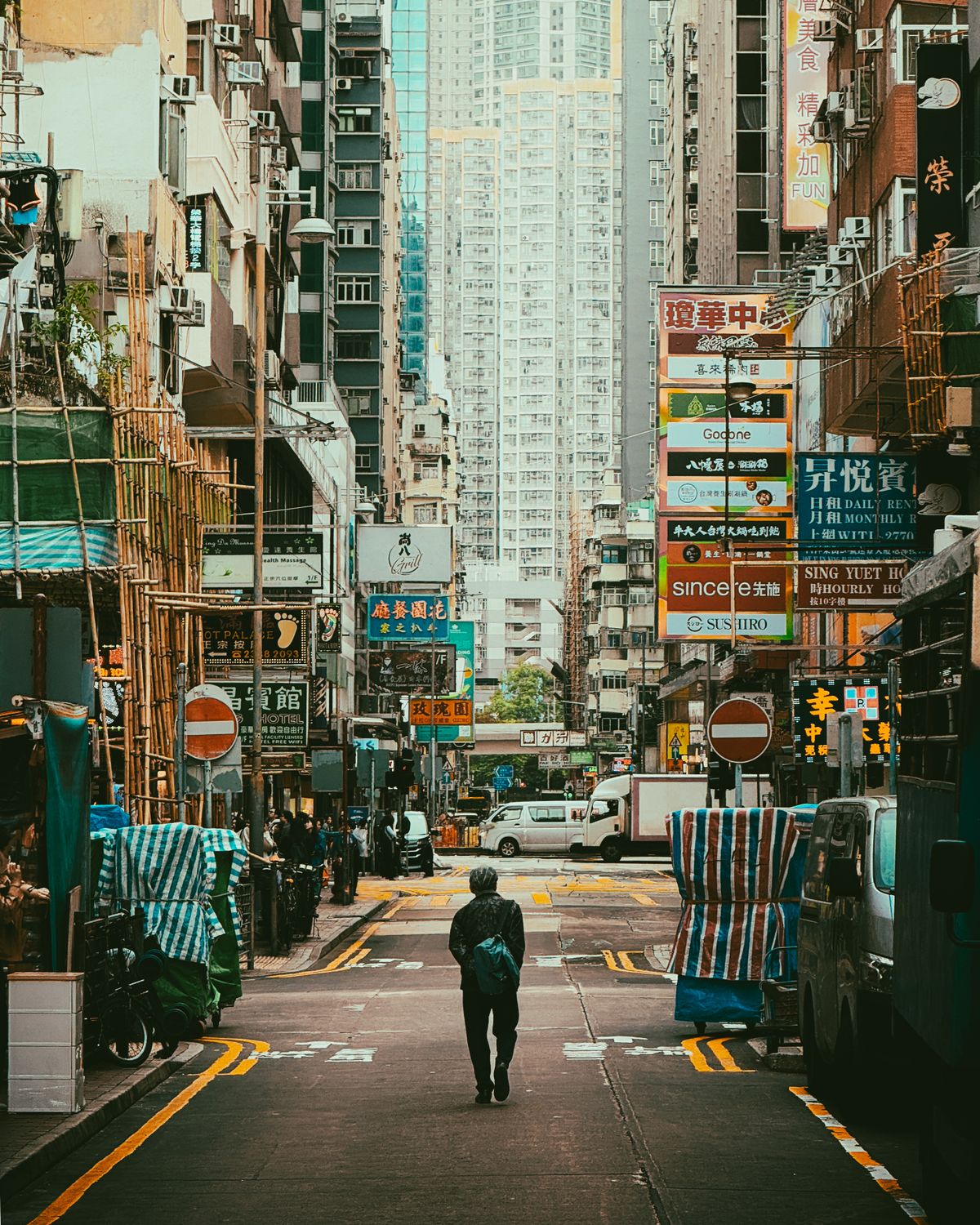
Every Wong Kar-wai film. Every noodle shop postcard. Every rain-soaked Blade Runner rip-off. The image the world holds of Hong Kong is stitched together from one thing above all: neon. Pink glass tubing bent into 麻雀 (mahjong parlour), gold-yellow characters spelling out 燒臘 (roast meats), electric blue letters humming above pawn shops. And now that image is quietly disappearing. What was once a 190,000-sign forest is down to a few thousand — and the craft that built it is being kept alive by a handful of masters and one very stubborn NGO.
How Neon Came to Hong Kong
Neon was invented in Paris in 1910. It reached Hong Kong in the 1920s but didn't take over the streets until the 1950s and 1960s, when the city was booming, factories were opening in Kwun Tong, and shops were competing for the eye of every pedestrian rushing to a bus stop. Cantonese calligraphers hand-drew each character, glassblowers heated tubes and bent them by breath and instinct, and electricians hung the signs off buildings on iron cages that jutted out over the street.
By the 1980s, Hong Kong had one of the densest neon skylines in the world — brighter, arguably, than Times Square or the Ginza. Signs poked into the street from both sides, sometimes almost meeting in the middle. Rain turned them into a smeared painting on wet asphalt. This is the Hong Kong that Wong Kar-wai filmed. This is the Hong Kong Leslie Cheung walked through in Days of Being Wild. This is the Hong Kong postcards still sell.
The Craft Nobody Notices Until It's Gone
Making a neon sign is not printing. It is glass work. A master takes a straight glass tube, heats it over a torch, and bends it — freehand — into the exact shape of a Chinese character. The tube is then pumped free of air, filled with neon or argon-mercury gas, and electrified. Neon glows red-orange. Argon-mercury with a phosphor coating gives you every other colour: blue, green, white, pink, gold.
Chinese calligraphy is not easy to bend into glass. A character like 燒 has more than fifteen strokes. Every stroke has to be one continuous tube or a clever splice, and every corner has to be a real corner — not a rounded lump. A single wrong bend cracks the tube and the master starts again. In Hong Kong's peak years, there were maybe 200 neon glassblowers. Today, fewer than ten still practise the craft actively.
The Regulation That Killed a Skyline
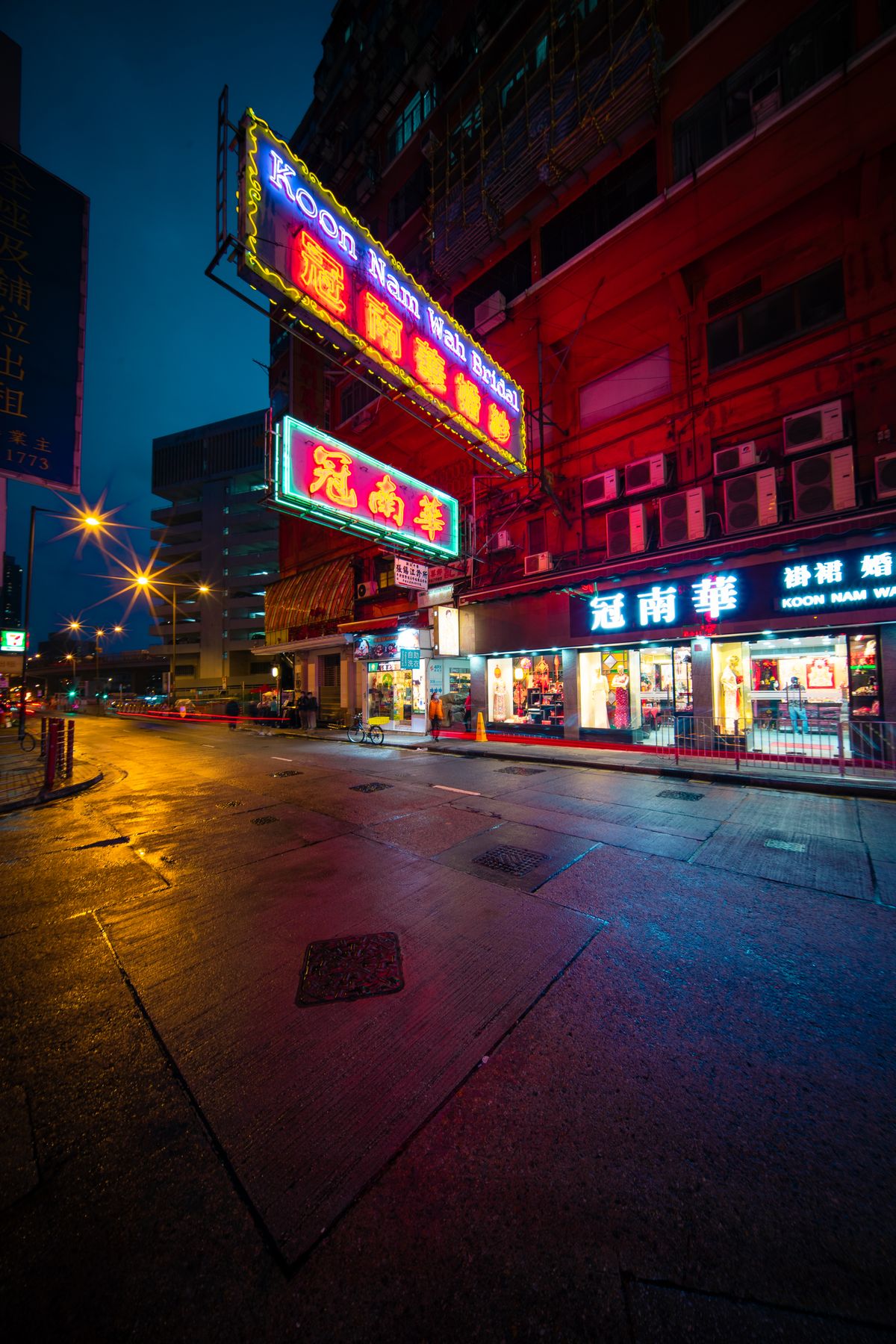
On 31 December 2010, Hong Kong's Buildings Department launched the Signboard Control System. On paper, the reason was safety — old signs had begun falling and injuring pedestrians. The system limited how far a sign could protrude, how heavy it could be, how high it could hang, and required regular safety renewals. Overnight, nearly 190,000 existing signs became technically illegal. Since then, the government has been removing them at a rate of around 3,000 per year. Estimates suggest up to 90% of Hong Kong's original neon signs have vanished in the last two decades.
At the same time, LED replaced neon on cost. A neon sign takes weeks to hand-bend and thousands of Hong Kong dollars. An LED strip takes an afternoon and a fraction of the price. Landlords switched. Shop owners retired. The apprenticeship pipeline dried up. The skyline dimmed one bulb at a time.
The Movement to Save What's Left
In 2020, an NGO called Tetra Neon Exchange (霓虹交滽) was founded by Cardin Chan. It rescues abandoned signs before they hit the skip, restoring them and storing them in an open-air yard in the New Territories. Over 70 signs are now saved. M+, Hong Kong's contemporary art museum in West Kowloon, has neon in its permanent collection. Local designers, streetwear labels, and cafés are commissioning new neon pieces — usually smaller, indoor, and made by one of the last five or six masters.
Photography books and Instagram accounts have exploded in the last decade documenting what's left. Every time a giant sign gets marked for removal — 森美餐廳, 華豐燒臘, the old 雞記麻雀 mahjong parlour — someone shows up with a camera before the crew shows up with a crane.
Why the Diaspora Should Care
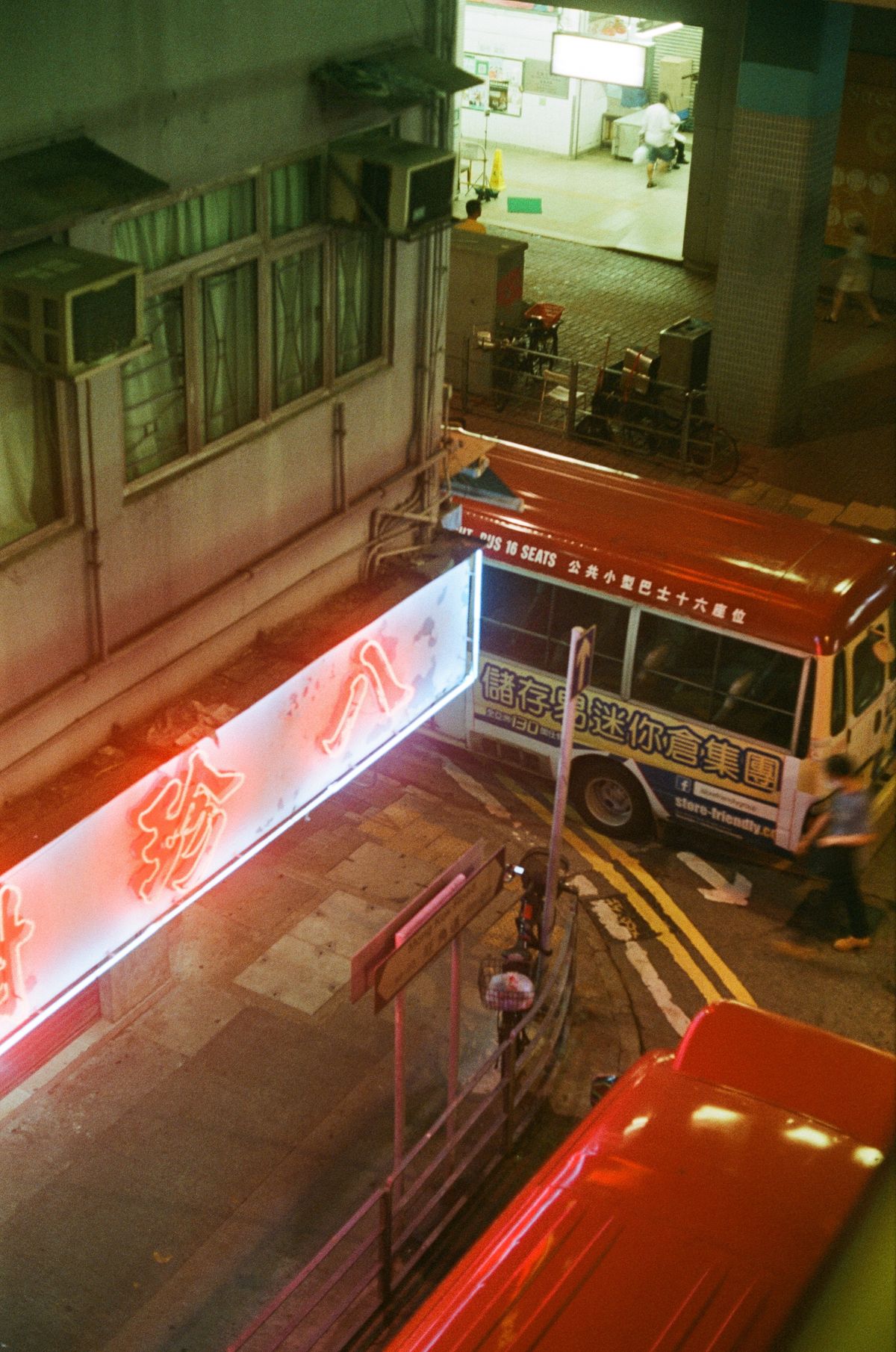
For anyone who grew up watching Hong Kong cinema, listening to Canto-pop, or flipping through old family photos of Nathan Road at night, the neon skyline isn't just decoration. It's memory. It's the visual grammar of a city and a culture. When a Cantonese diaspora kid in Vancouver or London or Sydney sees a pink 大排檔 neon sign, they don't think "advertising." They think "grandma," "night market," "family dinner," "home."
This is why the disappearance matters far beyond Hong Kong itself. The same way Cantonese opera survived by being written down, filmed, and taught, the neon craft will only survive if a new generation learns to bend the glass, draw the characters, and hang the signs. And if the streetwear brands, artists, and small businesses of the Cantonese diaspora keep asking for neon — one sign at a time.
The Character on Every Sign
霓虹燈
ngai4 hung4 dang1 — Jyutping romanisation
Meaning: Neon light — literally "rainbow light."
Explanation: The Cantonese word for neon is beautifully poetic: 霓虹 (ngai4 hung4) means "rainbow." A neon sign is literally a rainbow lamp. It's a name that captures exactly what neon does to a wet Hong Kong street at midnight.
📖 Related Articles
👉 Shop Cantonese Guy — Modern Streetwear for the Global Cantonese Community