

Before Cantopop, before Bruce Lee, before Wong Kar-wai — there was Cantonese opera. For nearly seven hundred years, this loud, painted, gong-and-clash art form has been the ancestor stage of everything Cantonese entertainment eventually became. It gave Hong Kong cinema its melodrama. It gave the diaspora a portable piece of home. And in 2009, UNESCO officially added it to the Representative List of the Intangible Cultural Heritage of Humanity.
Here's the story of 粵劇 — the Cantonese opera tradition that refused to disappear.
A Southern Art With Northern Bones
Cantonese opera didn't start in Guangdong. It was carried south. Chinese opera as a broader art form is generally thought to have grown out of Nan Xi (南戲), the 'Southern drama' performed in public theatres in Hangzhou around the 12th century. As waves of northern performers migrated south during the late Southern Song dynasty, their operatic traditions travelled with them and reached the Pearl River Delta by the late 13th century.
Over the next few hundred years, southern practitioners fused several melodic systems — Haiyan qiang (海鹽腔), Yiyang qiang (弋陽腔), Kunshan qiang (崑山腔), and Bangzi qiang (梓子腔) — with local Pearl River folk music. Sung entirely in Cantonese, the result was a distinct regional art form that came to be known as 粵劇 (jyut6 kek6).
The Red Boats of Foshan
By the 18th century, the Guangdong city of Foshan (佛山) had become the beating heart of Cantonese opera. Between roughly 1736 and 1795, Foshan was home to most of the region's touring troupes. Because performers travelled between villages along the Pearl River Delta, each troupe had its own boat — famously painted red. These 紅船 (hung4 syun4, 'Red Boats') became legendary in Cantonese culture: floating villages of actors, musicians, costume makers, martial arts teachers, and cooks, docking at riverside temples to put on shows for festival crowds.
The Red Boats are also how Cantonese opera reached Hong Kong. Troupes sailed downriver from Foshan and Guangzhou, and by the 19th century, Hong Kong had become one of the most important stages for the art form. The influence still runs deep — early Cantonese cinema was so dominated by opera stars that many early Hong Kong film techniques essentially inherited an opera grammar.
What Actually Happens on Stage
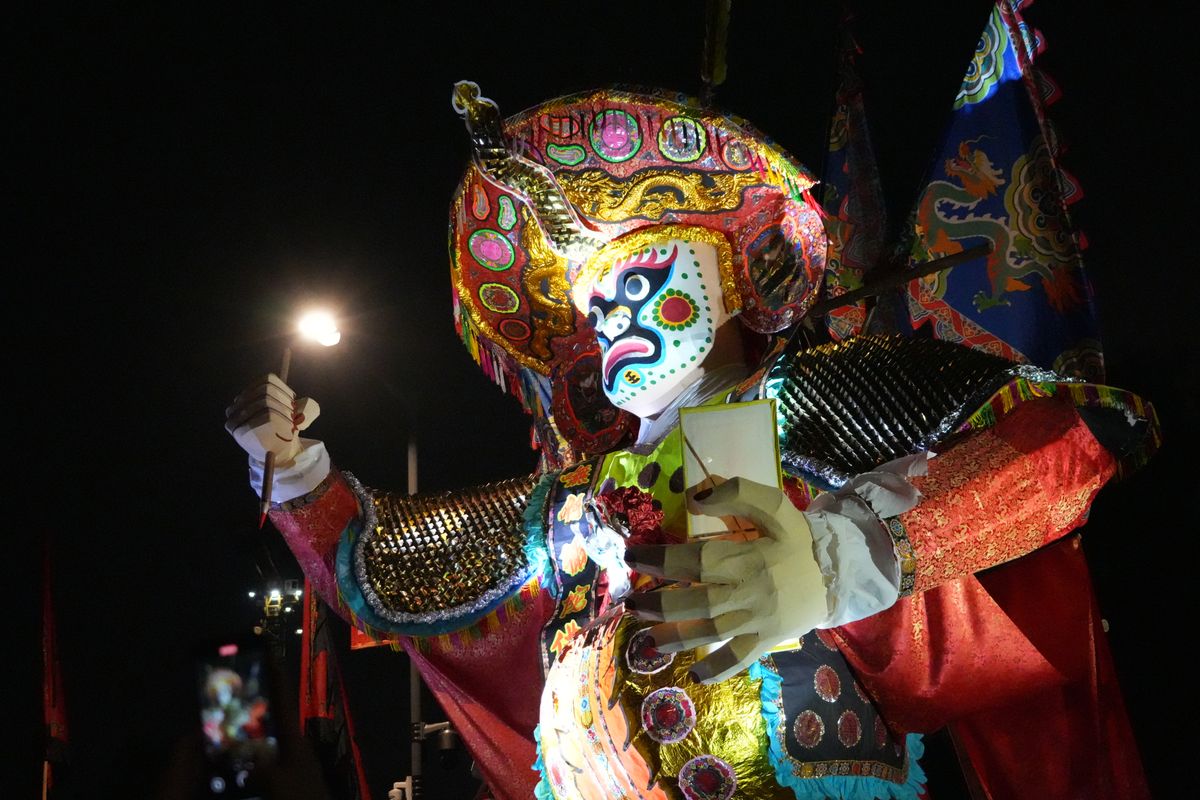
A Cantonese opera performance is not one thing — it's a total art form. Every performer trains for years across four core disciplines: 唱 (singing), 念 (recitation), 做 (acting and gesture), and 打 (martial and acrobatic movement). A single character might have to sing a heart-breaking ballad in Act I, spar with three actors in a stylised fight in Act II, and deliver a comic monologue in Act III — all in elaborate embroidered robes, with painted faces and enormous headdresses.
Roles fall into archetypes: 生 (male leads), 旦 (female leads), 淨 (painted-face characters, often warriors), and 丑 (clowns). A single audience member watching a full show gets martial arts, tragic romance, palace intrigue, comedy, and Cantonese lyricism — all set to the crash of gongs, the whine of the erhu, and the thumping wood block that anchors the tempo.
The UNESCO Recognition (and Why It Matters)
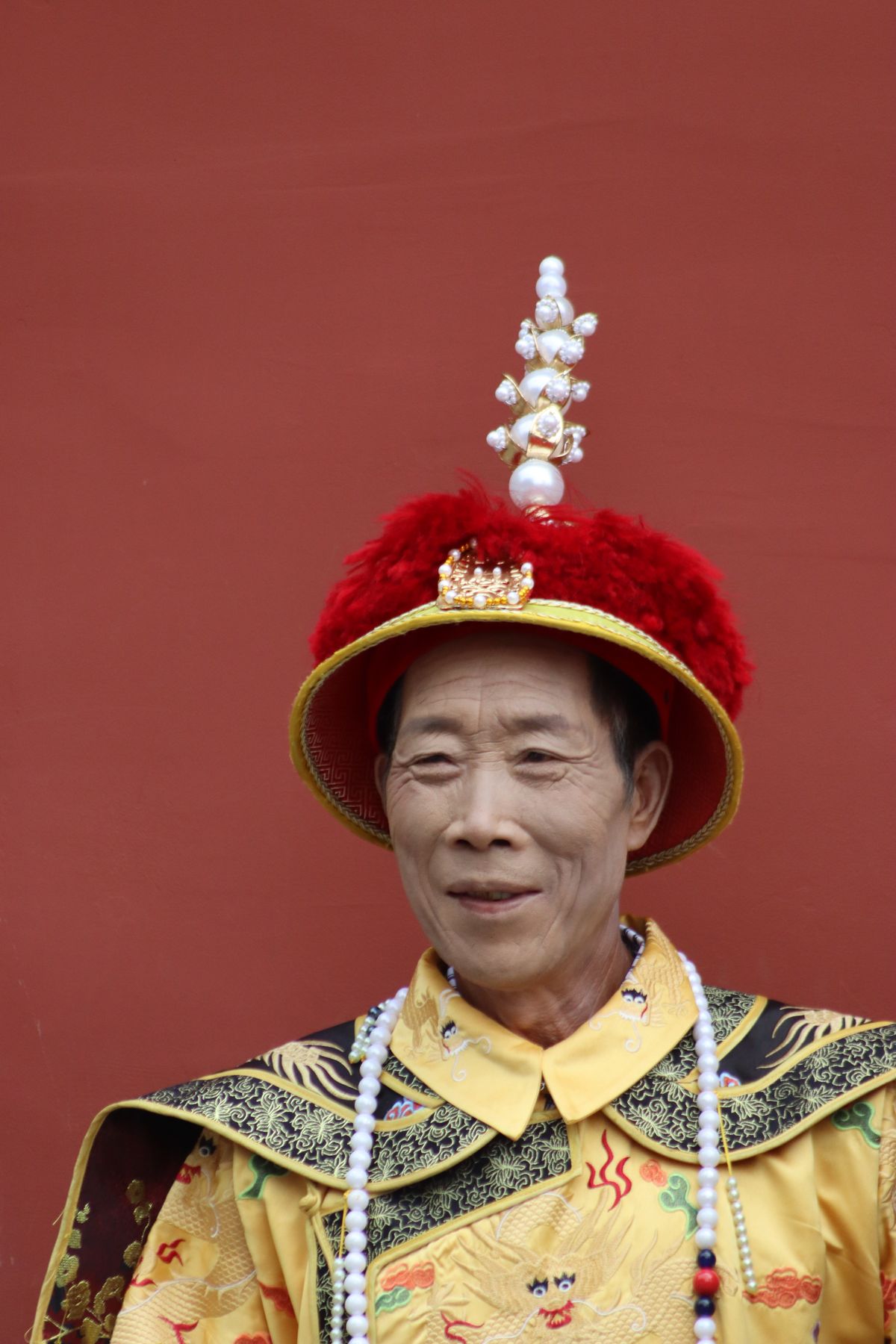
In September 2009, UNESCO inscribed Cantonese opera onto its list of Intangible Cultural Heritage of Humanity — the first time the world formally acknowledged that this specific southern Chinese art form deserved permanent global protection. The recognition was a joint nomination between Guangdong Province, Hong Kong, and Macau, marking the three regions as shared custodians.
For a form that had been threatened by decades of cultural change — the rise of cinema, then television, then streaming — the UNESCO listing was a lifeline. It unlocked government funding, formal training programmes, and public campaigns to keep the art alive. Hong Kong's Xiqu Centre in West Kowloon, opened in 2019, was built specifically to give Cantonese opera and other Chinese operatic forms a permanent modern home.
The Diaspora Kept It Alive
Cantonese opera has always travelled well. Wherever Guangdong migrants set down roots — San Francisco's Chinatown, Sydney's yum cha districts, Vancouver, Kuala Lumpur, Ho Chi Minh City — troupes eventually followed. In 19th-century San Francisco, Cantonese opera houses were among the loudest and most crowded venues on Grant Avenue. In Singapore and Malaysia, night-market opera stages still pop up during the Ghost Festival every year, performed for both human audiences and the spirits.
That's part of what makes Cantonese opera such a diaspora anchor. The language is instantly recognisable, the music transports you to a specific corner of the Pearl River Delta, and the costumes look exactly like the pictures your grandmother kept in a drawer. It's how you know you're still tethered to a place, even if your passport says otherwise.
Where to See It Today
In Hong Kong, the Xiqu Centre in West Kowloon Cultural District regularly stages full-length productions and shorter tea-house performances. During major festivals — Chinese New Year, the Yu Lan Ghost Festival, temple fair days — traditional bamboo theatres (戲棚) are still built by hand in villages across the New Territories, keeping alive the same craftsmanship as the bamboo scaffolders who build Hong Kong's skyscrapers.
Watching one of these bamboo-theatre performances outdoors, under Hong Kong stars, is one of the most quietly powerful cultural experiences the city offers. Free chairs, free show, free access to 700 years of history — and the gongs, still crashing, still keeping time with a tradition that refuses to fade.
📖 Related Articles
👉 Shop Cantonese Guy — Modern Streetwear for the Global Cantonese Community