

If you've ever walked through Chinatown during Lunar New Year — in Hong Kong, San Francisco, London, Vancouver, or Sydney — you know the sound before you see it. Cymbals crashing. Drums pounding. Firecrackers going off in bursts. Then two enormous, glittering lions come charging around the corner, heads bobbing, eyes blinking, mouths yawning open to swallow lettuce hanging above shop doorways. This is Cantonese lion dance (南獅) — and it is one of Guangdong's most enduring gifts to the world.
Foshan: The Birthplace of Cantonese Lion Dance
Southern lion dance (南獅) developed as a regional tradition in Guangdong province, most closely associated with the city of Foshan, likely during the Ming dynasty. Practitioners often say: "Southern lion dance originated in Foshan and flourished in Heshan (南獅始於佛山,盛於鶴山)." Foshan is also the cradle of Cantonese opera and southern-style kung fu — and the three arts grew up together, sharing performers, movements, and audiences.
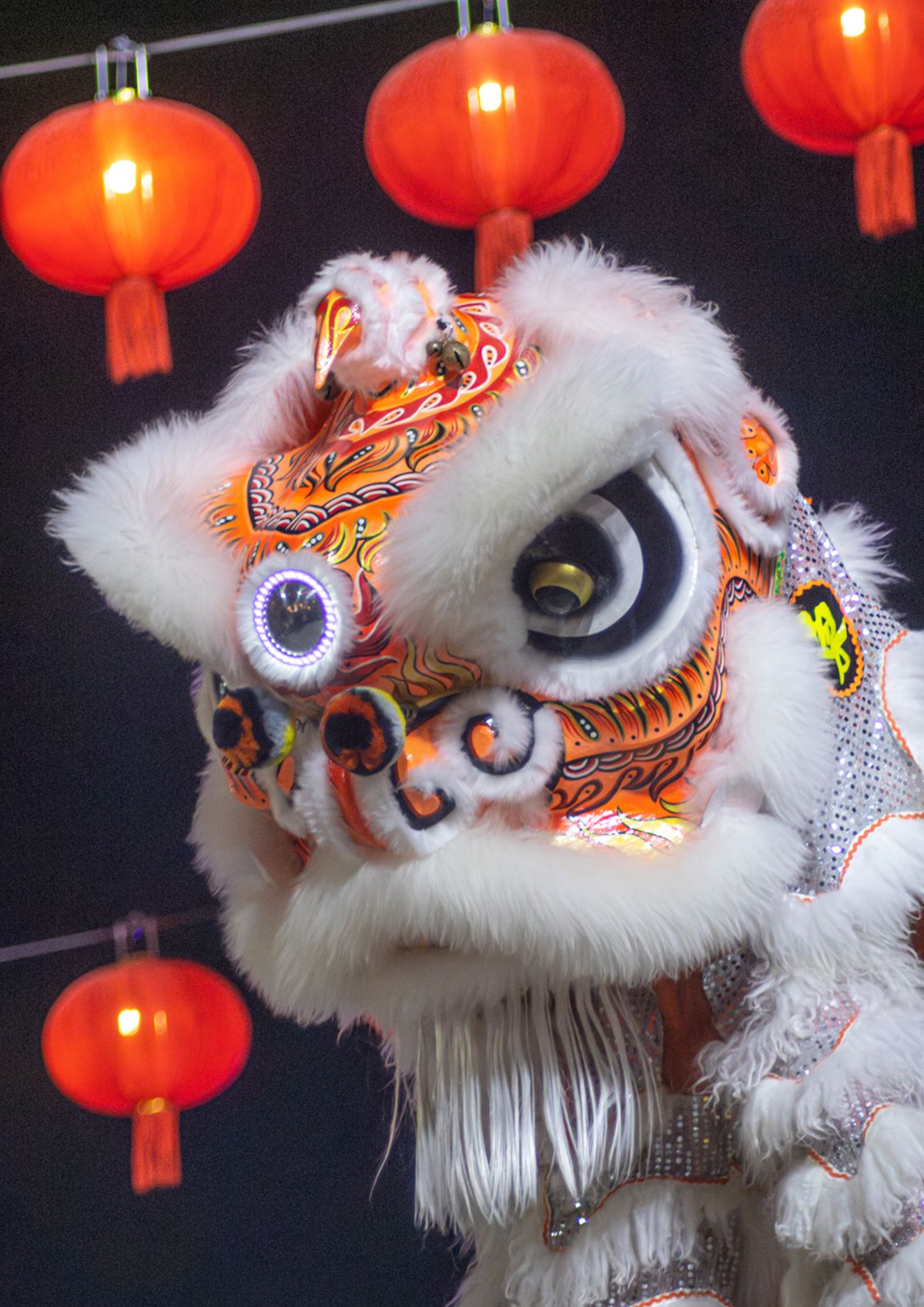
The Foshan lion has a distinctive look: a single horn, large eyes, an expressive mouth that opens and closes, and colours drawn from Chinese opera facial makeup. Legend links the lion to Nian (年), a mythical monster said to be scared away by loud noise and bright colours — which is exactly what a lion dance is engineered to produce.
The Two Great Cantonese Styles
Within the Southern lion tradition, two main styles emerged in Guangdong. The Fut San (佛山) style, from Foshan, features a tall, aggressive lion head with sharp expressions — historically associated with martial arts schools and used to display kung fu skill. The Hok San (鶴山) style, from Heshan, developed a flatter, more animal-like head and a bouncier, more playful footwork rooted in the movements of a cat. Traditional Fut San is fierce and ceremonial. Hok San is lively and audience-friendly. Most modern Cantonese lion dance troupes borrow from both.
Kung Fu Under the Costume
One thing most tourists don't realise: Cantonese lion dance is really a martial art in disguise. The stances — horse stance, cat stance, bow stance — are taken directly from southern-style Chinese kung fu. Historically, lion dance troupes were kung fu schools that used performances to demonstrate their students' skill and challenge rival schools. During Lunar New Year, a lion coming to your shop wasn't just a blessing — it was a statement about which martial arts lineage protected the neighbourhood.
This is also why Wing Chun masters, Hung Gar practitioners, and Choy Lay Fut schools all have their own lion dance traditions to this day. Lion dance is kung fu wearing a costume — and the best lion dancers are usually accomplished martial artists.
Choi Cheng: The Lettuce Ritual You've Definitely Seen
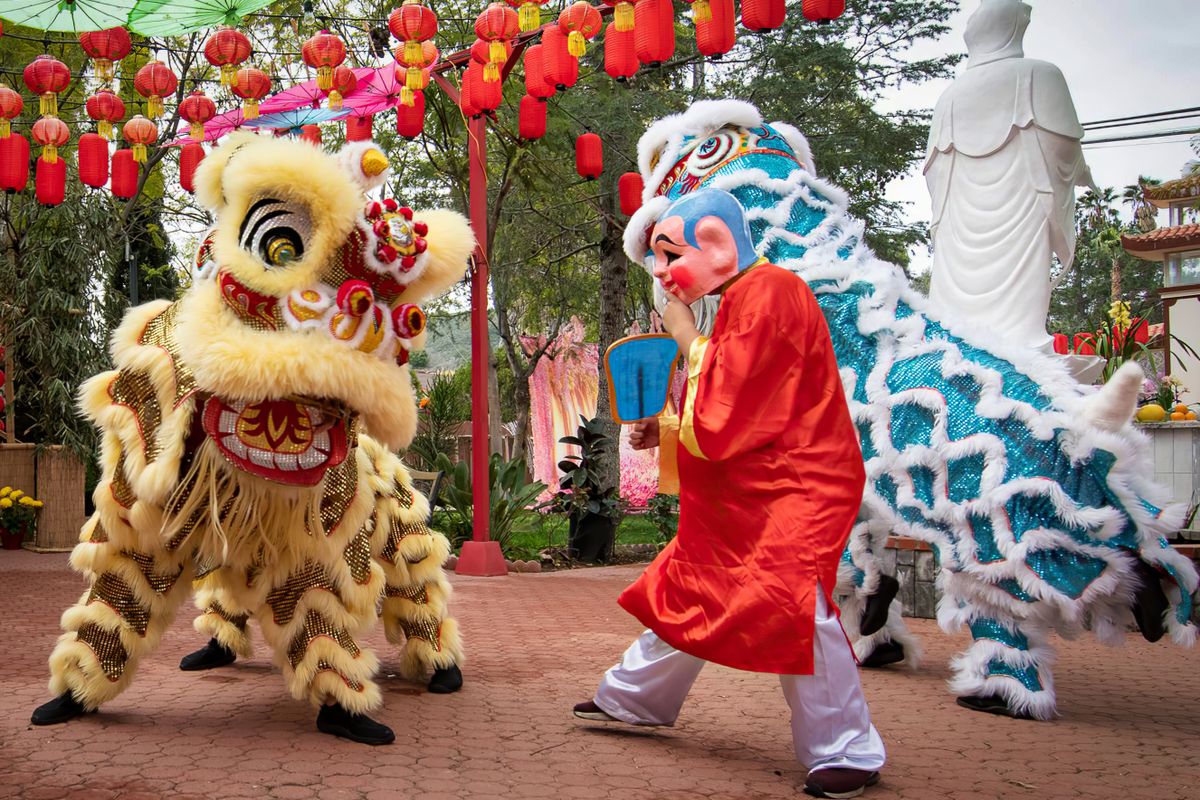
If you've ever wondered why lion dance troupes chase and eat a head of lettuce hanging from a red envelope, this is the choi cheng (採青) ritual — literally "plucking the green." The lettuce (生菜, saang1 coi3) sounds like 生財 (saang1 coi4), meaning "to grow wealth," and the red envelope tied to it contains lai see money for the troupe. The lion "eats" the lettuce, chews it dramatically, and then spits shredded greens out over the crowd — symbolically scattering prosperity in every direction. For Cantonese shopkeepers, having a lion perform choi cheng at your storefront on the second day of Lunar New Year is a proper way to open the year.
How the Diaspora Kept the Tradition Alive
When Cantonese people emigrated to Gold Mountain in the 19th century, they brought lion dance with them. San Francisco's Chinatown had lion dance troupes by the 1850s. Vancouver, Toronto, London, Sydney, and New York followed. In many cases, diaspora lion dance troupes actually preserved older forms of southern lion technique that had shifted or been lost back in Guangdong — meaning today, some of the most technically traditional Cantonese lion dancing on earth happens in cities like Vancouver, Melbourne, and the East Bay.
For diaspora Cantonese kids, joining a lion dance troupe is often the first serious cultural discipline they take on. It's kung fu, it's music, it's community, and it's a way to be visibly Cantonese in the middle of a city that doesn't always look like you. Ask any diaspora Cantonese uncle who danced lion in the 1980s — they'll still know the drum pattern by heart.
A Cantonese Word Every Lion Dance Fan Should Know
舞獅
mou5 si1 — Jyutping romanisation
Meaning: Lion dance — literally "dancing lion."
Explanation: The everyday Cantonese term for the whole art form. If you want to talk about a specific performance or the practice of lion dance as a discipline, this is the phrase. Cantonese speakers might also refer to a troupe as 醒獅團 (sing2 si1 tyun4), literally "awakened lion troupe."
Why Lion Dance Still Matters
In an era of mass-produced cultural experiences, Cantonese lion dance is stubbornly, gloriously handmade. Each lion head is still crafted from bamboo, paper, and painted silk. Each performance takes two humans coordinating perfectly through hours of drumbeats. Each troupe carries a lineage that goes back through a kung fu school, through a village in Guangdong, through centuries of practice.
When you watch a lion dance at Lunar New Year — whether that's in Sheung Wan, Chinatown SF, or a strip mall in Richmond — you're watching an unbroken chain of Cantonese culture that survived migration, war, and modernity. The drums haven't changed. The horn on the lion's head still points up. And the diaspora is still keeping it alive, one performance at a time.
📖 Related Articles
👉 Shop Cantonese Guy — Modern Streetwear for the Global Cantonese Community