

In 1952, a dockside food-stall owner named Lam Muk Ho set up shop on a narrow slope in Central called Lyndhurst Terrace. He served rice plates and coffee to the men working the piers below. But his real experiment was in a pot on the back burner: Ceylon black tea, brewed strong, strained through a long cotton sock, poured over evaporated milk. The men loved it. They kept coming back. Word travelled up the hill. And that unnamed brown liquid became the most famous drink in modern Cantonese history — Hong Kong-style milk tea, better known as 丝襪奶茶 ("silk stocking milk tea").
Today Lam's cha chaan teng — Lan Fong Yuen (蘭芳園) — is still open on Gage Street in Central, still hand-pulling tea the way Lam did seven decades ago. And in 2014, the craft he invented was officially recognised by the Hong Kong government as intangible cultural heritage.
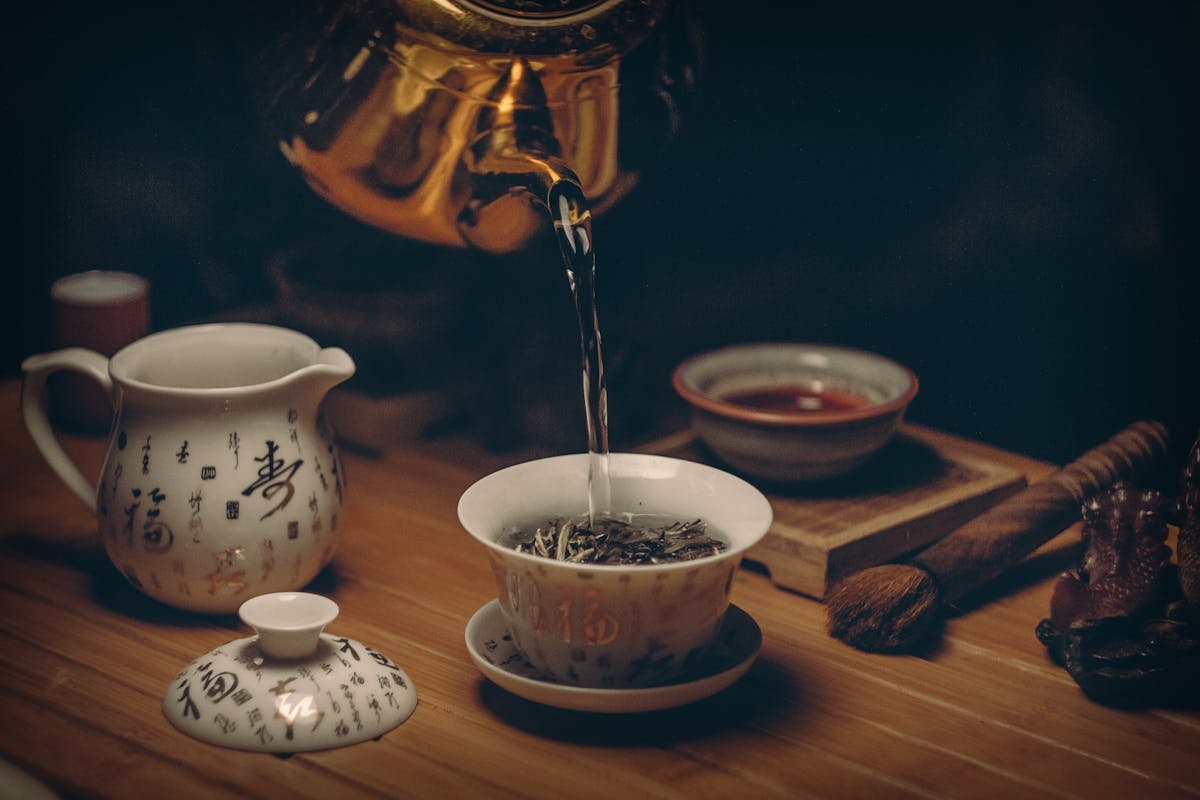
Why "Silk Stocking"?
The nickname is misleading. There is no silk. There is no stocking. What Lam Muk Ho did was borrow a length of white cotton interlock fabric — the kind his tailor friend used as lining for suit jackets — and sew it into a long tapered sleeve that could hold a serious quantity of tea leaves. This sleeve, filled with strong Ceylon black tea, went into a pot of near-boiling water and stayed there.
To develop the flavour, Lam would lift the tea-filled sleeve and pour the hot liquid back through it, repeatedly, from a height. "Pulling the tea" (拉茶) forces oxygen into the brew and coaxes out a deeper, rounder taste. After many pulls, the cotton fabric turned a dark, stained brown — and, to the dockworkers, it looked exactly like a nylon silk stocking. Hence the name.
The Recipe That Never Changed
A real Hong Kong milk tea is deceptively technical. There are exactly three ingredients and dozens of ways to get any of them wrong.
Lam Muk Ho famously insisted on premium "post-monsoon" tea leaves from Colombo, Sri Lanka — tea grown after the rainy season, when the leaves are plumper and the colour deeper. He blended multiple grades: broken orange pekoe for the punch, finer dust for the body. Then he added Black & White evaporated milk (the brand Hong Kong cha chaan tengs still swear by) for the creamy, slightly caramelised base. No fresh milk. No sugar in the brew — it's added by the customer, sugar cubes on the saucer, so you control your own destiny.
The result is not a subtle drink. It's bold, tannic, aggressive, and slightly bitter under the milk — designed to pair with the greasy Cantonese-Western fusion food of a working-class cha chaan teng lunch: baked pork chop rice, macaroni soup with ham, thick slices of buttered toast.
A UNESCO-Level Craft
On 24 June 2014, the Leisure and Cultural Services Department of the Hong Kong SAR government announced that "Hong Kong-style milk tea making technique" had been inscribed on the city's official inventory of intangible cultural heritage. This is the same list that protects Cantonese opera, the Cheung Chau Bun Festival, and the fire dragon dance of Tai Hang.
In other words: the government of Hong Kong made it official. This brown drink in a chipped white cup is not just a beverage. It is a piece of the city's soul, worthy of the same protection as its temples and its opera houses.
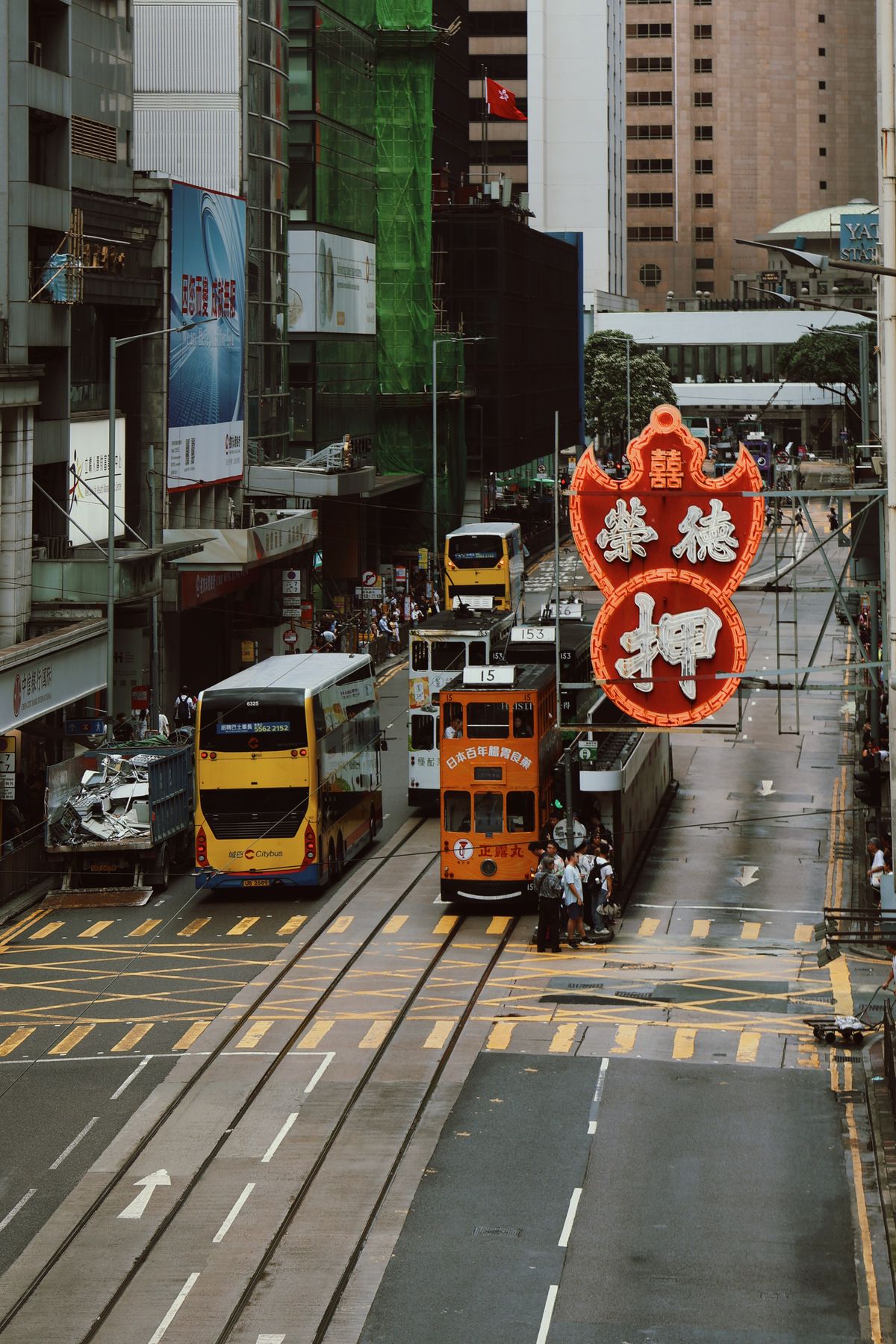
The Cha Chaan Teng Ritual
You don't just drink Hong Kong milk tea. You perform a ritual around it. The waiter slams down the cup, splashes half of it into the saucer, tosses two sugar cubes on top, and vanishes before you've said thank you. You stir counter-clockwise (there's no real reason for the direction; everyone just does it), let the steam curl up your face, and take that first tannic, milky, life-restoring sip.
If you want it iced, you order "凍奶茶" (dung3 naai5 caa4). If you want it half-coffee, half-milk-tea — a uniquely Hong Kong invention called 鸳鴦 (yuenyeung, "mandarin duck," because ducks pair up) — you say so. If you want condensed milk instead of evaporated, you ask for "茶走奶" (caa4 zau2 naai5). The vocabulary is its own dialect. Getting it right is a small badge of belonging.
Why It Spread to the Diaspora
Wherever Cantonese people have gone — Vancouver, Sydney, London, San Francisco — the cha chaan teng has followed, and with it, the silk stocking milk tea. In Toronto's Scarborough, in Melbourne's Box Hill, in London's Chinatown, you can find a cup of tea pulled the exact way Lam Muk Ho pulled his in 1952. It's the fastest way for a diaspora Cantonese person to feel, for five minutes, like they're home.
It sits comfortably alongside the other pillars of the Cantonese food canon — the pineapple bun, the wonton noodle, the dai pai dong stir-fry — as one of the everyday things Cantonese people built into world culture without ever really trying to.
One Cup, Seven Decades, One City
Seventy-plus years after Lam Muk Ho first hung his cotton sock over a pot of Colombo tea, Hong Kong drinks an estimated 2.5 million cups of silk stocking milk tea every single day. Every one of them a small tribute to a dockside experiment that turned into a heritage-listed craft. Every one a reminder that Cantonese culture is often made by the same people who never expected to be remembered — a Central cha chaan teng owner, a tailor friend with spare fabric, a group of dockworkers thirsty enough to try anything.
Order one strong, half-sweet, and let it teach you something about the city that invented it.
📖 Related Articles
👉 Shop Cantonese Guy — Modern Streetwear for the Global Cantonese Community