

Cantonese doesn't do polite. When a Hongkonger is angry, they aren't "a little frustrated" — their 火 is literally 滾ing (boiling). When they're sad, they don't say "I feel down" — they say their heart has gone 淡 (watery, faded). The language of feeling in Cantonese is short, physical, and unmistakable.
In Volume 19, we cover ten Cantonese emotion words you'll hear all over Hong Kong — from cha chaan teng arguments to family group chats. Each one with a fact-checked Jyutping, the cultural nuance, and a real-life example you could use tonight.
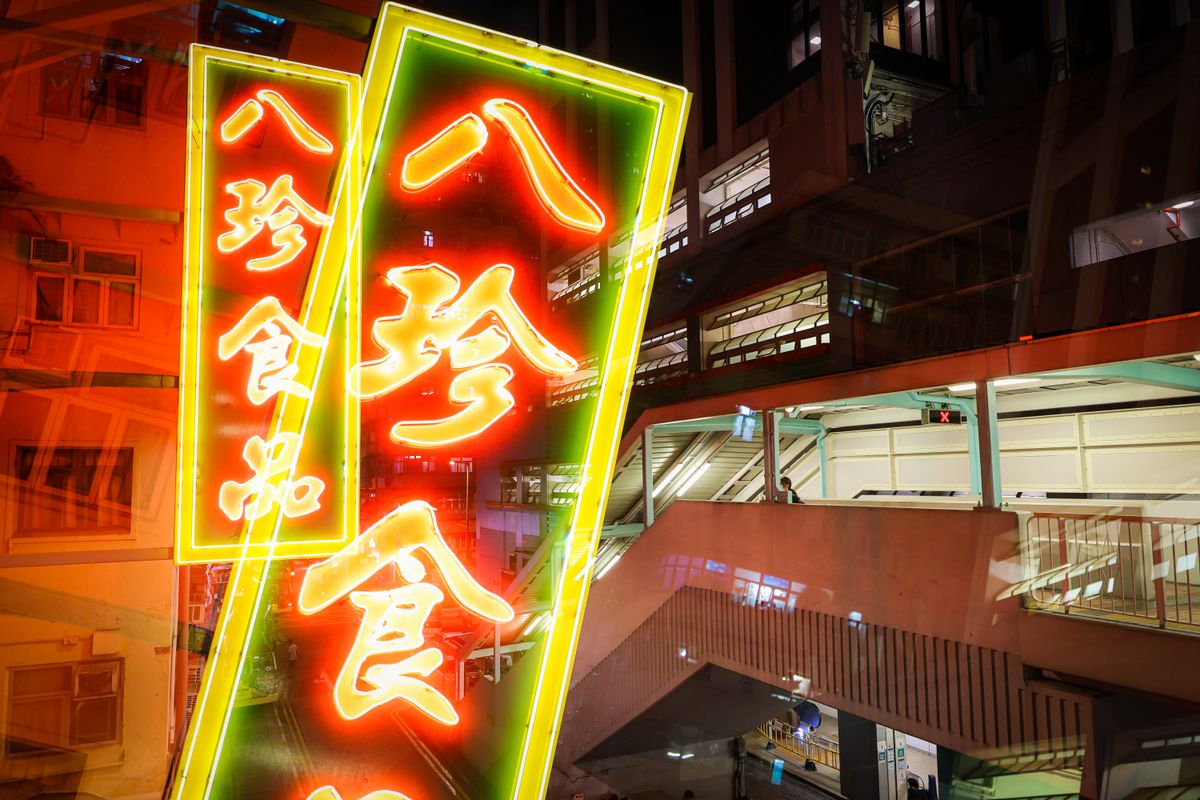
The 10 Cantonese Emotion Words You Actually Need
1. 開心
hoi1 sam1 — Jyutping romanisation
Meaning: Happy / joyful.
Explanation: Literally "open heart." It's the default Cantonese word for happy, but it carries a particular warmth — your chest opening up, not just your face smiling. Doubled up as 開開心心 (hoi1 hoi1 sam1 sam1), it becomes a New Year wish.
2. 唔開心
m4 hoi1 sam1 — Jyutping romanisation
Meaning: Unhappy / sad.
Explanation: Add 唔 (m4, "not") in front of almost any positive word in Cantonese and you flip it. 唔開心 is the everyday way to describe sadness — softer and more honest than "depressed," which Cantonese speakers usually avoid in conversation.
3. 嬲
nau1 — Jyutping romanisation
Meaning: Angry / annoyed / sulking.
Explanation: A uniquely Cantonese character built from 男 + 女 + 男 — three people crammed together, which is exactly how the feeling looks. It covers everything from petty annoyance to "we're not speaking right now" silent treatment.
4. 火滾
fo2 gwan2 — Jyutping romanisation
Meaning: Furious / fuming.
Explanation: Literally "fire boiling." This is the upgrade from 嬲 — the feeling when something is so unfair your insides are bubbling. Hongkongers reach for it in traffic, after a bad customer-service call, or watching the news.
5. 驚
geng1 — Jyutping romanisation
Meaning: Scared / afraid / worried.
Explanation: One short syllable that does the work of three English words. 驚 covers everything from "afraid of the dark" to "worried I'll be late." It often comes paired with what you fear: 驚黑 (geng1 hak1, scared of the dark), 驚遲到 (geng1 ci4 dou3, afraid of being late).
6. 緊張
gan2 zoeng1 — Jyutping romanisation
Meaning: Nervous / tense / wound up.
Explanation: Literally "tight-stretched." Used before exams, job interviews, first dates, and any time a parent is about to meet your partner. It also doubles as "to care deeply about" — 我好緊張你 means "I really care about you."
7. 失望
sat1 mong6 — Jyutping romanisation
Meaning: Disappointed.
Explanation: Literally "lost hope." 失望 is heavier than English "disappointed" — it implies you had real expectations, and the loss matters. It's a word Cantonese parents wield very, very carefully because it lands hard.
8. 心淡
sam1 taam5 — Jyutping romanisation
Meaning: Disheartened — the warmth has drained out.
Explanation: Literally "heart gone watery / bland." 心淡 is the quiet end of caring — not anger, not sadness, but the moment you stop hoping. Joey Yung's 2003 hit 心淡 turned the word into a Cantopop classic of love-faded-out.
9. 興奮
hing1 fan5 — Jyutping romanisation
Meaning: Excited / thrilled.
Explanation: Bigger than 開心 — this is the body-tingling, can't-sit-still kind of joy. Cantonese parents will tell over-stimulated kids 唔好咁興奮 ("don't be so worked up") right before a Mid-Autumn lantern walk.
10. 攰
gui6 — Jyutping romanisation
Meaning: Tired / exhausted / worn out.
Explanation: Technically tiredness, but emotionally it does so much more. A Cantonese person who says 我好攰 isn't just physically wiped — they're worn down by something deeper. It's the word for the end of a long week, a long argument, or a long life.
Why Emotion Words Matter So Much in Cantonese
Cantonese speakers, especially older generations, have a reputation for not saying "I love you" out loud. But the language is anything but emotionally flat. The depth shows up sideways — in 心淡 instead of "heartbroken," in 火滾 instead of "annoyed," in 攰 carrying everything you couldn't say. Learning these ten words doesn't just help you communicate. It helps you hear what your grandparents have been telling you all along.
📖 Related Articles
👉 Shop Cantonese Guy — Modern Streetwear for the Global Cantonese Community