

Walk into any Hong Kong wet market, night market, or wholesale district in Sham Shui Po and you'll hear this vocabulary flying back and forth at high speed. Cantonese shopping talk is fast, direct, and full of colour — a stallholder can flip from "老闆" to "蝕本" to "找續" in a single breath. Here are 12 words every Cantonese-speaking shopper (or seller) uses every single day.
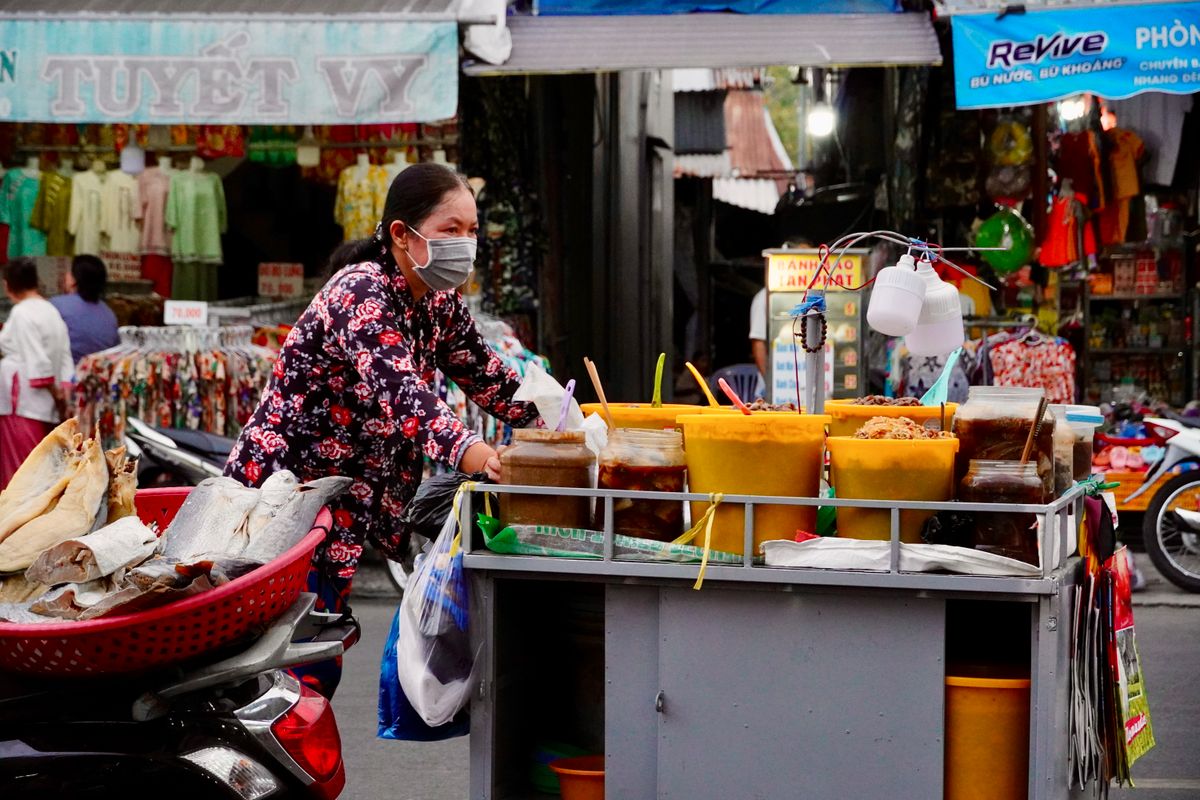
The 12 essential Cantonese shopping words
1. 幾錢
gei2 cin4 — Jyutping romanisation
Meaning: "How much?" — the single most-used shopping phrase in Cantonese.
Explanation: You can point at literally anything in a market — a mango, a T-shirt, a rice cooker — and say this. It works standalone. No verbs, no politeness padding, no "excuse me could you tell me the price of…". Just gei2 cin4.
2. 貴
gwai3 — Jyutping romanisation
Meaning: Expensive. Often delivered as a stretched-out complaint: "gwaaaaai3."
Explanation: This is the polite-ish opening move in any Hong Kong bargaining exchange. Saying "貴" without adding anything else signals: "I want you to name a better price." The stallholder already knows the script.
3. 平
peng4 — Jyutping romanisation
Meaning: Cheap. The direct opposite of 貴.
Explanation: Note the tone — peng4 (cheap) is completely different from ping4 (peaceful). This one causes a lot of confusion for learners. Locals will chase peng4 things with sport-like intensity, especially during 減價 season.
4. 抵
dai2 — Jyutping romanisation
Meaning: Worth it. Good value. A bargain.
Explanation: 抵 is more nuanced than 平. Something can be expensive but still 抵 (worth the price for what you get). Something can be cheap but not 抵 (poor quality). Locals treat 抵 like a status award — declaring "呢個好抵!" means you've made a smart purchase.
5. 老闆
lou5 baan2 — Jyutping romanisation
Meaning: Boss. The default way to address any shopkeeper or stall owner.
Explanation: You don't say "excuse me sir" in a Cantonese market. You call the person 老闆 — even if they're clearly an employee, even if they're 20 years old. It's the universal, flattering, doors-open form of address. Female shopkeepers get 老闆娘 (lou5 baan2 noeng4).
6. 有冇平啲
jau5 mou5 peng4 di1 — Jyutping romanisation
Meaning: "Anything cheaper?" — the classic bargaining line.
Explanation: This is the standard follow-up after 貴. In markets where haggling is expected (electronics in Sham Shui Po, clothing stalls in Mong Kok, souvenir shops), this line is basically required. Skip it and you're leaving money on the table.
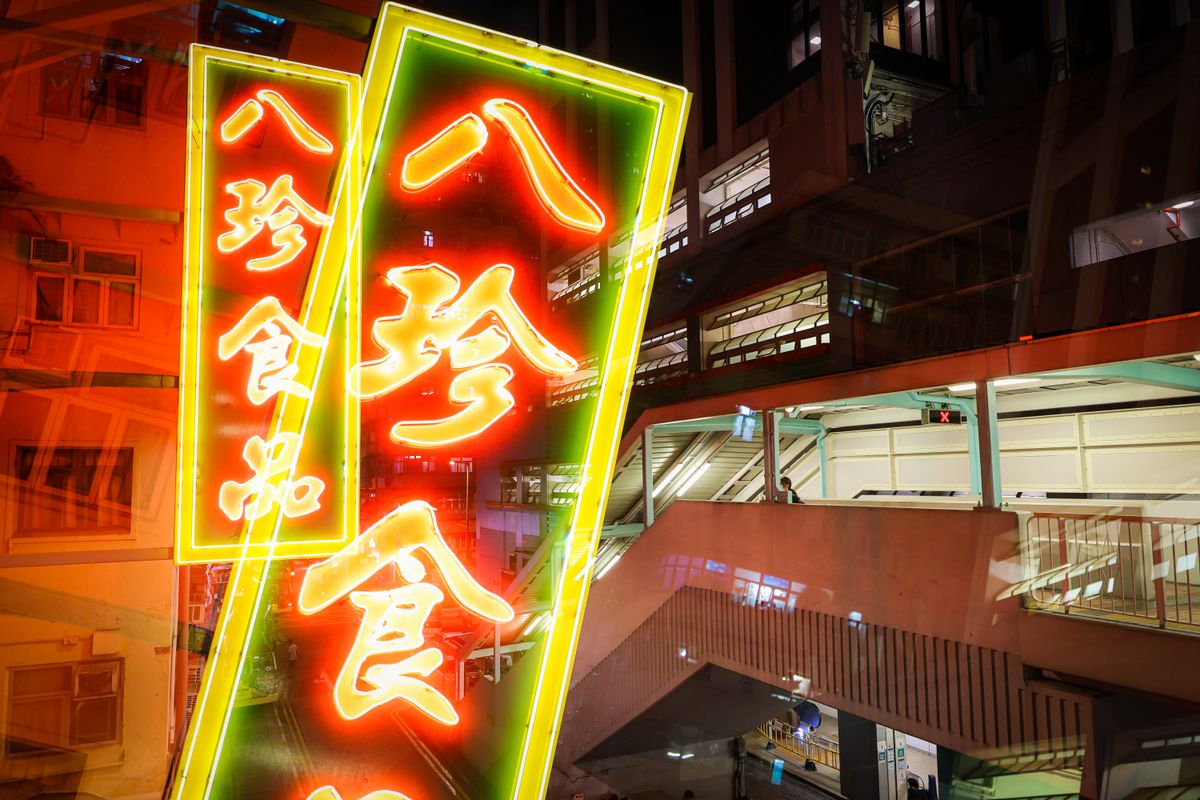
7. 折
zit3 — Jyutping romanisation
Meaning: Discount — but read the numbers backwards from Western pricing.
Explanation: This is the Cantonese pricing quirk that trips up every visitor: 七折 (cat1 zit3, "seven-tenths") means you pay 70% of the price, not that you save 70%. So 七折 = 30% off. 半價 (bun3 gaa3) is straightforward: half price.
8. 減價
gaam2 gaa3 — Jyutping romanisation
Meaning: On sale. Price reduction.
Explanation: The magic word in every Hong Kong shop window. 大減價 (daai6 gaam2 gaa3, "big sale") is what pulls aunties into a store from across the street. The word literally means "cut price."
9. 蝕本
sit6 bun2 — Jyutping romanisation
Meaning: Losing money (on the sale).
Explanation: This is a stallholder's classic dramatic weapon during bargaining: "俾埋你就蝕本啦!" ("If I give it to you at that price I'll be losing money!"). Both sides know it's theatre. Both sides love the theatre.
10. 找續
zaau2 zuk6 — Jyutping romanisation
Meaning: To give change (money back after payment).
Explanation: When you hand over a $100 for a $73 item, the change coming back is 找續. Old-school stallholders still count it into your palm one coin at a time. If you hear "唔使找" (m4 sai2 zaau2) — that means "keep the change."
11. 睇下
tai2 haa5 — Jyutping romanisation
Meaning: "Just looking." The polite escape phrase.
Explanation: When a shopkeeper hovers and asks what you want, "睇下先" (tai2 haa5 sin1, "looking first") sets the boundary without offending anyone. Every Hong Kong local uses this defensively in shops they don't intend to buy from.
12. 執平嘢
zap1 peng4 je5 — Jyutping romanisation
Meaning: To grab a bargain. Literally: "pick up cheap thing."
Explanation: This is what Hong Kong aunties do at closing-time wet markets, at Boxing Day sales, at Sham Shui Po electronics stalls at midnight. It's the shopper's sport of hunting for the day's best deal. Bragging rights included.
Why this vocabulary matters
Shopping talk isn't just utility Cantonese — it's cultural performance. The back-and-forth of 貴 and 平, the theatrical 蝕本, the ritual "老闆" address — this whole vocabulary is a live tradition that keeps Cantonese street commerce loud, warm, and human. Learn these 12 words and you'll stop feeling like a tourist in any Cantonese-speaking market from Guangzhou to Vancouver.
📖 Related Articles
👉 Shop Cantonese Guy — Modern Streetwear for the Global Cantonese Community