

Cantonese isn't just what you say — it's how you react. Half a conversation between Hong Kongers happens in short bursts of sound: a sharp 咦, a drawn-out 嘩, a dismissive 唓 that says more than a full sentence ever could. These are interjections, and mastering them is how you stop sounding like a textbook and start sounding like someone who actually grew up on Cantonese TV.
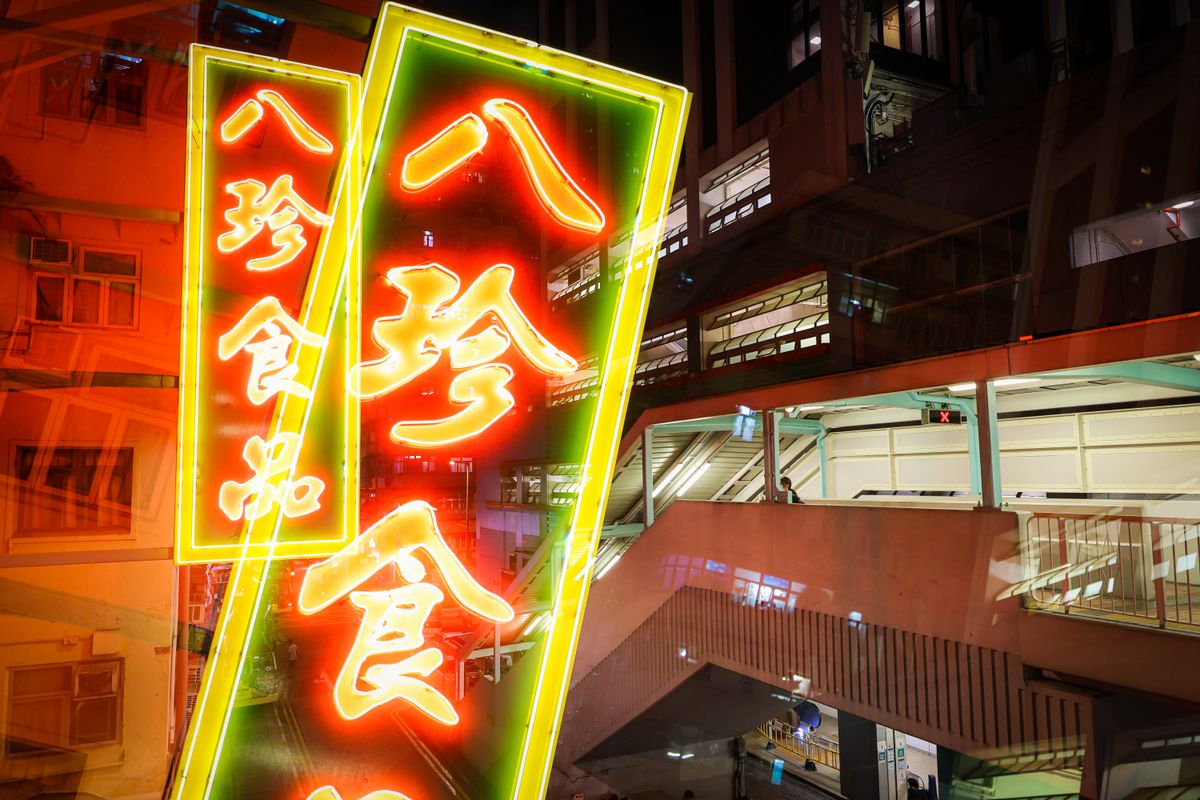
The 12 exclamations Hong Kong locals use every single day
1. 哇
waa1 — Jyutping romanisation
Meaning: Wow! (positive surprise, admiration)
Explanation: The all-purpose Cantonese "wow." Short, snappy, and used when something is genuinely impressive — a view, a dish, a price tag, a haircut. Not sarcastic. Different from the drawn-out 嘩.
2. 嘩
waa4 — Jyutping romanisation
Meaning: Whoa (drawn-out awe or disbelief)
Explanation: Where 哇 is quick, 嘩 is stretched — the longer you hold it, the more astonished you sound. Often paired with 咁 ("so") to emphasise scale, size, or shock.
3. 咦
ji2 — Jyutping romanisation
Meaning: Huh? / Wait, what's that?
Explanation: A short, curious "huh?" — used when something unexpected catches your eye or when you notice something odd. Not confused-angry, just genuinely puzzled.
4. 吓
haa2 — Jyutping romanisation
Meaning: What? / Come again?
Explanation: The Cantonese "sorry, what did you say?" Also used to signal disbelief. Tone matters — a rising 吓 means "please repeat," a flat 吓 means "you're kidding me."
5. 哎呀
ai1 jaa3 — Jyutping romanisation
Meaning: Oh no / Oops / Ugh
Explanation: The Cantonese "oh no" — used for small mishaps, forgotten umbrellas, spilled tea, or when Mum reminds you about the thing you were supposed to do yesterday. Not for real emergencies.
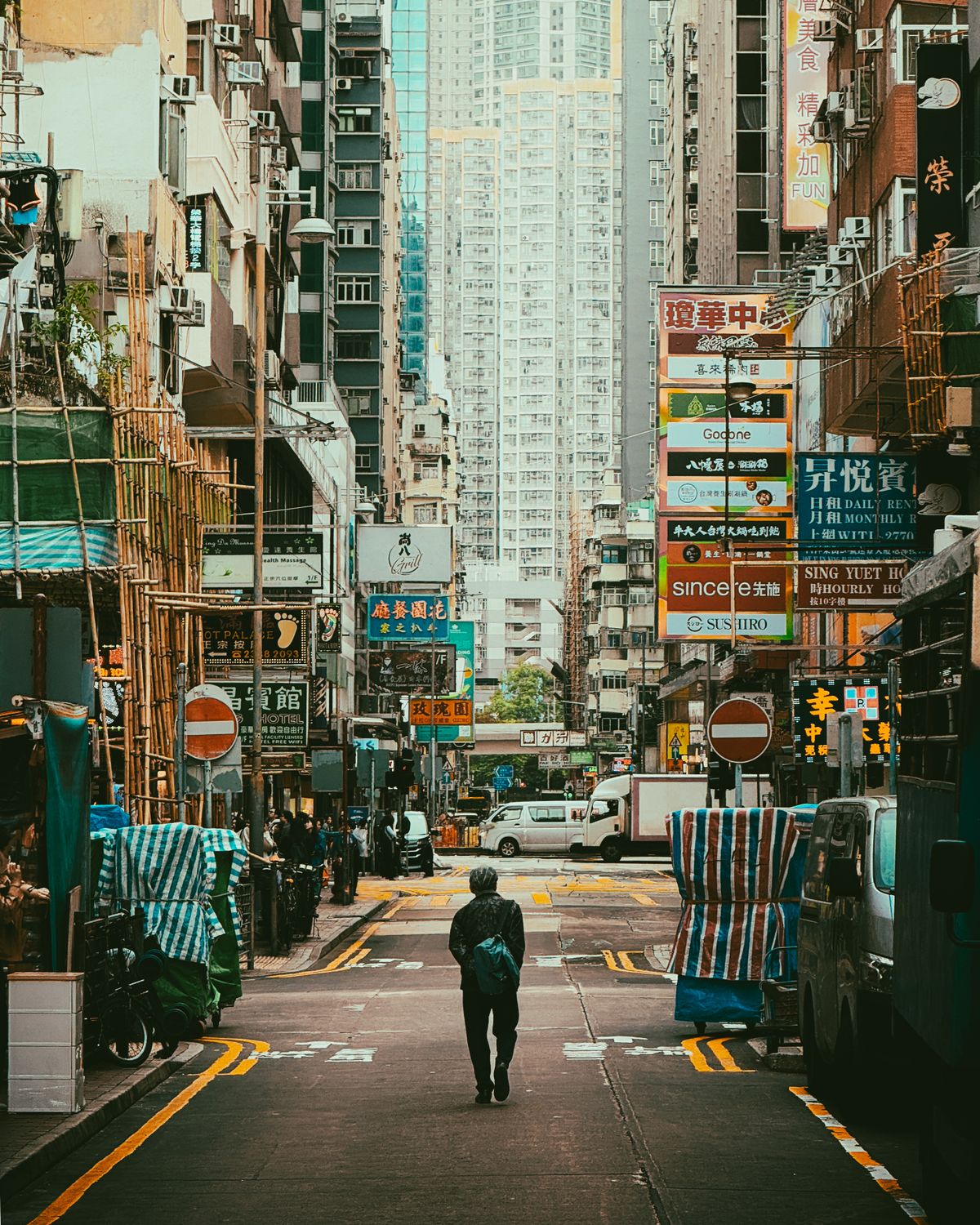
6. 唔係啩
m4 hai6 gwaa3 — Jyutping romanisation
Meaning: No way! / You can't be serious.
Explanation: Literally "not-is-suppose." The particle 啩 softens 唔係 ("not is") into a stunned, doubtful "you're joking, right?" It's how Hong Kongers process gossip they weren't ready to hear.
7. 好嘢
hou2 je5 — Jyutping romanisation
Meaning: Yes! / Awesome!
Explanation: Literally "good stuff." The Cantonese cheer of triumph — shouted when your team scores, when you land the promotion, or when Mum finally says yes to takeaway. Full body, arms optional.
8. 死喇
sei2 laa3 — Jyutping romanisation
Meaning: I'm dead / I'm done for.
Explanation: Literally "die la." Not actually about dying — it's the Cantonese "I'm cooked." Used when you realise you left the stove on, missed the deadline, or forgot Mum's birthday.
9. 弊
bai6 — Jyutping romanisation
Meaning: Crap / Uh oh / Trouble.
Explanation: A one-syllable panic button. Slightly softer than 死喇 but still signals: something has gone sideways and you know it. Often extended as 弊喇 for full effect.
10. 唓
ce1 — Jyutping romanisation
Meaning: Tsk / Pfft (dismissive scoff)
Explanation: The most Cantonese sound of all — a sharp, unimpressed 唓 that means "please, I've heard better." Older aunties and TVB drama villains have made it an art form. One syllable, whole worldview.
11. 天呀
tin1 aa3 — Jyutping romanisation
Meaning: Oh heavens / OMG
Explanation: Literally "sky ah." A slightly dramatic exclamation aimed at the heavens themselves — for shock, disbelief, or that special exhaustion that only appears at family dinners.
12. 慘
caam2 — Jyutping romanisation
Meaning: How tragic / poor thing
Explanation: An expression of sympathy — or of mock sympathy — for someone's misfortune. Doubled as 好慘 ("so tragic") for maximum emotional weight. Reserved for stories where the ending genuinely deserves a sigh.
Why interjections make you sound native
A Cantonese sentence with no exclamation is like Hong Kong with the lights off — technically still there, but missing all the personality. When you drop a well-timed 咦 into a conversation, or hit someone with a devastating 唓, you're doing more than speaking Cantonese. You're reacting like you were raised in it. That's what turns a learner into a local.
📖 Related Articles
👉 Shop Cantonese Guy — Modern Streetwear for the Global Cantonese Community