

In Hong Kong, weather is not small talk — it is a survival language. A single word can tell you whether to bring an umbrella, whether the MTR will still run, or whether your grandmother is about to tell you to wear more clothes. Cantonese has dozens of expressions for the sky and the air, many of which have no clean English equivalent. Below are twelve of the most-used weather words in Hong Kong Cantonese — with correct Jyutping, cultural notes, and real Hong Kong sentences you will actually hear.
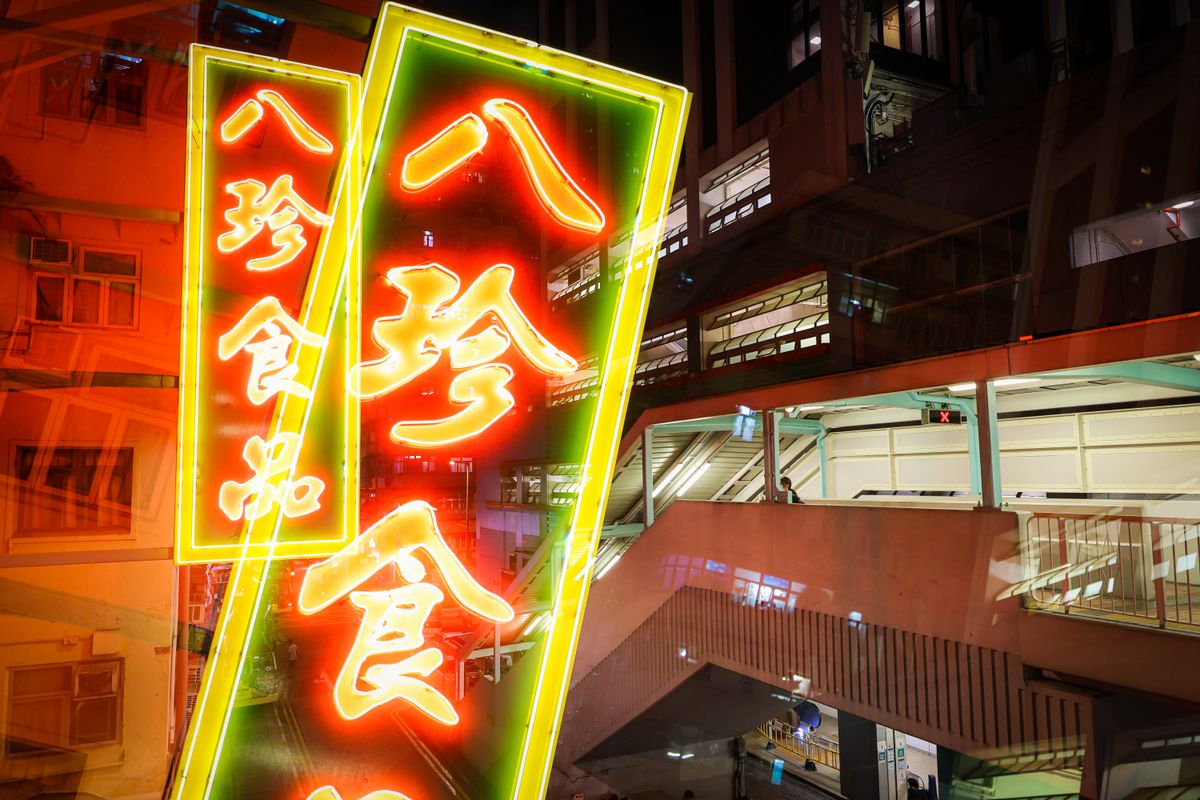
Volume 44: The Cantonese language of sky, wind and sweat
Because Hong Kong sits on the edge of the South China Sea, weather here is dramatic. Summers are wet, sticky, and interrupted by black-rainstorm warnings. Autumn is short and sweet. Winter can be as mild as 20°C or drop to 6°C with a wind that cuts through cheap jackets. Every Hong Konger has a running vocabulary for these shifts — and much of it is unique to Cantonese. If you have read Vol. 43 on family and relative words, you know how granular Cantonese can get. Weather is no different.
1. 天氣
tin1 hei3 — Jyutping romanisation
Meaning: Weather.
Explanation: The umbrella term. Hong Kongers will start almost any small talk with 今日天氣 — today's weather — before moving on to complaints, plans or gossip.
2. 打風
daa2 fung1 — Jyutping romanisation
Meaning: A typhoon is hitting; typhoon season.
Explanation: Literally "strike wind." Between May and October, this word appears in every Hong Kong WhatsApp group. It is also code for a possible day off work.
3. 掛波
gwaa3 bo1 — Jyutping romanisation
Meaning: To hoist a typhoon signal.
Explanation: Literally "hang the ball." A leftover from the old days when the Hong Kong Observatory physically hoisted black storm balls above its towers. The phrase survived long after the balls disappeared.
4. 落雨
lok6 jyu5 — Jyutping romanisation
Meaning: Raining. Literally "falling rain."
Explanation: Cantonese uses 落 ("fall") for many things that descend from the sky — rain, snow, hail. If your friend says 落緊雨, they mean it's actively raining right now.
5. 潮濕
ciu4 sap1 — Jyutping romanisation
Meaning: Humid, damp.
Explanation: Hong Kong in March and April is legendarily 潮濕 — walls sweat, laundry never dries, and old aunties break out the dehumidifier as if it were a family heirloom.
6. 焗
guk6 — Jyutping romanisation
Meaning: Stuffy, muggy, oppressive.
Explanation: One of the great untranslatable Cantonese words. 焗 is not just hot — it is the airless, sticky feeling of a Hong Kong summer with no aircon, or a packed minibus with the windows shut. It also means "to bake in a sealed pot."
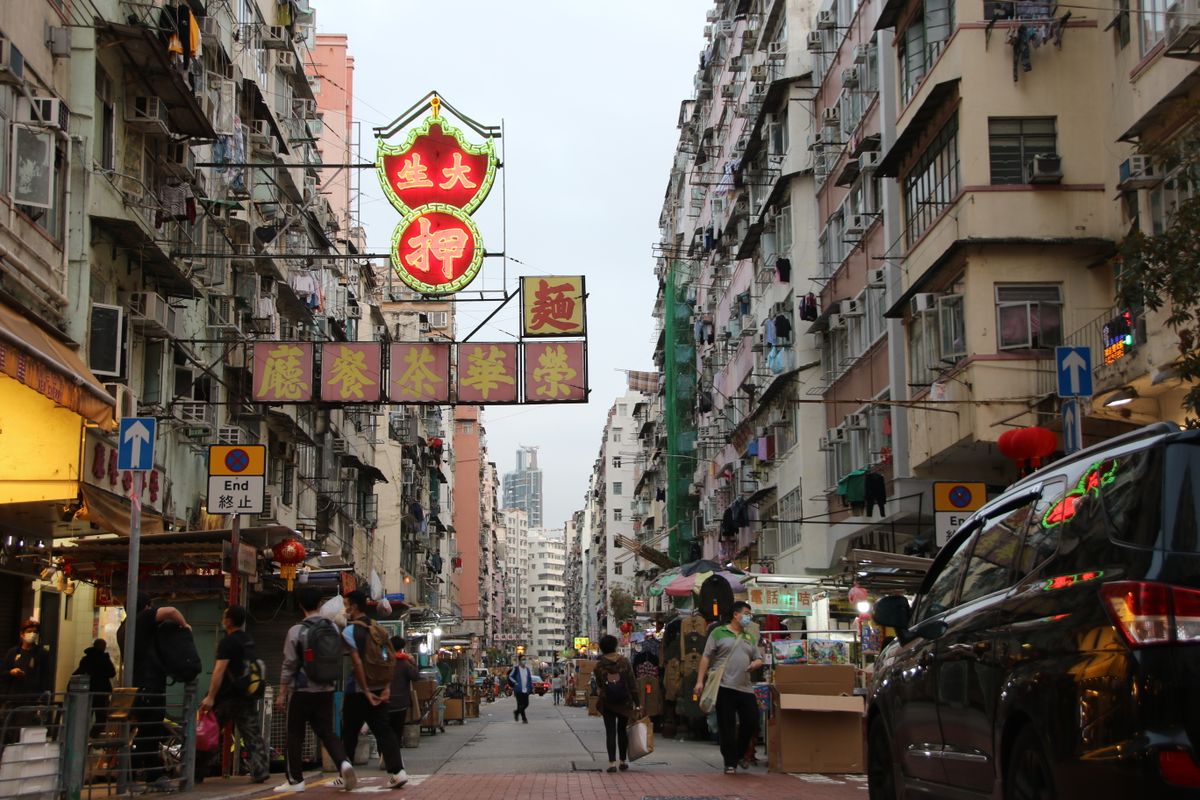
7. 好凍
hou2 dung3 — Jyutping romanisation
Meaning: Really cold.
Explanation: Hong Kong winter is not Toronto winter, but concrete flats without central heating make 12°C feel brutal. 好凍 is the polite version. Grandmothers upgrade it to 凍到入骨 — "cold right into the bones."
8. 好熱
hou2 jit6 — Jyutping romanisation
Meaning: Very hot.
Explanation: Cantonese also has 熱氣 (jit6 hei3) which means "internal heatiness" — a totally different concept from ambient heat. Do not confuse the two, or your auntie will start boiling herbal tea for you.
9. 曬
saai3 — Jyutping romanisation
Meaning: To be baked by the sun; to sun-dry.
Explanation: Everything gets 曬 in Cantonese life — clothes on the balcony, salted fish on rooftops, tourists on the ferry. If someone says 好曬, they mean the sun is scorching. If they say 曬黑, they mean tanned.
10. 行雷
haang4 leoi4 — Jyutping romanisation
Meaning: Thundering. Literally "walking thunder."
Explanation: More colloquial and more Cantonese than 打雷. The image is beautiful — thunder walks across the sky. Older Hong Kongers still say 雷公 (leoi4 gung1) — "the thunder god" — is angry.
11. 閃電
sim2 din6 — Jyutping romanisation
Meaning: Lightning.
Explanation: 閃 means to flash and 電 means electricity — a very Cantonese, very physical description. Also used metaphorically: 閃電交往 ("lightning dating") means an impossibly fast relationship.
12. 涼爽
loeng4 song2 — Jyutping romanisation
Meaning: Cool and refreshing.
Explanation: The word Hong Kongers save for those rare October and November evenings when the humidity finally drops and you can actually wear a jacket without sweating through it. A near-mythical state of weather.
Weather is Cantonese identity
To be Cantonese is to be intimate with weather. Grandmothers can smell 打風 before it arrives. Office workers keep 遮 (umbrellas) in every bag. Cha chaan teng aunties adjust their menus to the season — hot 奶茶 (milk tea) in December, ice-cold yuenyeung in July. When you learn these twelve words, you are learning how a whole culture reads the sky.
📖 Related Articles
👉 Shop Cantonese Guy — Modern Streetwear for the Global Cantonese Community