

Colours in Cantonese are never just colours. Red is luck, but only in the right context. Green is fresh and vital — unless it's on a hat. White is elegance, but also mourning. Every colour word in Cantonese carries a hidden second life, and once you learn the cultural baggage, you start seeing the city differently.
Volume 45 covers twelve everyday colour words and the meanings Hong Kongers, Guangzhou aunties, and diaspora grandmothers all know without ever having to explain. If you missed Vol. 44, catch up with Vol. 44 on weather words before you dive in.
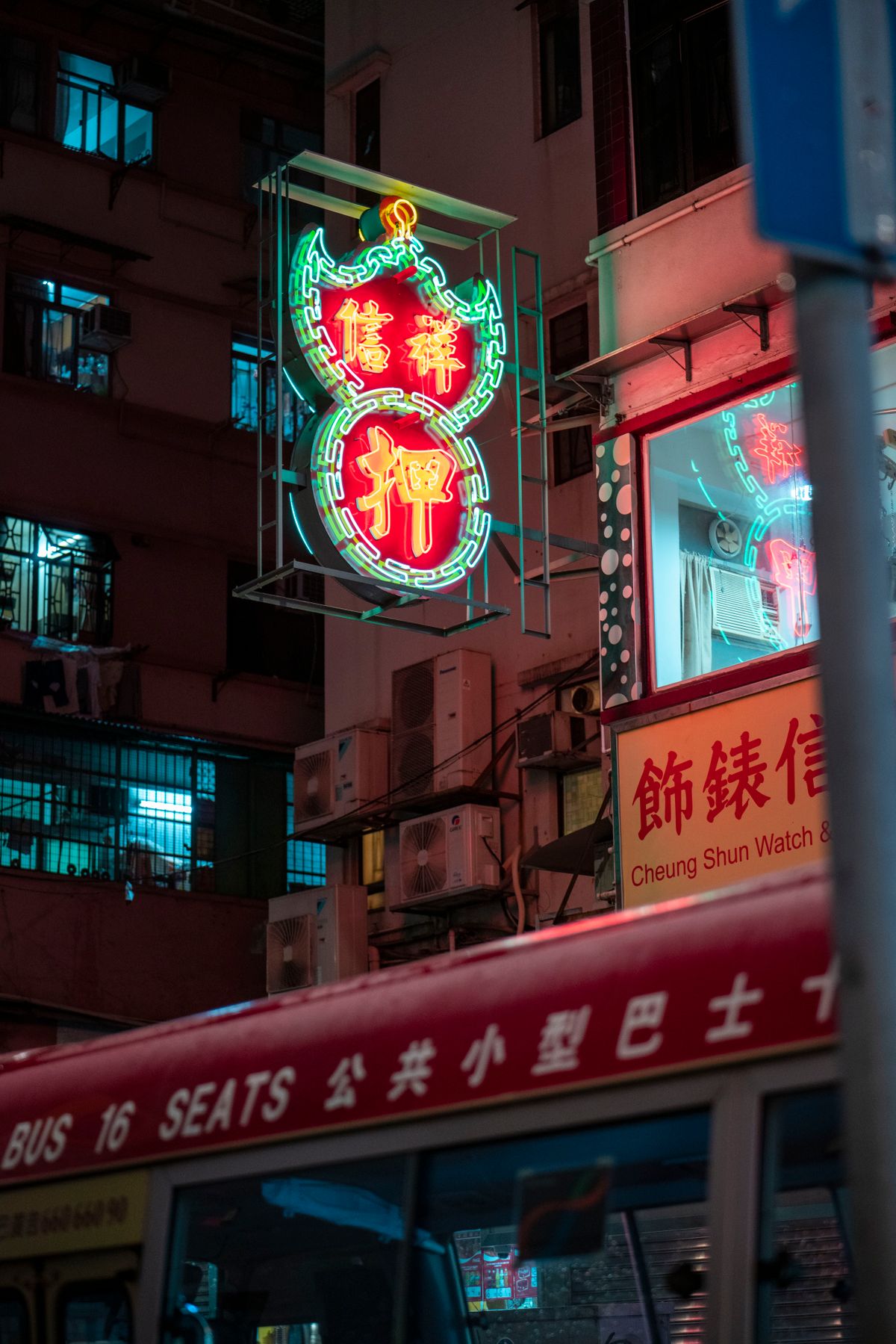
The 12 Cantonese Colour Words
1. 紅色
hung4 sik1 — Jyutping romanisation
Meaning: Red — the colour of luck, weddings, red packets and celebration.
Explanation: Red is the emotional core of Cantonese life. It shows up on lai see envelopes, wedding qipaos, temple pillars and shop signs. When a business "opens red" (紅盤), the first day of trading was profitable — an omen for the whole year.
2. 白色
baak6 sik1 — Jyutping romanisation
Meaning: White — pure and clean, but historically the colour of mourning.
Explanation: Traditional Cantonese funeral dress is white, so old-school aunties still avoid gifting white flowers or wrapping presents in white paper. In modern Hong Kong, white is fashion-neutral — but never at a wedding, and never as the main colour of a gift envelope.
3. 黑色
hak1 sik1 — Jyutping romanisation
Meaning: Black — serious, formal, and in modern slang, "cool."
Explanation: Traditionally, black hinted at bad luck (黑仔 hak1 zai2 literally "black kid" means "unlucky person"). But among younger Hong Kongers, all-black outfits, black tees and black caps have become the default streetwear shorthand for taste and restraint.
4. 綠色
luk6 sik1 — Jyutping romanisation
Meaning: Green — nature and freshness, but the "green hat" is a taboo.
Explanation: A green hat (綠帽 luk6 mou6) is Cantonese shorthand for being cheated on by a partner. No man will ever accept one as a gift, no matter how good the brand. Green as a colour on its own is fine — it's specifically the hat that's cursed.
5. 黃色
wong4 sik1 — Jyutping romanisation
Meaning: Yellow — imperial in old China, but "adult/vulgar" in modern Cantonese slang.
Explanation: Yellow was reserved for emperors in dynastic China. In everyday Cantonese, though, 黃色 has picked up a very different meaning — 黃色電影 (wong4 sik1 din6 jing2) means "adult film." Context is everything.
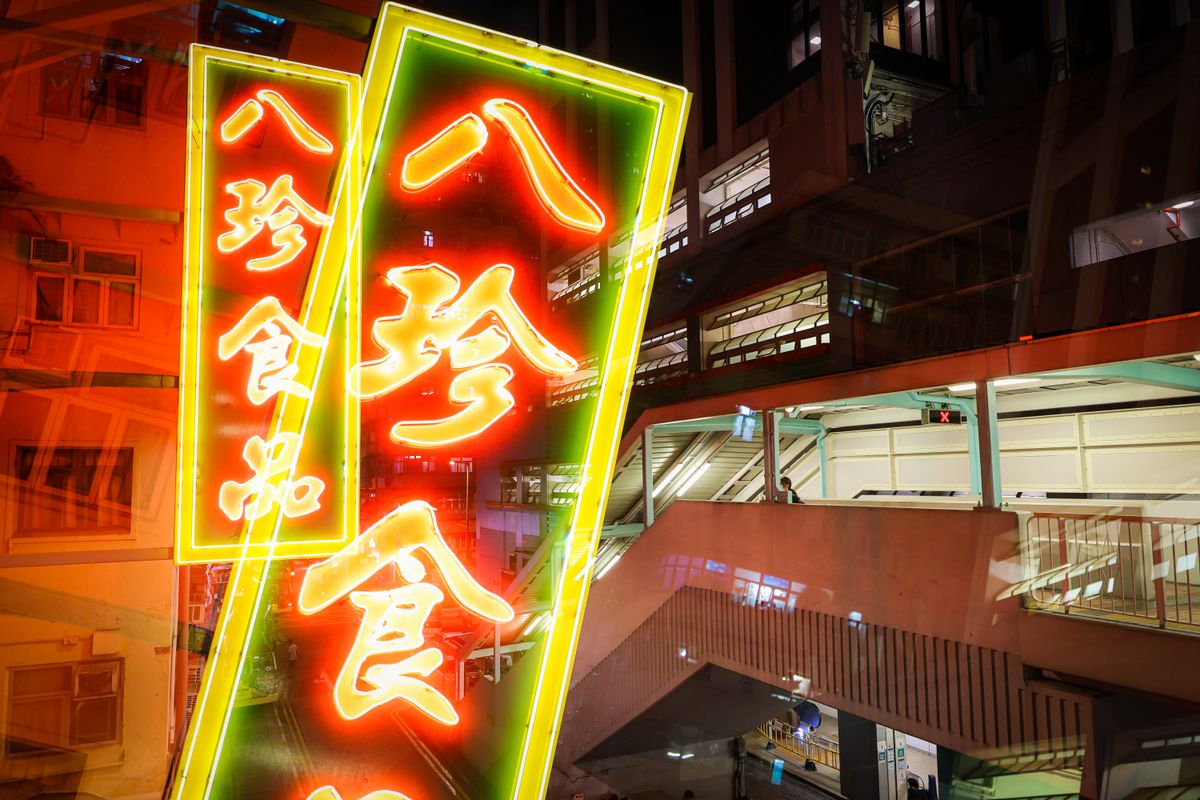
6. 藍色
laam4 sik1 — Jyutping romanisation
Meaning: Blue — calm, professional, and lately loaded with political meaning.
Explanation: Blue is the workwear colour of Hong Kong — police uniforms, dockworkers, MTR staff. Since 2019, "blue" has also become political shorthand referring to the pro-establishment camp, mirroring the "yellow" of the opposition. Colour is politics here now.
7. 金色
gam1 sik1 — Jyutping romanisation
Meaning: Gold — wealth, prosperity, and the colour of every Cantonese jewellery shop window.
Explanation: Gold is aspirational in the most literal sense. Cantonese weddings feature real 24K gold gifted to the bride. Gold paint decorates temple altars, restaurant awnings, and lucky characters on shop doors. Nothing signals prosperity faster in Cantonese culture.
8. 銀色
ngan4 sik1 — Jyutping romanisation
Meaning: Silver — the "cool" metal, second to gold in the Cantonese hierarchy of shine.
Explanation: Silver is beautiful but never quite as auspicious as gold. Old Cantonese banknotes were even nicknamed 銀紙 (ngan4 zi2, "silver paper") — a term still used today for money in everyday speech, especially by older generations.
9. 紫色
zi2 sik1 — Jyutping romanisation
Meaning: Purple — regal, mysterious, and a favourite of Cantopop stage lighting.
Explanation: Purple has historically been seen as noble and rare — the Forbidden City is called 紫禁城 (zi2 gam3 sing4, the "Purple Forbidden City"). Cantopop divas from Anita Mui onward have made it a favoured stage colour for its dramatic warmth.
10. 粉紅色
fan2 hung4 sik1 — Jyutping romanisation
Meaning: Pink — literally "powder red." Romantic, soft, and a modern favourite.
Explanation: Pink isn't a traditional Cantonese ceremonial colour, but it became huge in the 2000s through Cantopop styling, Sanrio fandom, and the local pink taxi (in Lantau). It's now safely used for gifts, gadgets, and streetwear alike.
11. 灰色
fui1 sik1 — Jyutping romanisation
Meaning: Grey — neutral in fashion, but "morally grey" in slang.
Explanation: 灰色地帶 (fui1 sik1 dei6 daai3) — "grey zone" — is one of the most useful Cantonese phrases for anything legally or morally ambiguous. It's how Hong Kongers describe half of city life: not exactly illegal, not exactly kosher, just… grey.
12. 咖啡色
gaa3 fe1 sik1 — Jyutping romanisation
Meaning: Brown — literally "coffee colour." The Cantonese way to name brown.
Explanation: Unlike Mandarin, which often uses 棕色 for brown, Cantonese overwhelmingly prefers 咖啡色 — the colour of Hong Kong milk tea, of leather jackets, of every yuenyeung cup at the local cha chaan teng.
Why Cantonese Colour Words Matter
Colours in Cantonese are cultural passports. They tell you when it's safe to gift, when to wear black to a party (yes) or to a wedding (no), and when a colour changes meaning depending on the object it's attached to. For anyone in the Cantonese diaspora relearning the language, colour vocabulary is one of the fastest ways to sound like you actually grew up here — because you'll get the jokes.
📖 Related Articles
👉 Shop Cantonese Guy — Modern Streetwear for the Global Cantonese Community