

Hong Kong summers are not for the faint of heart. From late May to early October, the city becomes a living pressure cooker — temperatures push past 33°C, humidity hovers around 90%, and the concrete radiates heat well past midnight. Cantonese speakers have spent centuries building a vocabulary for this weather, and the words go far beyond just hot. There is a word for the heat that clings to your skin. A word for the heat that swells inside your body. A word for the ritual of showering to reset yourself.
This is Vol. 52 of our Cantonese Dictionary series. Today's theme: 10 words every Hong Konger uses when the mercury climbs. Learn these and you will sound like you actually survived a Kowloon August.
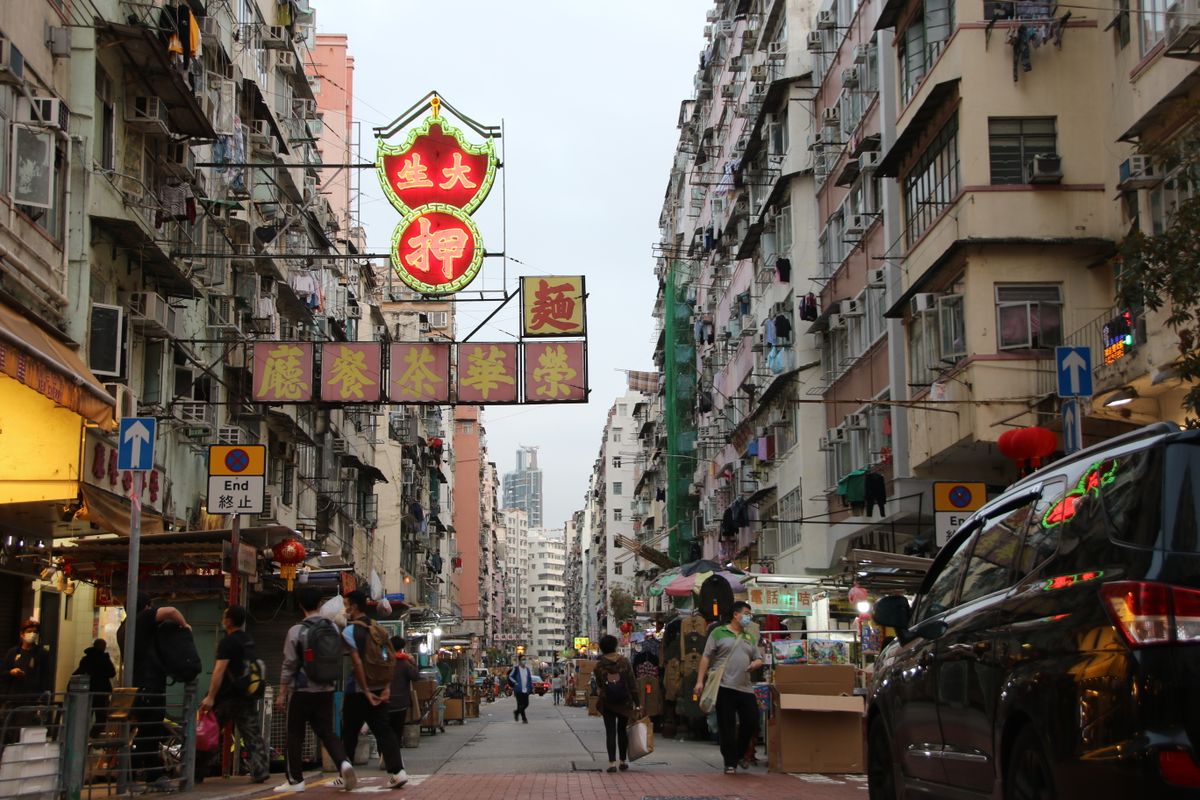
The 10 Cantonese Summer Words
1. 熱
jit6 — Jyutping romanisation
Meaning: Hot.
Explanation: The most basic and most-used weather word in the Cantonese summer. It covers heat in every form — the weather, food, tea, even a person's body temperature. If a Hongkonger says it once, you can bet they will say it fifty more times before September.
2. 焗
guk6 — Jyutping romanisation
Meaning: Stuffy, muggy, oppressive (heat that has nowhere to escape).
Explanation: This is the Cantonese word for humidity-heavy heat that makes you feel trapped. The character also means "to bake in a covered vessel," which is exactly what a Hong Kong summer feels like — sealed in a pot with the lid on. Locals also use 焗 for windowless rooms and packed minibuses.
3. 熱辣辣
jit6 laat6 laat6 — Jyutping romanisation
Meaning: Scorching hot; piping hot.
Explanation: A classic Cantonese ABB adjective that doubles the second syllable for vividness. It intensifies 熱 (hot) into something visceral — the kind of heat that stings. It also describes food fresh out of the wok. If your char siu bao arrives 熱辣辣, you are eating it right.
4. 冷氣
laang5 hei3 — Jyutping romanisation
Meaning: Air conditioning (literally "cold air").
Explanation: The most important two-syllable word in the Hong Kong summer vocabulary. 冷氣 refers to both the AC unit and the cold air it produces. A summer visit to Hong Kong is basically a series of movements between 冷氣 zones — MTR to mall to office to cha chaan teng. Losing 冷氣 for even an hour is a domestic emergency.
5. 出汗
ceot1 hon6 — Jyutping romanisation
Meaning: To sweat (literally "put out sweat").
Explanation: A basic but essential verb for surviving the season. Cantonese also has the vivid idiom 身水身汗 (san1 seoi2 san1 hon6) — "body of water, body of sweat" — for when you are utterly drenched. In traditional Chinese medicine circles, mild sweating is even considered healthy, a way to release heat.

6. 沖涼
cung1 loeng4 — Jyutping romanisation
Meaning: To shower (literally "to flush cool").
Explanation: Cantonese does not just say "take a shower" — it says "flush yourself cool." The word carries the whole cultural weight of using water to reset your body temperature. In summer, a Cantonese person might 沖涼 two or three times a day. When your grandmother tells you to 沖涼 the moment you walk in the door, she is speaking centuries of tropical wisdom.
7. 中暑
zung3 syu2 — Jyutping romanisation
Meaning: Heatstroke; sunstroke.
Explanation: Literally "struck by heat." It is both a medical term and a cultural warning. Cantonese mothers will remind you not to 中暑 before you leave the house — usually while handing you a bottle of leung cha (herbal tea). If you spend a full afternoon outdoors in July, you learn very fast why this word exists.
8. 打風
daa2 fung1 — Jyutping romanisation
Meaning: A typhoon is coming; to have a typhoon (colloquial).
Explanation: Literally "hit wind." The formal word for typhoon is 颱風 (toi4 fung1), but every Hongkonger uses 打風 in daily speech. It has become a full lifestyle word — 打風 means the observatory raises signals, offices close, MTR runs slow, and the city stocks up on instant noodles and mahjong tiles. A T8 signal is basically a surprise weekend.
9. 悶熱
mun6 jit6 — Jyutping romanisation
Meaning: Sultry; stifling; hot-and-stuffy at the same time.
Explanation: A step up from 焗. If 焗 is stuffy, 悶熱 is stuffy-plus-heavy, the kind of pre-typhoon day when the air feels like a warm wet blanket. The character 悶 usually means "bored" or "depressed," and that is exactly the emotional weight this weather carries.
10. 曬
saai3 — Jyutping romanisation
Meaning: To expose to the sun; to sunbathe; to dry in the sun.
Explanation: A single character that carries a lot of Cantonese life. Grandmothers 曬 preserved plums on the windowsill. Uncles 曬 tea leaves. Kids get 曬 (sunburned) at the beach. There is even a slang usage — 曬命 (saai3 meng6) — "to show off your life," as if flaunting it under the sun for everyone to see.
Why These Words Matter
Language is climate memory. The Cantonese summer vocabulary is thick because the season is intense — and centuries of Guangdong life have shaped a very specific relationship with heat. To speak the words 焗, 悶熱, and 沖涼 is to speak like a Hongkonger has spoken for generations, on tram stops and rooftops and back-alley cha chaan tengs where the ceiling fan spins overhead.
Learn these ten and you will not only survive a Hong Kong August — you will complain about it, in perfect Cantonese, like a local.
📖 Related Articles
👉 Shop Cantonese Guy — Modern Streetwear for the Global Cantonese Community