

Cantonese doesn't just describe the body — it thinks with it. When a Hongkonger hesitates, their heart goes big and small. When they order too much dim sum, their eyes are wide and their stomach is narrow. When something annoying comes up at work, their head starts itching. These body-part idioms are stitched so deeply into daily Cantonese that most speakers never notice they're using them.
This volume of the Cantonese Dictionary pulls together 10 of the most useful body-part expressions Hong Kong locals use every day — from the wet market to the office group chat.
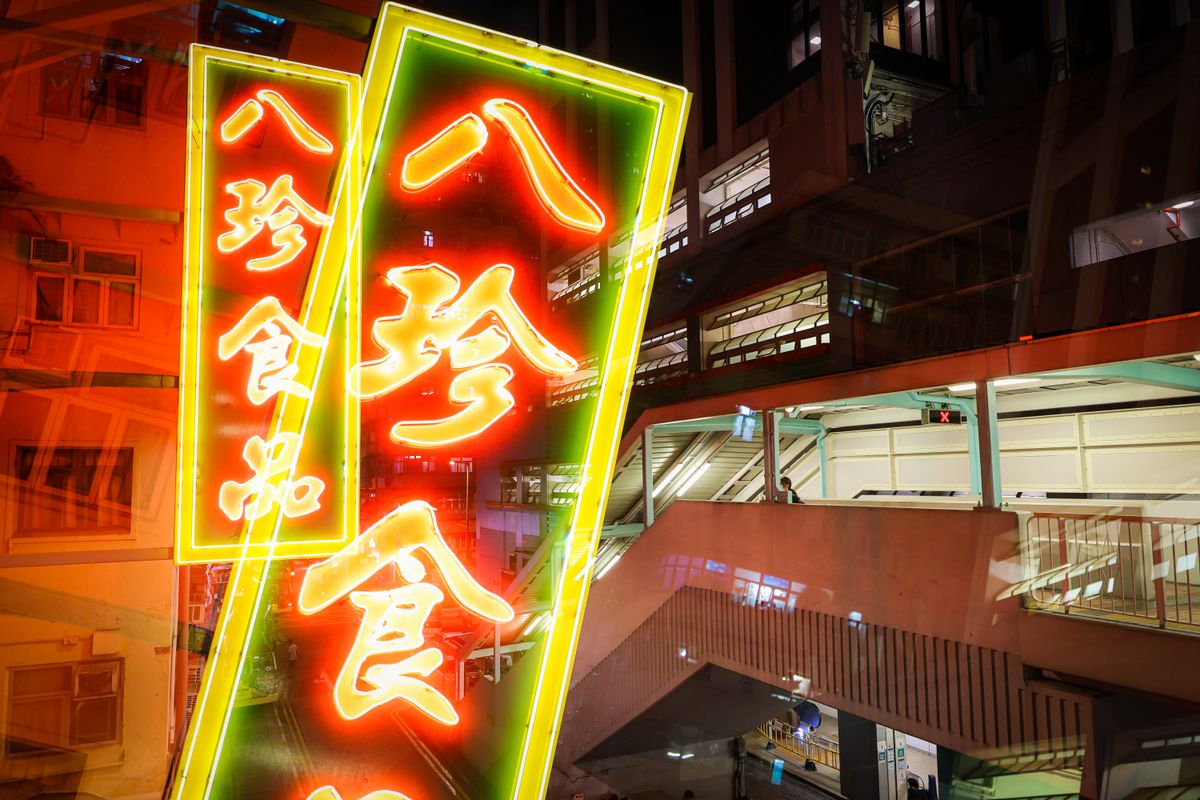
The 10 body-part words every Cantonese speaker uses without thinking
1. 心水
sam1 seoi2 — Jyutping romanisation
Meaning: A preferred choice — the one that matches your taste.
Explanation: Literally “heart water”, this is the Cantonese phrase you'll hear in every shopping mall and dim sum trolley. If something is your 心水, it fits your taste perfectly — a shirt, a phone, an apartment, a partner. Locals will ask “啱唔啱你心水?” to check if you're happy with something.
2. 手急眼快
sau2 gap1 ngaan5 faai3 — Jyutping romanisation
Meaning: Quick hands, sharp eyes — lightning reflexes.
Explanation: A four-character compliment for anyone who catches a falling teacup, snags the last siu mai off the trolley, or reacts before you've finished the sentence. Aunties in the wet market use it to describe the vegetable seller who wraps everything before you've counted your coins.
3. 心大心細
sam1 daai6 sam1 sai3 — Jyutping romanisation
Meaning: To hesitate; to keep flip-flopping between choices.
Explanation: Literally “big heart, small heart”. Your heart keeps swelling toward one option, then shrinking away. It's the exact feeling of standing in front of a bubble tea menu for ten minutes. Cantonese doesn't call it indecision — it calls it your heart changing size.
4. 頭痕
tau4 han4 — Jyutping romanisation
Meaning: Literally “itchy head” — a headache-shaped problem you can't shake.
Explanation: More colloquial than 頭痛 (physical headache). 頭痕 is the sigh you let out when your boss forwards an email at 11pm, when your kid needs a school project by tomorrow, or when the plumber quotes you three times the estimate. It's a very Hong Kong flavour of annoyance.
5. 腳骨力
goek3 gwat1 lik6 — Jyutping romanisation
Meaning: Leg-bone strength — stamina for walking.
Explanation: Hong Kong is a vertical city with 1,300 escalators and half a million stairs. When your grandmother says an elderly friend still has 腳骨力, it's a real compliment — she still climbs Sham Shui Po and hikes Dragon's Back on weekends. Losing your 腳骨力 is a quiet mark of getting old.
6. 好眼光
hou2 ngaan5 gwong1 — Jyutping romanisation
Meaning: A good eye — excellent taste or judgement.
Explanation: Literally “good eye-light”. When a friend picks a great restaurant, spots a rising brand early, or marries someone impressive, Cantonese speakers compliment their 好眼光. It's the phrase every Hong Kong parent says when they meet their kid's partner and quietly approve.
7. 口疏
hau2 so1 — Jyutping romanisation
Meaning: Loose-lipped — a person who can't keep a secret.
Explanation: Literally “sparse mouth” — the gaps in the mouth let everything spill out. If a colleague is 口疏, you don't tell them about the office affair, the promotion, or the surprise party. Every WhatsApp group has that one 口疏 friend.
8. 眼闊肚窄
ngaan5 fut3 tou5 zaak3 — Jyutping romanisation
Meaning: Eyes wide, stomach narrow — your eyes are bigger than your belly.
Explanation: The universal yum cha mistake. You see the har gow, the char siu bao, the cheung fun, and you order all of them — then you're defeated by the third steamer. Every dim sum table in Hong Kong ends with someone laughing 我又眼闊肚窄啦!
9. 死心
sei2 sam1 — Jyutping romanisation
Meaning: To let one's heart die — to give up hope for good.
Explanation: Dramatic on paper, casual in speech. Cantopop lyricists lean on it constantly for tragic love songs, but in daily life, you'll hear it about a stubborn crush, a losing football team, or a phone you were waiting to go on sale. Sometimes friends order you to 死心 — meaning “let it go already”.
10. 面懵
min6 mung2 — Jyutping romanisation
Meaning: A dazed, blank face — that “huh?” expression.
Explanation: Sometimes doubled as 面懵懵. It's the look on a tourist's face when the noodle uncle rattles off options in fast Cantonese, or on a student's face when the teacher asks a question they weren't listening to. Not insulting — usually affectionate, like calling someone adorably clueless.
Why body-part idioms tell you so much about Cantonese thinking
Cantonese is a physical language. It puts hesitation in the heart, gluttony in the eyes, quick thinking in the hands, and tiredness in the leg bones. Speaking it fluently isn't just knowing the words — it's knowing which body part carries which feeling. Miss the body-part logic and your Cantonese sounds like a textbook. Learn it, and you sound like someone raised on wonton noodles and MTR platform announcements.
The next time you're in a dai pai dong or crammed onto the Star Ferry, listen for the body words. Once you spot them, you'll hear Cantonese in a completely different way — a language that doesn't just describe the world, it feels it, one body part at a time.
📖 Related Articles
👉 Shop Cantonese Guy — Modern Streetwear for the Global Cantonese Community