

Push open the door of any classic Cantonese roast-meat shop in Hong Kong and the first thing that hits you isn't a smell — it's a red. Lacquered strips of pork hang in the window, glossy at the edges, blackened where the fat has caramelised, threaded onto steel hooks like a jeweler's display. That's char siu (叉燒). It's the sweetest of Guangdong's roast-meat family, the one that gave Cantonese cooks the excuse to teach the world how sugar and pork should meet.
What the name actually means
In Cantonese, 叉燒 is pronounced caa1 siu1. The characters are literal: 叉 means "fork," 燒 means "to burn" or "roast." Long before ovens and rotisseries, Cantonese cooks skewered marinated strips of pork on long forks and roasted them over an open flame. The name outlived the technique, and today "fork-roasted" is Cantonese shorthand for one of the most beloved dishes in the language.
A short history: Tang, Song, and the Guangzhou markets
Historians trace the ancestor of char siu to the Tang Dynasty (618–907 CE), when southern China was already experimenting with roasted-and-preserved meats to survive the region's heat and humidity. The dish took real shape during the Song Dynasty (960–1279 CE), when Guangzhou grew into a major urban market and Cantonese cooks began building a distinct roast-meat repertoire.
Guangzhou's port position mattered. Merchants and dockworkers wanted meat that was cheap, portable, calorie-dense — perfect for a lunch break at the docks. Char siu, sold hanging by the strip and chopped to order, fit exactly. By the Qing Dynasty (1644–1912), Guangdong had built a reputation for roast meats across China, and char siu was one of its stars.
The marinade — and the red mystery
The classic char siu marinade is a small, punchy family: hoisin sauce (甜麵醬-style bean paste), soy sauce, Chinese rice wine, five-spice powder (五香粉), and a sweetener. Boneless cuts of pork shoulder, belly or loin are best — the fat carries the glaze. During roasting, cooks brush maltose (麥芽糖) or honey onto the surface so it forms char siu's signature lacquered shell.
And the famous red? Traditionally, it came from red fermented bean curd (南乳 naam4 jyu5) and red yeast rice — natural fermented pigments. Modern shops often use red food colouring for consistency. Purists insist on the fermented stuff. If you've ever tasted a char siu that seemed deeper and funkier than the standard version, it's likely 南乳 doing the work.

Char siu is a whole ecosystem, not one dish
Ask a Hongkonger what char siu is and they won't just describe pork on a plate. It's a whole family of dishes:
叉燒飯 (caa1 siu1 faan6): chopped char siu over rice with pickled greens and a drizzle of dark, sweet sauce. The go-to Hong Kong lunch. Fifty-something dollars in a good cha chaan teng, thirty in a rougher siu mei shop.
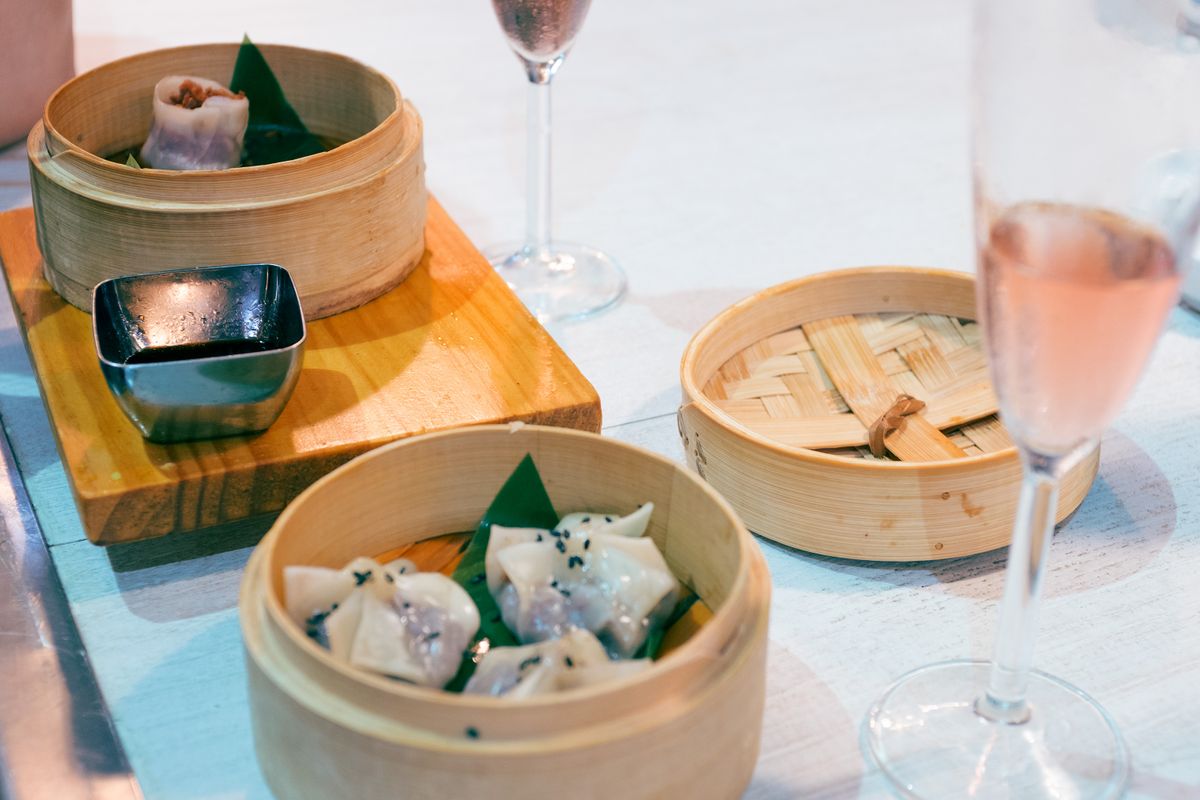
叉燒包 (caa1 siu1 baau1): the char siu bun, a dim sum staple. A fluffy white steamed bun cracked open to reveal a sticky red filling — arguably Cantonese cuisine's most globally recognised bite, adopted by Hawaii, the Philippines and every diaspora kitchen with a bamboo steamer.
叉燒酥 (caa1 siu1 sou1): the char siu pastry — the buttery, flaky dim sum version, layered like a Cantonese answer to French puff pastry, filled with the same sweet-savoury pork.
叉燒撈麵 (caa1 siu1 lou1 min6): tossed noodles with strips of char siu on top — the busy lunch counter's love letter.
Where to eat it: Hong Kong's living char siu institutions
Joy Hing's Roasted Meat (再興燒臘飯店) on Hennessy Road in Wan Chai is a good place to start any pilgrimage. The shop traces its roots to the late Qing dynasty, when a Teochew family opened what became one of the earliest Cantonese char siu specialists. Its Hong Kong operation was suspended when Japanese troops occupied Hong Kong in 1941, then rebuilt afterwards, and moved to its current Hennessy Road location in the 1980s. It received a Bib Gourmand from the Hong Kong Michelin Guide in 2016. Joy Hing still cooks its char siu in a pre-war-style oven, the kind of slow-charring set-up modern kitchens have mostly abandoned.
Kam's Roast Goose and Yat Lok are more famous for roast goose, but locals often argue their char siu deserves as much love — dark, unashamedly fatty, glass-lacquered on the outside, tender within.
Why char siu became a Cantonese identity marker
Every diaspora has a dish that carries home in its recipe. For Italians it might be red-sauce Sunday gravy. For Cantonese, it's char siu. The dish is portable — you can buy it hanging, take it home, slice it later. It survives immigration because the flavour is unmistakable. Ask a Cantonese grandmother in Toronto what she remembers about her Guangzhou childhood, and there's a decent chance the first thing she describes is the walk past the siu mei shop after school, watching the pork sway on hooks in the window. That's memory encoded in caramel and pig fat.
Cantonese words to keep in your pocket
燒味
siu1 mei2 — Jyutping romanisation
Meaning: Cantonese roast meats collectively — the family that includes char siu, roast goose, roast duck, roast pork belly (siu yuk), soy sauce chicken and more.
Explanation: A siu mei shop is where you point at hanging meats in the window and a chef in a bloody apron chops them onto rice for you. It's the closest thing Cantonese cuisine has to a fast-food institution — quick, cheap, revered.
📖 Related Articles
👉 Shop Cantonese Guy — Modern Streetwear for the Global Cantonese Community